Word of mouth on social media draws younger crowds to the flea market district, where fixed price tags are replacing haggling and rents are rising
"I didn't expect haggling to be so hard. They wouldn't budge at all on anything priced at 3,000 won."
On Tuesday afternoon, two teenage girls in school uniforms were rummaging through piles of clothes at the Dongmyo secondhand market in Jongno-gu, Seoul, checking price tags one after another. They had already filled three plastic bags with roughly 10 items — tops, bottoms and shoes.
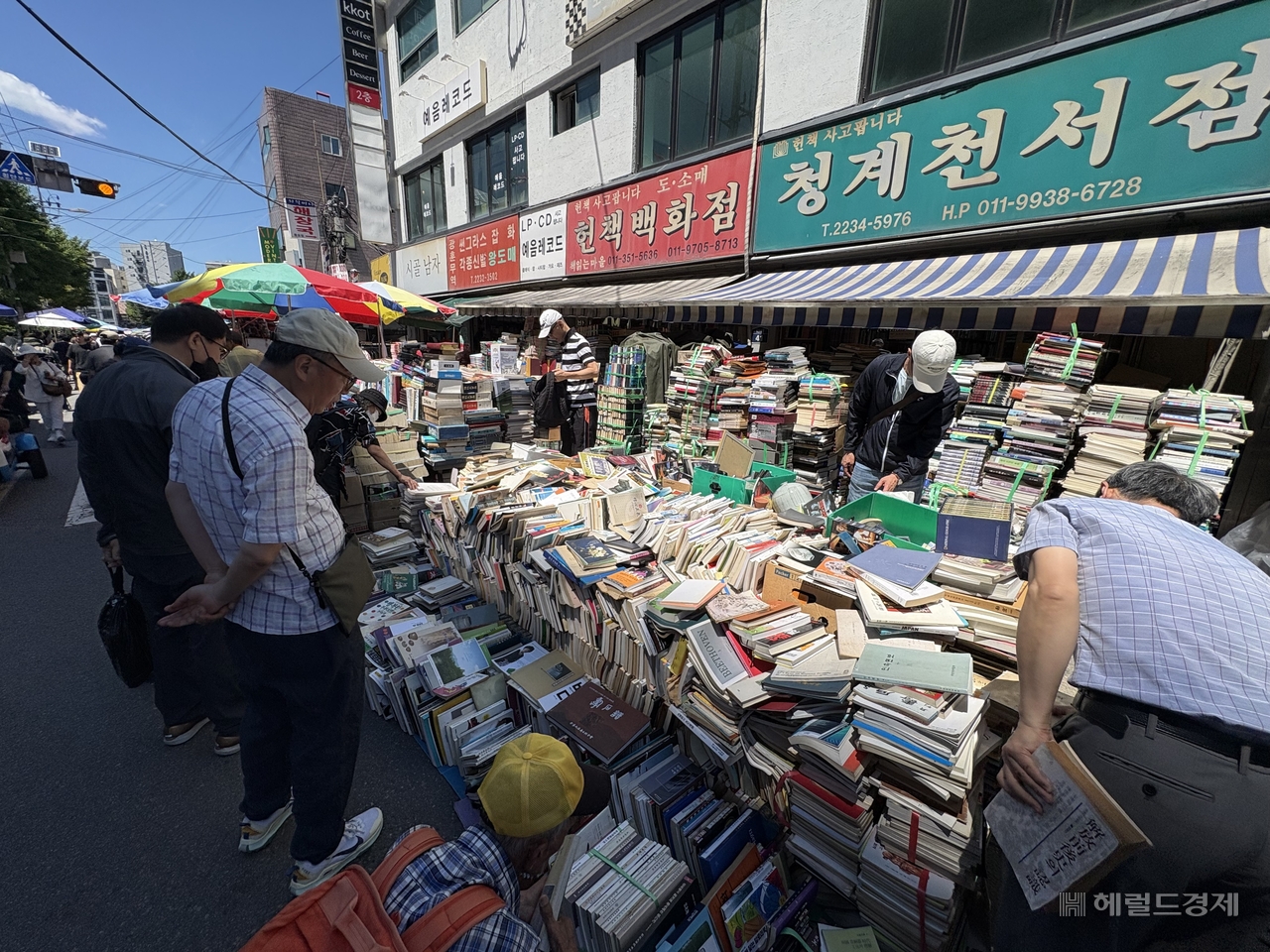
The Dongmyo secondhand market took shape in the late 1980s when street vendors began clustering in the area. Once a flea market where buyers and sellers haggled loudly over used goods and antiques, the place is changing. The back-and-forth of price negotiations has largely given way to fixed price tags. Shoppers in their 20s and 30s now roam the stalls, and on social media, a so-called "Dongmyo course" — a curated itinerary of must-visit spots in the district — is widely shared.
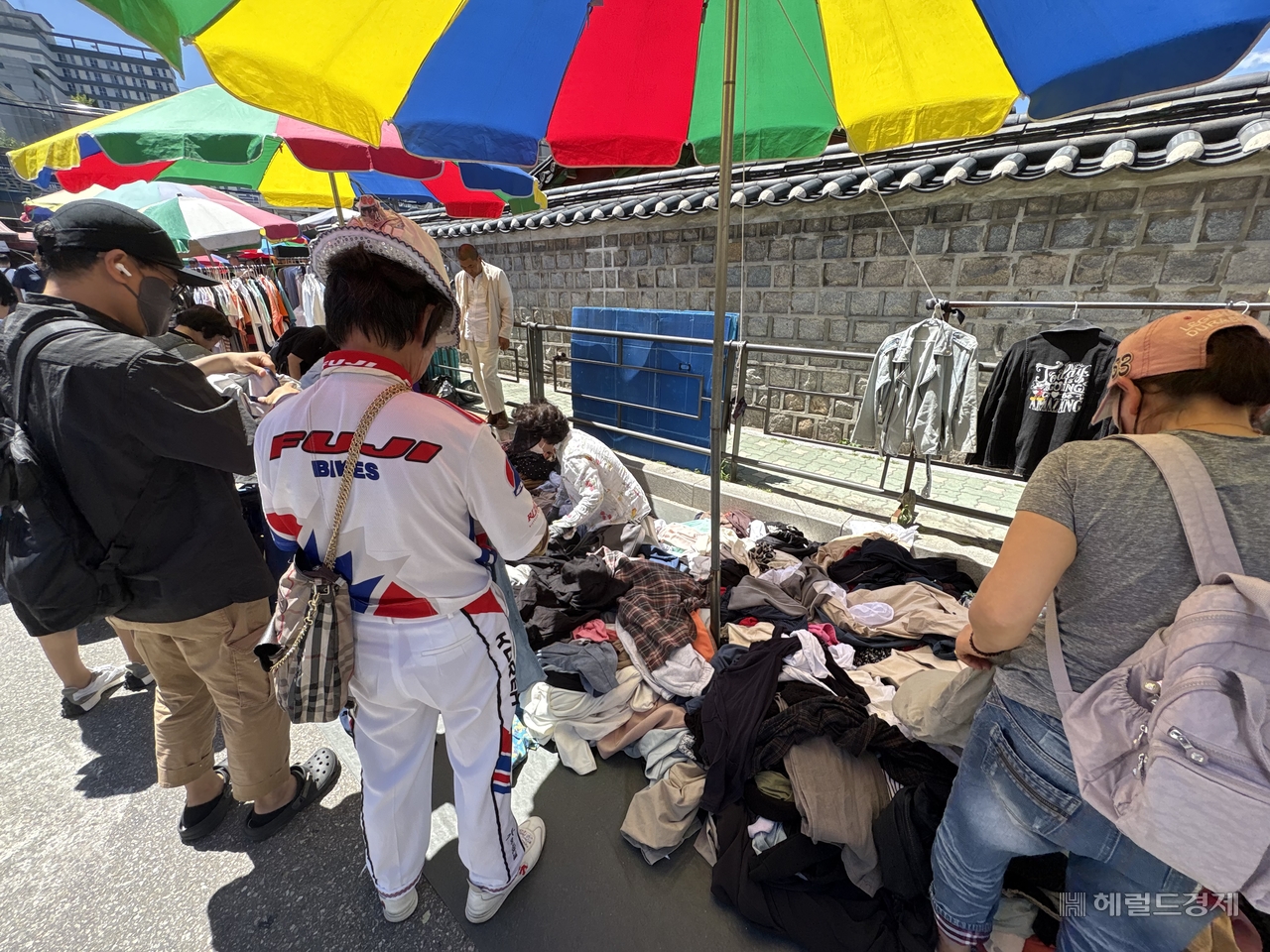
On both Monday and Tuesday, the market was dotted with college students fresh out of their final exams, middle and high schoolers, and couples in their 20s on dates. Many carried black plastic bags stuffed with clothes, squishy toys and 1,000-won toast from nearby stalls.
The stalls were packed with an eclectic mix of goods — Italian leather belts, watches, vinyl records, used cameras, bicycle saddles, Dutch beer, computers, luggage and old books. Vendors said they no longer haggle as much as they used to, but added that after 5 p.m. they mark down leftover clothing sharply to clear stock. After 5 p.m. on Monday, some stalls dropped items originally priced at 3,000 to 5,000 won to 1,000 won, drawing crowds.
Watch stalls have emerged as one of Dongmyo's hottest draws, pulling in clusters of young shoppers. The selection ranged from 10,000-won ($7) fashion watches to authentic Seiko timepieces priced at around 500,000 won. "Nothing here is 1,000 won," one vendor said. "These are all things someone else has used."
The 'Dongmyo course' built by social media
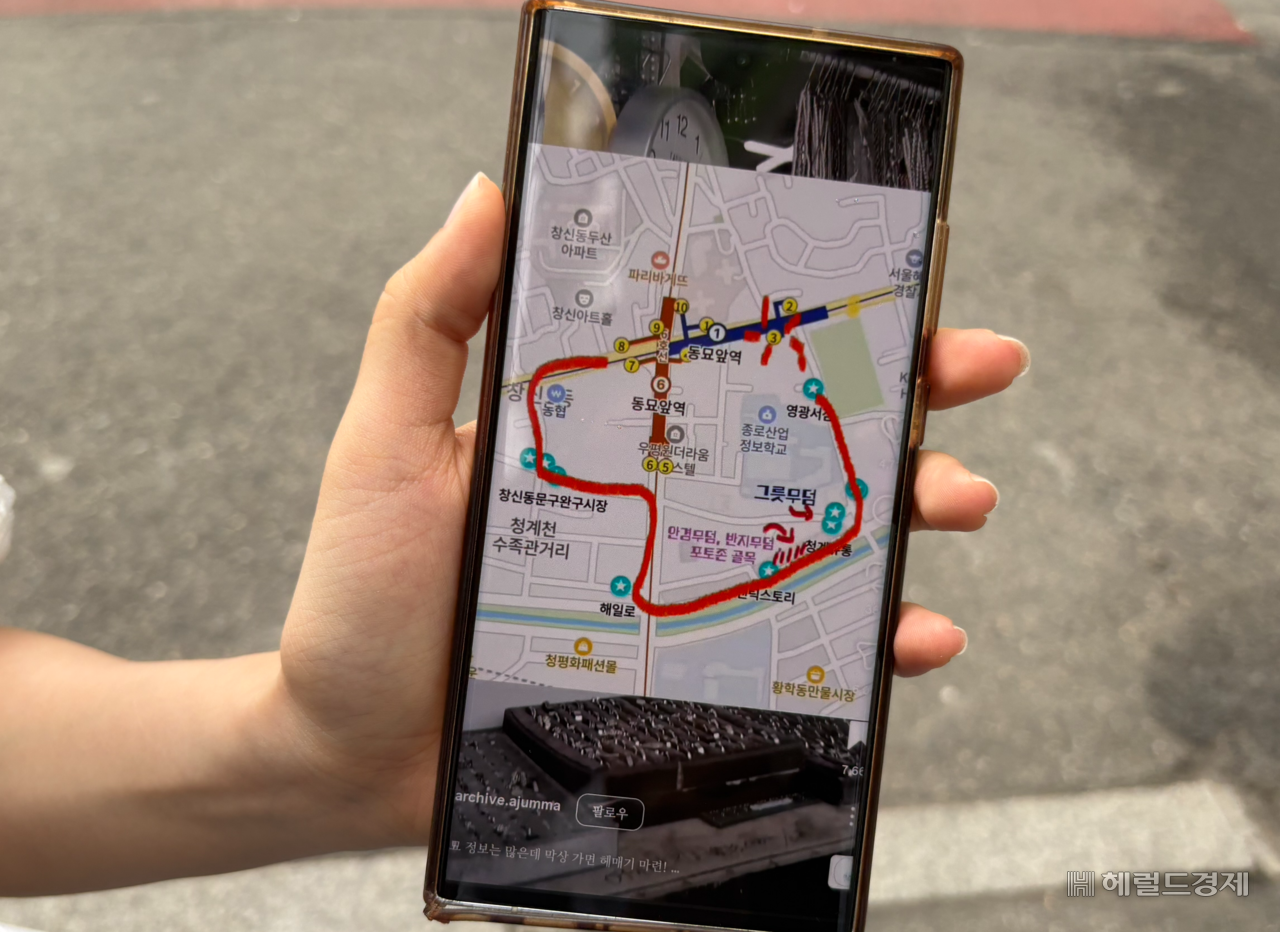
Young visitors to Dongmyo these days arrive with a plan. Drawing on routes shared on social media, they work their way through the secondhand clothing market, record shops and used camera stores before heading over to the toy street in Changsin-dong.
Hwang Hee-jin, a 22-year-old college student, said she looked up directions to Dongmyo and which spots to visit on Instagram before making the trip. "It can be confusing the first time, but the route was laid out so clearly that I just followed it," she said.
Another visitor in her 20s, who gave only her surname Lee, said fixed price tags made the experience far less intimidating than she had expected. "I was a bit nervous about the haggling culture since it was my first time here, but a lot of places had price tags, which made it easy," she said, adding that she had bought a watch and some accessories and planned to visit the toy street next.
High school students Kim Na-yeon, 17, and Park So-hee, 16, said it was their first visit to Dongmyo, having come all the way from Goyang. "Everything was cheap enough to buy with our allowance, so we ended up getting a lot of clothes," they said. "We picked up a ton of stuff, and we were surprised by how many people our age were here."
Even on a weekday morning, young shoppers kept streaming in. Outside a used digital camera shop that had not yet opened, one customer was seen calling the owner directly. Kim, a 20-year-old college student who asked to be identified only by surname, said he had found the shop by searching online for digital cameras near Jongmyo. "Buying online might be cheaper, but the advantage here is that you can actually hold the camera before you buy it," he said.
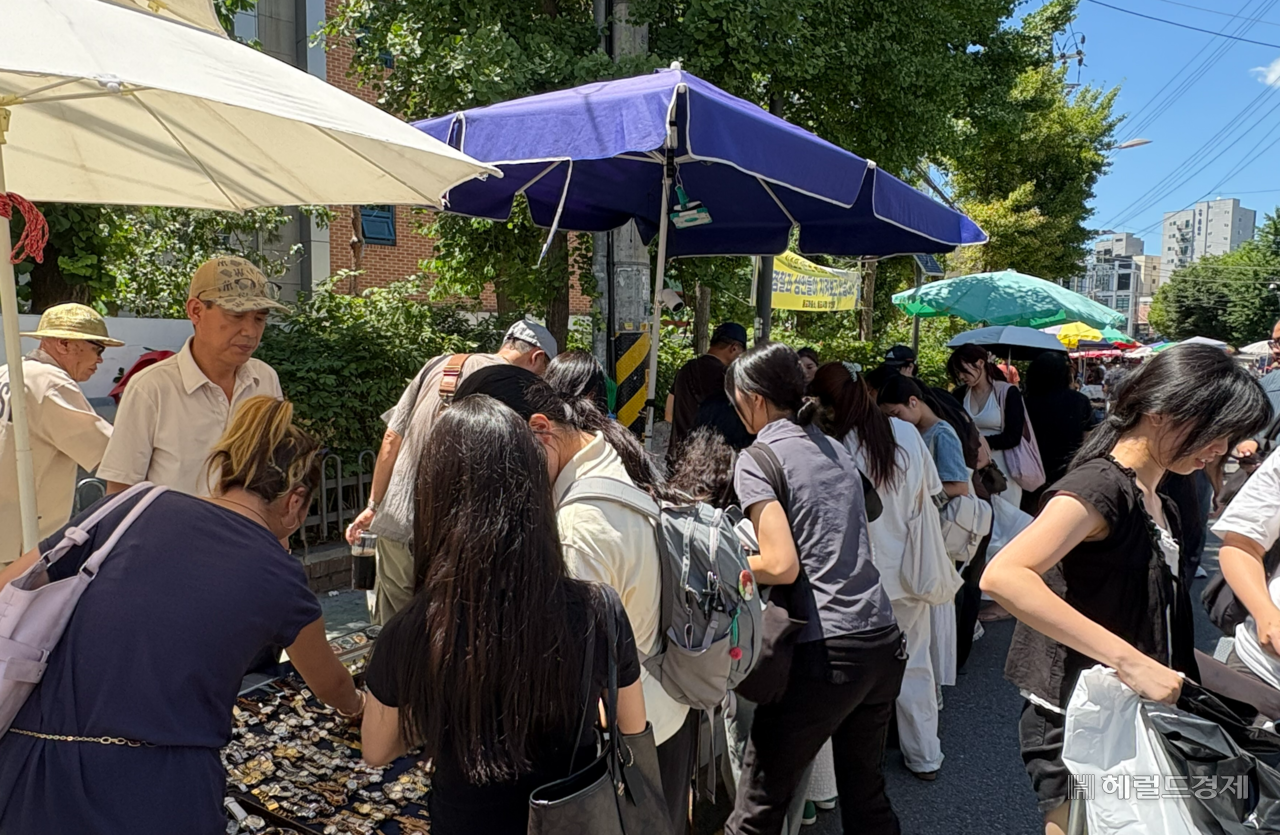
The 1,000-won toast stand and the 2,000-won tteokbokki (spicy rice cake) stall — now considered essential stops on the Dongmyo circuit — also drew steady streams of MZ generation visitors. Even late on weekday afternoons, a line formed outside the toast stand, and young shoppers could easily be spotted wandering the market with toast in hand.
Jung Seung-hwan, who runs the tteokbokki stall, said business had been strong for two or three years, but surged further over the past year as a meme — "Dongmyo over Seongsu" — spread online. "A lot of fans also come to follow the same route a celebrity visited," he said.
Seon Jong-pil, head of retail market research firm Sangga News Radar, said Dongmyo had grown from an elderly-centered flea market into a commercial district that draws younger generations and foreign visitors by layering in new types of content.
Commercial rents around the Dongmyo secondhand market have been rising gradually for years, according to local real estate agents. A representative of a real estate agency in Sungin-dong, Jongno-gu, said rents had climbed about 10 percent compared with three years ago. "There have been cases where a shop that was renting for 1.5 million won ($1,085) a month went up to 2.5 million won after the previous tenant left with key money," the representative said.
A representative of another nearby real estate agency said vacancies in the area were nearly impossible to find. "It's so hard to come across an empty unit," the representative said.
Across the street, the toy district in Changsin-dong has become another magnet for younger visitors. Stalls throughout the area displayed squishy toys and slime products priced between 4,000 and 7,000 won, and young women browsed by squeezing and testing items before buying. One shop posted a sign noting that refrigerated products make a better sound — a nod to the sensory appeal that draws shoppers in.
Shin Hyeon-suk, a vendor in her 60s, said the area used to function more like a wholesale market where stationery shop owners came to stock up, but that has completely changed. "Starting in early May, YouTubers began visiting one after another, and the number of customers has grown exponentially," she said.
However, not every shop has benefited from the change. Choi, who runs a used electronics store, said young visitors tend to use the TVs on display as backdrops for photos and then leave without buying anything. Some in the area also worry about gentrification — the prospect of large corporate money moving in and pushing out longtime vendors.
Seon cautioned that if the flea market character and old-establishment culture that define Dongmyo disappear, the district could actually lose its competitive edge.
jookapooka@heraldcorp.com
shy@heraldcorp.com