Greater Seoul housing prices rose 0.46% in May
Price-rise expectations return to early-year levels
Commercial properties — especially outside capital region — remain weak
Slump poses risks to project financing, financial institution soundness
By Kim Byeo-ri, The Herald Business
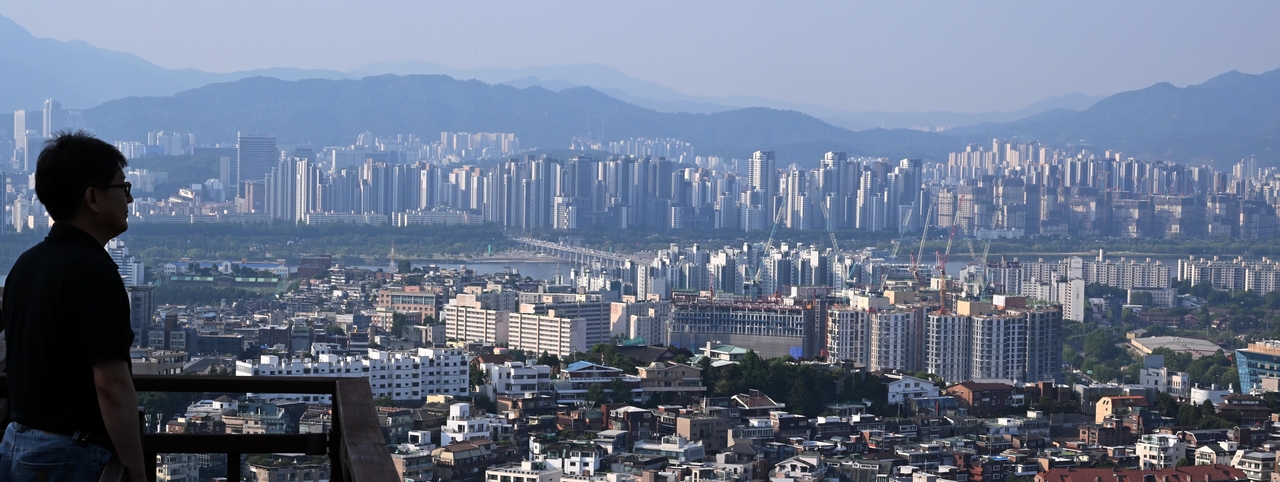
Rising expectations for further price gains have reignited the housing market in Greater Seoul, pushing sale prices higher at an accelerating pace. Commercial real estate — particularly retail and warehouse properties outside the capital region — continues to struggle, widening the gap between the two markets.
According to the Bank of Korea's financial stability report for the first half of 2026, released Wednesday, home sale prices in Greater Seoul rose 0.46% in May, accelerating from the previous month's 0.31% gain. That was the highest monthly increase since January, when prices rose 0.51%. After two consecutive months of declines starting in February, prices rebounded in April and have now risen for two straight months.
On-the-ground data point to an even sharper climb. According to the Korea Real Estate Board, Seoul apartment sale prices rose an average of 0.27% in the third week of June compared with the previous week. In Gyeonggi Province, prices rose 0.21% overall, with Dongtan District in Hwaseong seeing its weekly gain jump from 1.98% to 2.22%.
"The pace of home price increases in Greater Seoul, including Seoul, has widened again on the back of heightened expectations for further price gains," the Bank of Korea said.
The central bank's consumer sentiment survey for June showed the housing price outlook index rose 8 points to 120, driven by expanding apartment sale and jeonse price gains centered on Seoul and Gyeonggi Province. The index had fallen from 124 in January to 96 in March before climbing for two consecutive months, returning to its early-year level.
Commercial real estate, by contrast, remains broadly weak. The Bank of Korea noted that commercial property transactions have been sluggish since 2022, particularly for retail and warehouse facilities. "Transaction volumes have been on a declining trend since their 2021 peak, with retail and warehouse properties falling to their lowest levels since 2020," the bank said.
By property type, office building sale prices rose an average of 12.2% per year from 2022 to 2025, while retail properties gained just 2.6% over the same period. Warehouse facilities fell 8.1%.
Regional disparities were also pronounced. As of the end of the first quarter, the office vacancy rate outside Greater Seoul stood at 16.3% — more than 2.5 times the 6.5% recorded in the capital region. Retail vacancy rates were also elevated in non-capital areas, with Sejong at 27.0% and North Chungcheong Province at 20.3%, reflecting weak conditions for self-employed businesses in those regions. Logistics center vacancy rates exceeded 20% in parts of Greater Seoul as well, including the northwestern corridor.
The Bank of Korea warned that the commercial real estate slump could erode the financial soundness of lenders. Delinquency rates on commercial real estate-backed loans are high at non-bank institutions, including savings banks at 9.1% and mutual finance cooperatives at 6.3%. Non-bank lenders also hold loans with loan-to-value ratios above 60% accounting for half of their total commercial real estate exposure, leaving them vulnerable to rising default risk if property prices fall further.
"If the commercial real estate market is slow to recover, reduced project viability could delay the resolution of distressed sites and hold up the ongoing restructuring of real estate project financing," the bank said, urging vigilance. Among project financing sites in Greater Seoul flagged as at-risk or potentially distressed, logistics centers accounted for 13.7%. Outside the capital region, retail properties made up 9.3%.
The bank added that the weakness in the commercial real estate market could negatively affect the financial soundness of institutions holding related exposures, and that monitoring of those institutions' management conditions would need to be strengthened.
![하루 만에 끝난 ‘SK하이닉스 천하’…코스피 급락 속 삼성전자 시총 1위 재탈환 [투자360]](https://wimg.heraldcorp.com/news/cms/2026/06/23/ams.V01.photo.HDN.P.20260623.P12026062312293025147326573_T1.jpg)
kimstar@heraldcorp.com