New contract manufacturing orders to be layered onto acquired Rockville facility
Overseas production diversification to begin, with additional sites planned within years
Cross-factory 90-day tech transfer built on unified platform takes center stage
Samsung Biologics has confirmed it will add new contract manufacturing organization (CMO) orders to its recently acquired factory in Rockville, Maryland, on top of the commercial pharmaceutical products already produced there. The company also formally laid out a roadmap to expand its global manufacturing footprint further within the next few years, with the US acquisition serving as the first step.
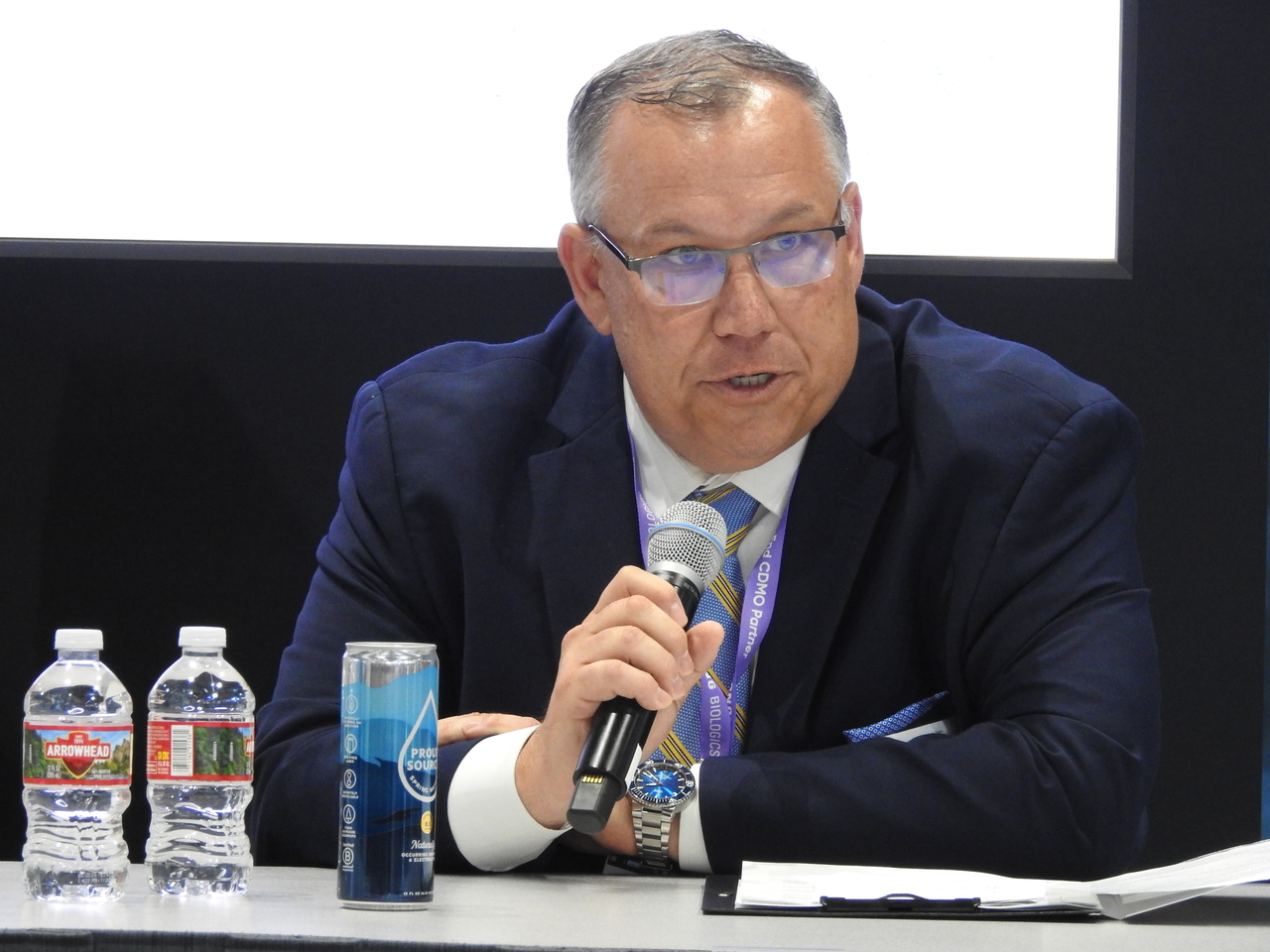
Jeff Mason, vice president of Samsung Biologics' New Jersey sales office, disclosed the company's global site strategy and future growth pillars in interviews with buyers at the 2026 Bio International Convention (BIO USA) in San Diego on Tuesday (local time).
Samsung Biologics completed its acquisition of the Rockville factory from pharmaceutical giant GSK in April and is currently carrying out systems integration work. The facility has commercial production capacity of 10,000 liters (10k) and 20,000 liters (20k).
On plans for the Rockville factory, Mason said the company would "continue manufacturing GSK's commercial products that were originally produced at the facility, while at the same time adding new CMO orders and new product lines from Samsung Biologics." The strategy is to immediately layer new orders from global pharmaceutical companies onto the US production facility to drive up utilization rates.
The acquisition marks the first step in Samsung Biologics' push to diversify its production base. Mason identified three pillars of the company's future growth — production capacity expansion, global site expansion and portfolio diversification — and said the Rockville acquisition was "the first step in geographic diversification," adding that "within the next few years, you will see additional global site expansion."
Mason also addressed the trend of global pharmaceutical companies building their own domestic production facilities and the geopolitical pressures driving it, signaling the company's intent to compete head-on. "Even amid on-shoring pressure, big pharma clearly wants to outsource at least a certain proportion of their existing pipelines and new emerging pipelines to external CDMOs in order to maintain flexibility," he said.
The key weapon Samsung Biologics is deploying to attract sophisticated orders from major pharmaceutical companies is its "90-day ultra-fast technology transfer." The company says the capability is tailored to a growing trend in which global customers demand two or more production nodes for risk diversification at the time of product launch.
Mason said Samsung Biologics applies an "Excellence" strategy in which all its factories, regardless of scale, are built to the same platform guidelines. "This allows us to complete technology transfers from an existing factory in Songdo to a new factory in just 90 days — from the out-of-freeze stage at the donor facility to the freeze stage at the receiving facility — a process we have built that is truly differentiated," he said.
He added that the company continues to invest in building a "full service" system at its Songdo headquarters, covering everything from cell line development to large-scale production, to address growing modality complexity. "We will stay one step ahead of the rapidly changing technology curve and solve the challenges our global customers face," he said.
silverpaper@heraldcorp.com