Accountability debate intensifies at public meeting hosted by lawmaker Lee Yong-woo
Shin Seung-ryeol, head of planning, says city must own responsibility as 'administration has continuity'
Residents push back hard, saying they cannot trust any projected opening date
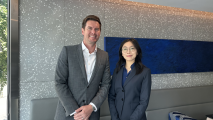
![National Assembly member Lee Yong-woo delivers opening remarks at a public meeting on measures to ensure the timely opening of the Seoul Subway Line 7 Cheongna extension, held Monday. [Provided by Rep. Lee Yong-woo's office]](https://wimg.heraldcorp.com/news/cms/2026/06/23/news-p.v1.20260623.8761c7ca0654440f81d2da5adf0d1917_P1.jpg)
Incheon Metropolitan City has for the first time acknowledged administrative responsibility for the delayed opening of the Seoul Subway Line 7 Cheongna extension, pledging to investigate the cause and take steps to accelerate the project.
A senior city official said "administration has continuity, so Incheon must take responsibility" — a statement expected to intensify scrutiny over longstanding allegations of poor construction management and the concealment or downplaying of delays.
The remarks came Monday at a public meeting on measures to ensure the timely opening of the Line 7 Cheongna extension, held at the Cheongna 2-dong community welfare center in Seo-gu, Incheon. The meeting was hosted by National Assembly member Lee Yong-woo and drew about 200 Cheongna residents, along with city officials including Shin Seung-ryeol, head of Incheon's planning and coordination office, Transportation Bureau chief Jang Cheol-bae, and Urban Rail Construction Division head Jang Du-hong.
Responding to residents who pressed the city on its accountability for the delay, Shin said: "I was not in charge at the time, but because administration has continuity, the city must take responsibility."
He added that if officials had known about the delays and concealed or underreported them, the city would pursue legal accountability. He said funding needed to shorten the construction timeline would be made the top budget priority.
The remarks mark a notable shift. Until now, the city had largely deflected questions about responsibility by focusing on problems with the contractor and the rolling-stock manufacturer, rather than clearly acknowledging its own administrative role.
<style ref="s1">Allegations of falsified progress reports and lax oversight — did the city know and fail to act?</style>
The meeting also brought intense scrutiny to how the project had been managed.
Documents obtained by Rep. Lee's office indicate that the contractor and the construction supervision team reported progress figures to Incheon — the project's contracting authority — that did not reflect actual conditions on the ground.
Despite this, the city had been operating a "construction progress task force" since early this year, composed mainly of officials from the contractor, the supervision team, and the Urban Rail Construction Division, to assess a feasible opening date.
Lee criticized the arrangement, saying it was impossible to trust an opening timeline produced by a task force that included the very people under suspicion for falsifying progress reports and mismanaging the project. "It's like leaving a fish in the care of a cat," he said.
Residents have also grown increasingly skeptical of the task force's projected opening dates of either 2030 or 2033.
<style ref="s2">Responsibility for rolling-stock procurement comes under fire</style>
The delay in manufacturing the trains also emerged as a major point of contention.
Lee said that despite repeated warnings about production setbacks and financial difficulties at Dawonsys, the rolling-stock manufacturer, Incheon had failed to put adequate contingency measures in place.
The city had previously maintained that the opening schedule remained on track through the use of existing vehicles, but has since shifted its position, saying consultations with Seoul Metro and other relevant agencies are now needed.
Further concern arose after it emerged that excess progress payments had been made to the manufacturer even as production fell behind, prompting calls for a comprehensive audit of rolling-stock procurement and overall project management.
<style ref="s3">Residents demand transparency on causes and accountability</style>
Residents at the meeting expressed deep distrust of the opening schedule currently on the table.
"This is a project we have been waiting nearly 20 years for, and yet again we are being asked to bear the burden," they said, calling for full public disclosure of the actual construction status and the reasons for the delays.
In response, the city said it would review how the existing task force has been operating and consider forming a new consultative body that includes outside experts and members of the public.
Lee said the Line 7 Cheongna extension is a national project with a total budget of 1.8 trillion won ($1.17 billion), and called on not only Incheon but also the Ministry of Land, Infrastructure and Transport and the Metropolitan Area Transportation Commission to step in directly to shorten the construction timeline, secure additional funding, and work out a plan for procuring the rolling stock.
He said a thorough investigation and clear assignment of responsibility were needed across the entire affair, citing poor construction management, falsified reports, concealment allegations, excess progress payments, and the failure to respond to delays in train delivery.
As the Line 7 extension that Cheongna residents have long awaited is once again mired in delay, attention is focused on whether the city's pledges to investigate and accelerate the opening will translate into concrete action.
gilbert@heraldcorp.com