Once compared to Seoul's Myeong-dong, Sinpo-dong was Incheon's premier commercial and cultural hub — and urban renewal experts say it cannot be left out of the city's flagship revitalization project
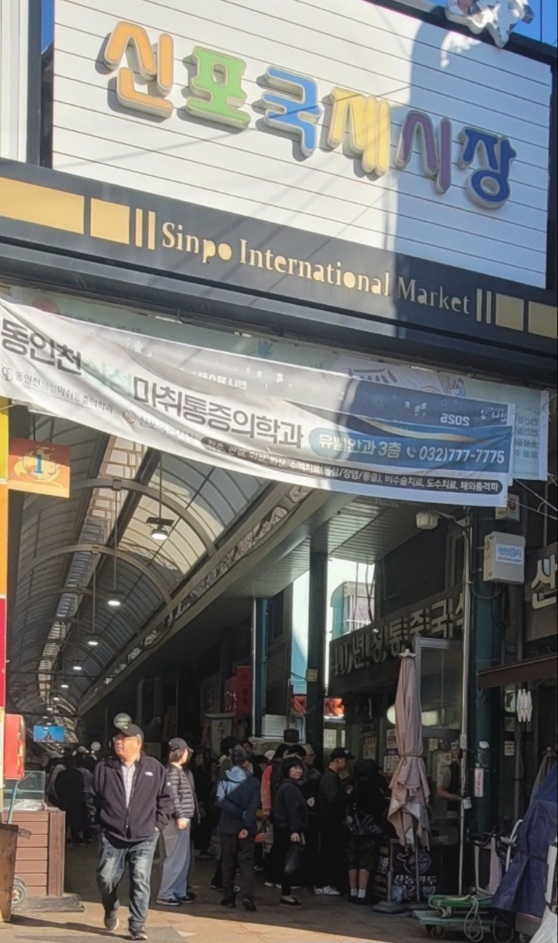
As Incheon's "Jemulpo Renaissance" project — billed as a sweeping revitalization of the city's historic downtown — approaches a new crossroads with the launch of the ninth elected city administration next month, critics are raising a pointed question: why has Sinpo-dong, once the undisputed commercial and cultural heart of old Incheon, been left out of the project's core strategy?
The Jemulpo Renaissance is a large-scale initiative centered on Incheon's inner harbor and the area around Dong-incheon Station, aimed at creating new economic and cultural hubs.
But if the true goal of downtown revitalization is not mere construction but drawing people back to the city, experts argue it is hard to speak of success while leaving out Sinpo-dong — the historic heart of Incheon's old downtown.
How Incheon's answer to Myeong-dong fell behind
Sinpo-dong was once Incheon's premier commercial district. At its peak, it drew crowds comparable to Seoul's Myeong-dong, packed with shopping streets, restaurants, cinemas and traditional markets that made it the center of consumer culture in the city.
But Sinpo-dong is more than a commercial zone. Since Incheon's port opened in 1883, the area has accumulated a dense concentration of historical, cultural and tourism assets: Sinpo Market, Chinatown, Donghwa Village, the Open Port cultural street, below-ground shopping arcades, the century-old Dap-dong Cathedral and Naeri Church, and Korea's first Western-style public park, Jayu Park.
From an urban competitiveness standpoint, the area stands apart from other districts precisely because it already possesses built tourism infrastructure and modern historical assets.
Yet since the 1980s, accelerating new town development and the migration of commercial activity have left Sinpo-dong in a prolonged slump.
As development strategy shifted toward new towns — first Namdong-gu, Yeonsu-gu and Gyeyang-gu, and more recently Songdo International City and Cheongna International City — consumer traffic and foot traffic drained away, and the Sinpo-dong commercial district went into decline.
Decades of stagnation have compounded the problem: aging and shuttered buildings are difficult to regenerate under layers of regulation. The district that was once Incheon's most celebrated commercial address has, in effect, been frozen in the past.
Still alive: Sinpo-dong draws weekend crowds
What makes Sinpo-dong's situation notable, however, is that it has not collapsed entirely. On weekends, residents and tourists continue to gather around Sinpo Market and the surrounding open port district.
When international cruise ships dock at Incheon Port, Sinpo Market, Chinatown and the open port area are among the first stops on visitors' itineraries. The district has also become a popular destination for tourists from Southeast Asian countries including Thailand, the Philippines and Vietnam.
This suggests that Sinpo-dong already has competitive appeal as a tourism and cultural destination.
The problem, analysts say, is that no strategy has been developed to translate that latent potential into a broader engine of city-wide growth.
Jemulpo Renaissance should focus on streets, not just buildings
Discussions around the Jemulpo Renaissance have so far concentrated on large-scale projects: inner harbor development, mixed-use facility construction and the redevelopment of Dong-incheon Station.
Urban regeneration specialists, however, argue that the key to revitalizing a historic downtown is not erecting new buildings but restoring the appeal of what already exists.
In that sense, Sinpo-dong could serve as a vital connecting link in the Jemulpo Renaissance.
If the inner harbor is the space that draws on maritime heritage and industrial history, Sinpo-dong can function as a walkable, livable tourism and cultural district where people stroll and linger.
Should a pedestrian tourism corridor be established running from the inner harbor development through the open port district, Chinatown, Sinpo Market and on to Dong-incheon Station, the entire old downtown could be reborn as a single, expansive historical and cultural platform.
The Sinpo-dong challenge awaiting the Park Chan-dae administration
If the incoming administration of Incheon Mayor Park Chan-dae — set to take office July 1 — moves to redesign the Jemulpo Renaissance, experts say any credible strategy must place Sinpo-dong at its core.
First, Sinpo-dong should be repositioned not merely as a traditional market area but as Incheon's signature cultural tourism street.
Second, the city needs to develop immersive, stay-oriented tourism content that connects the open port district, Chinatown and the inner harbor.
Third, an urban regeneration model must be created that can attract youth entrepreneurs and cultural content businesses.
Fourth, Incheon's distinct urban brand should be strengthened by leveraging its aging modern-era architecture and historical assets.
Fifth, a sustainable operating framework should be built with the active participation of local merchants and residents.
A Jemulpo Renaissance where Sinpo-dong comes back to life
If the Jemulpo Renaissance ends as little more than a development project around the inner harbor, it will struggle to drive a genuine revival of the broader old downtown.
The real competitive strength of Incheon's historic center lies not in newly built spaces but in the history, culture and collective memory that already exist there.
Sinpo-dong sits at that center. Reviving the district that was once Incheon's Myeong-dong is not simply a matter of restoring a commercial zone — it is an act of reclaiming the city's identity.
For the Park administration to transform the Jemulpo Renaissance from a "development project" into a genuine "urban revival project," it will need the resolve to place Sinpo-dong at the heart of its strategy.
Incheon's Jung-gu — to be renamed Jemulpo-gu from July — is already pursuing development in the Sinpo-dong area in line with a district-unit plan.
The aim is to modernize buildings that have stood for decades, attract new residents and revitalize the commercial district, restoring the reputation Sinpo-dong once held.
Alongside that district-level plan, calls are growing among residents for a new policy direction — one that approaches the area through a strategic framework linking the inner harbor, the open port district, Sinpo-dong and Dong-incheon into a unified old-downtown belt.
gilbert@heraldcorp.com