Ministry of SMEs and Startups project to recruit 73 companies; city aims to build talent-driven startup ecosystem around local research institutions
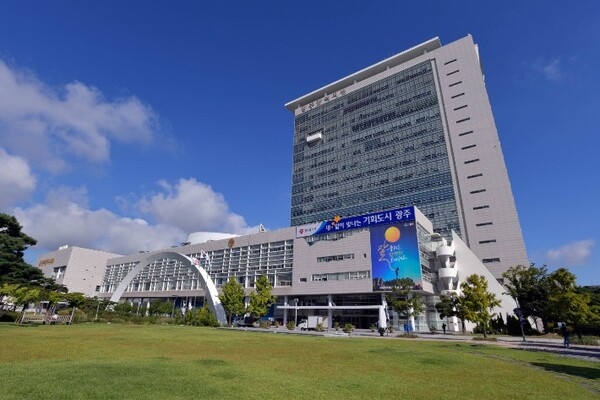
Gwangju is working to identify and attract promising startups in future growth industries as part of its push to rank among the world's top 100 startup cities by 2030.
The city is channeling large-scale startup support funding into Gwangju and Naju to help emerging companies take root and grow, with the broader goal of correcting the startup ecosystem's imbalance in favor of the Greater Seoul area and building the region's economic self-sufficiency.
Gwangju Metropolitan City, led by Mayor Kang Ki-jung, is accepting applications from companies in the Gwangju and Naju areas through July 7 to participate in the "2026 Startup City Development Project," which aims to identify promising startups capable of driving innovation in the region's key industries.
The project follows the "Startup City Development Project" announced by the Ministry of SMEs and Startups in April.
Through the initiative, the city plans to select and intensively nurture a total of 73 companies — including not only promising startups already based in Gwangju and Naju, but also strong candidates planning to relocate to the region.
A central strategy is to build a "talent-driven ecosystem" in which world-class researchers from institutions such as the Gwangju Institute of Science and Technology (GIST) and the Korea Institute of Energy Technology (KENTECH) settle in the region, launch startups, and generate results that feed back into the area's broader development.
Eligible applicants are promising startups either headquartered in Gwangju or Naju or planning to relocate there. Selected companies will receive commercialization funding ranging from a minimum of 80 million won to a maximum of 400 million won, depending on the track, along with a package of tailored growth programs.
The support program is divided into two tracks: an "investment-linked startup package" — covering early-stage and scale-up phases — targeting companies that have already secured investment, and a "regional startup package" covering growth and relocation phases to help companies establish a stable presence in the area.
Unlike the investment-linked track, which waives the company's cost share, the regional startup package's relocation track requires companies to cover about 30 percent of total project costs. To lower the barrier for companies moving in from other regions, the city will directly subsidize 10 percent of that self-funded portion using municipal funds — a differentiated incentive not available on the other track.
Selection will proceed on a two-track basis to maximize efficiency. Of the 73 slots, 41 companies will be chosen through an open competition, while the remaining 32 will be selected through a separate evaluation based on recommendations from the Gwangju Startup City Project Task Force.
Companies that make the final cut will receive comprehensive support through the Gwangju Creative Economy Innovation Center, including tailored growth programs, investment attraction assistance and technology support. The project runs from August this year through March next year.
"Through this project, we will build a solid startup ecosystem spanning Gwangju and Naju," said Hong Na-sun, head of the startup promotion division. "We will spare no effort in supporting innovative companies with cutting-edge technology to put down stable roots in the Gwangju-Naju area and grow into leading innovators representing South Korea."
sij@heraldcorp.com