Regular press briefing: 'Final government review reported; to be released in early July'
Three-term limit for group chairs to be included; best-practice code and legal revision to proceed together
Samsung Electronics in-house loans: 'DSR regulation needed in public interest'
Exchange rate volatility monitoring stepped up; pan-government response to insurance fraud
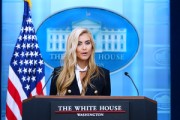
![Financial Supervisory Service Director General Lee Chan-jin answers reporters' questions at a regular press briefing at the FSS headquarters in Yeouido, Seoul, on Monday. [FSS]](https://wimg.heraldcorp.com/news/cms/2026/06/22/news-p.v1.20260622.da596f108f3c4a79b5e1ef62d1054eb3_P1.jpg)
Financial Supervisory Service Director General Lee Chan-jin said Monday that the regulator will release its financial holding company governance reform plan before KB Financial Group finalizes its shortlist of candidates for the next group chair on July 3. He also signaled that a three-term limit for holding company chairs would be resolved in the reform package.
Speaking at a regular press briefing at the FSS headquarters in Yeouido, Seoul, Lee said "the final governance plan reviewed at the government level has been reported" and that it "will be announced before KB Financial begins its shortlisting process in July." KB Financial's chair candidate recommendation committee is set to narrow a pool of 12 candidates to six on July 3. With incumbent KB Financial Group Chairman Yang Jong-hee's term expiring in November, the reform plan could take effect starting with the selection of his successor.
Lee confirmed that the reform plan will include a three-term limit for group chairs. "We have finished drafting the agenda on the three-term limit, and there are areas that have been supplemented and strengthened," he said. A best-practice code improvement plan the Financial Services Commission outlined in March had not included the three-term restriction. The reform package will combine revisions to both the best-practice code and relevant legislation. "Not only the selection of holding company chairs but also a number of bank president appointments are scheduled, so we will present both the legislation and the best-practice code together to avoid any delays," Lee said, adding that legislative proceedings would begin in July once standing committees are formed. The terms of the heads of the four major commercial banks and NH NongHyup Bank are all set to expire at year's end.
On the FSS probe into the social contribution activities of the four major financial holding groups — starting with Woori Financial — Lee drew a line against any political motive. "The National Assembly raised concerns that corporate image advertising was being packaged as social contributions, so we are checking whether disclosed figures match reality," he said.
Lee signaled the need for regulation of the in-house loan program introduced by Samsung Electronics, which offers employees loans of up to 500 million won ($326,000) per person at an annual interest rate of 1.5 percent. "We discussed with the Financial Services Commission whether corporate welfare programs could be linked to the debt service ratio system," he said. "I would like to regulate it, but there are limits within a capitalist framework." He added that he had "a sense of the problem that some degree of regulation is needed from a public interest standpoint."
Lee also explained the background behind reducing the fine for mis-selling of Hong Kong H-index equity-linked securities from 1.4 trillion won to the 600 billion won range. After the Financial Services Commission returned the sanctions proposal last month, the FSS recalibrated the figure. "There was no way to reduce it below 1.4 trillion won within the FSS's own authority, so we conveyed the view that discretionary mitigation was necessary," Lee said. "We reflected a Supreme Court precedent holding that if obligations were fulfilled during a guidance period, the conduct is difficult to classify as intentional or grossly negligent." He added that "a virtuous cycle can only be achieved if financial firms' efforts to restore damages are reflected in sanctions."
Lee expressed caution over the exchange rate. With the won-dollar rate persistently above 1,500 won, he said "foreign currency supply is not insufficient, but there are mismatches in short-term supply and demand," adding that "as interest rate increases are anticipated and volatility rises, we are stepping up monitoring." He said the FSS is also in discussions with the Financial Services Commission on ways to ease the repayment burden on small and medium-sized enterprises and self-employed business owners during a period of rising interest rates.
The FSS will take charge of a pan-government platform to combat financial crimes affecting ordinary citizens. An AI-based system to crack down on insurance fraud — estimated at 9 trillion won annually — will begin operation in the third quarter. A system cross-referencing National Health Insurance Service benefit data with insurance claims records has already been built. Lee said 6,000 active-duty military personnel are on the credit recovery committee's debt restructuring list, and said the FSS is preparing to institutionalize a ban on lending to military service members by loan companies.
Lee reaffirmed his opposition to proposals to relocate the FSS outside Seoul. "It would be strange for a construction site supervisor to leave the site," he said. "Policy must also conform to common sense."
psj@heraldcorp.com