Weekend 'New Ulsan, Dialogue with Citizens' forums held across city
'Budget should go to residents' lives, not showcase projects'
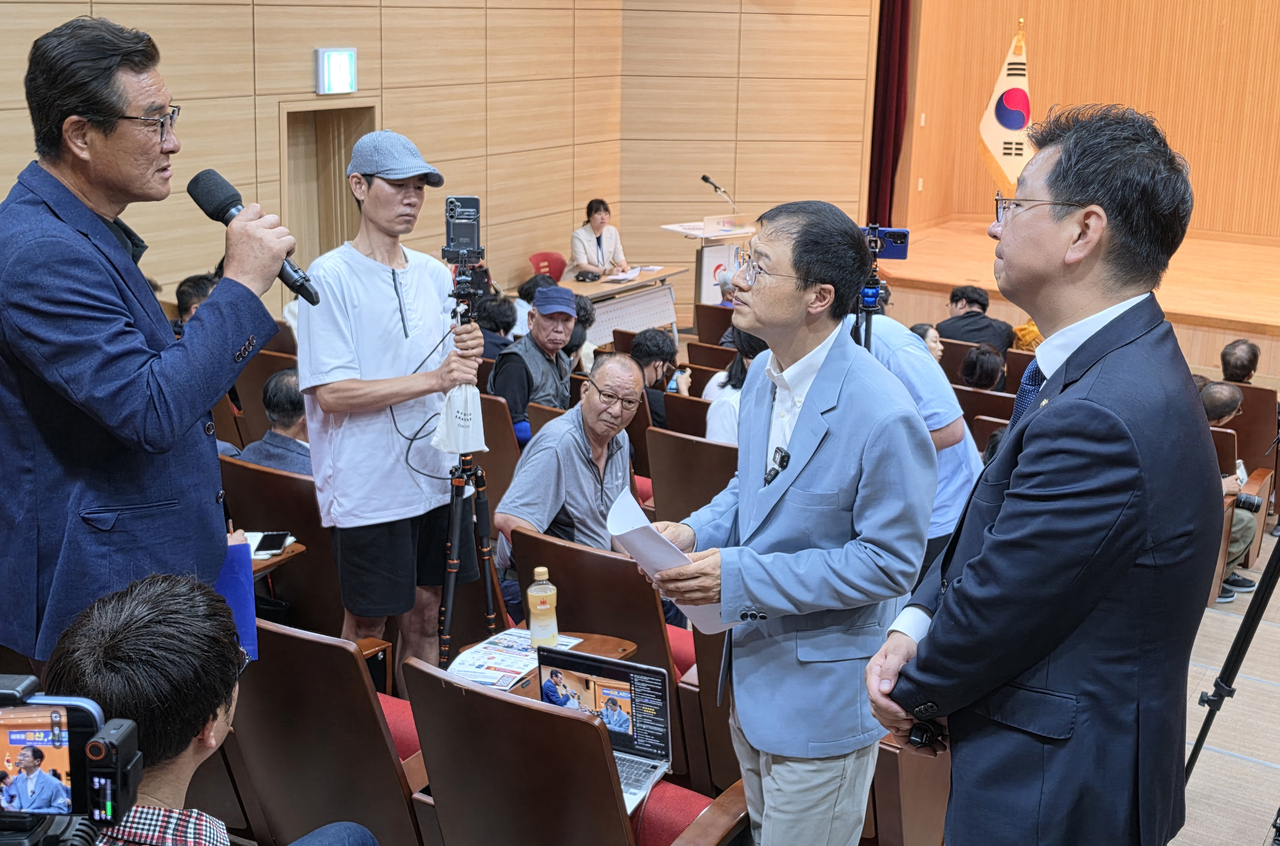
Ulsan Mayor-elect Kim Sang-uk held a series of public forums over the weekend under the theme "New Ulsan, Dialogue with Citizens," meeting residents across all five districts and outlining plans to steer city policy toward everyday concerns — including restoring bus routes, expanding childcare support and improving healthcare and welfare services.
Kim also made clear his opposition to a major project carried over from the outgoing administration: a plan to build a world-class performing arts venue with 2,500 seats at the Samsan-Yeocheon landfill site at a cost of 500 billion won (about $329 million) by 2032. His stance raises the prospect that several flagship initiatives of the eighth elected-term administration could stall.
The Democratic Party of Korea's Ulsan chapter organized the events to gather public input on key city issues ahead of the ninth elected term. On Saturday, forums were held at Nam-gu's Jong-ha Innovation Center, Jung-gu's Seongshin High School and Buk-gu's Maegok Park; on Sunday, sessions took place at the Dong-gu District Office and Ulju-gun County Office. Democratic Party Ulsan chapter chairman Kim Tae-seon moderated each event, while Mayor-elect Kim moved through the audience to take questions and share his vision on major issues.
Residents raised a wide range of concerns, including balanced regional development, inconveniences caused by the bus route overhaul, sluggish local commerce, welfare support and tourism promotion.
In December 2024, Ulsan overhauled its city bus network — consolidating or rerouting 100 of 183 existing lines and adding 22 new ones — to improve efficiency on a system that costs 440 million won a day to operate. Addressing the fallout, Kim said he would secure about 10 buses and restore routes 123 (Kkotbawi to Beomseo Middle School), 126 (Kkotbawi to the substation) and 307 (Cheongsang Middle School to Taehwagang Station) by the end of September as a first step for residents affected by the cancellations.
At the Dong-gu forum, residents raised concerns about quality-of-life issues stemming from an influx of foreign workers. Kim said he would review an "Ulsan-type regional visa" scheme that would train foreign workers in their home countries before placing them with local companies.
Kim added that while he intends to direct the city budget toward improving residents' basic quality of life, budget execution could prove difficult given that his party holds fewer than one-third of seats on the city council. The Democratic Party holds six of the Ulsan City Council's 22 seats, with the Progressive Party holding one.
Meanwhile, Kim has tapped Oh Moon-wan, an emeritus professor of law at the University of Ulsan, to chair the mayoral transition committee for the ninth elected term, with aide Choi Hyeong-jun named as vice chair. The committee is set to launch Wednesday, formally beginning the transition process.
cityblue@heraldcorp.com