As climate change drives increasingly frequent localized downpours — sometimes dumping dozens of millimeters of rain within minutes — Seoul's autonomous districts are moving to emergency footing ahead of the summer flood season.
Particularly notable is a shift away from routine facility inspections toward hands-on, scenario-based drills designed to test real-world response capabilities and minimize casualties.
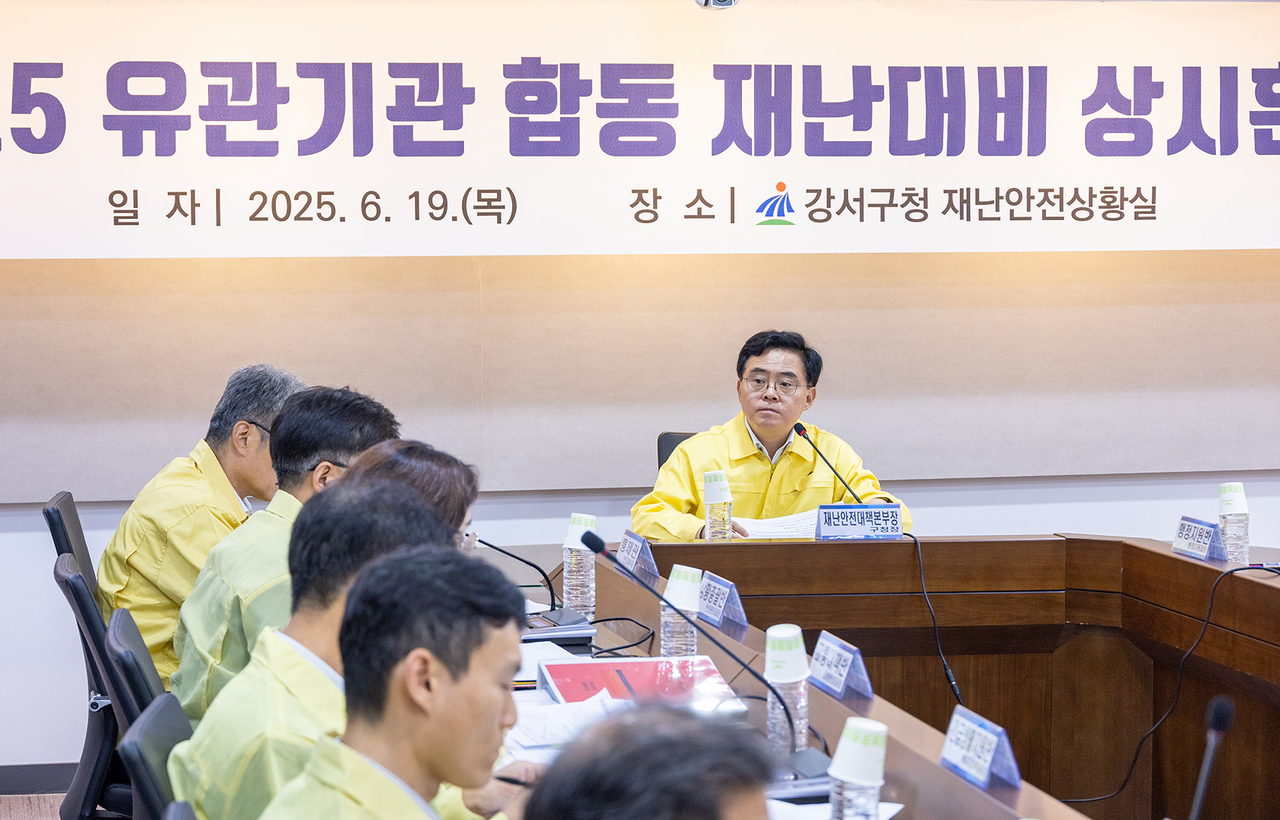
Gangseo-gu and Geumcheon-gu have recently conducted a series of joint agency exercises and late-night evacuation drills targeting flood-vulnerable households, significantly strengthening their summer disaster response frameworks.
Gangseo-gu (district mayor Jin Kyo-hoon) will hold its "2026 Joint Agency Disaster Preparedness Drill" on June 17 at 2 p.m. at a sewer repair site in Banghwa-dong.
The exercise is designed to sharpen on-site response capabilities and test coordination among partner agencies in the face of increasingly frequent localized heavy rain and strong wind events.
About 50 personnel from six agencies and organizations will take part, including the Gangseo-gu district office, the Gangseo Fire Station, the Gangseo Police Station, the Gangseo Public Health Center and the local volunteer disaster prevention corps.
The drill assumes a scenario in which rainfall exceeding 50 millimeters per hour, accompanied by strong winds, strikes the southwestern Seoul area, causing widespread flood damage and casualties.
Jin will chair the situation assessment meeting in his capacity as head of the disaster safety countermeasures headquarters and will review the response systems of 13 working-level teams, including the formulation of disaster recovery plans.
A field exercise at the below-ground sewer construction site will focus on drilling workers in emergency evacuation procedures. Participants will use actual disaster equipment — including gas concentration meters, air respirators and evacuation signal lights — and conduct joint rescue drills with fire and police units to maximize realism.
The drill will also include inter-agency situation communication exercises using the public safety LTE (PS-LTE) network, testing the initial response system that would be activated in an actual disaster.
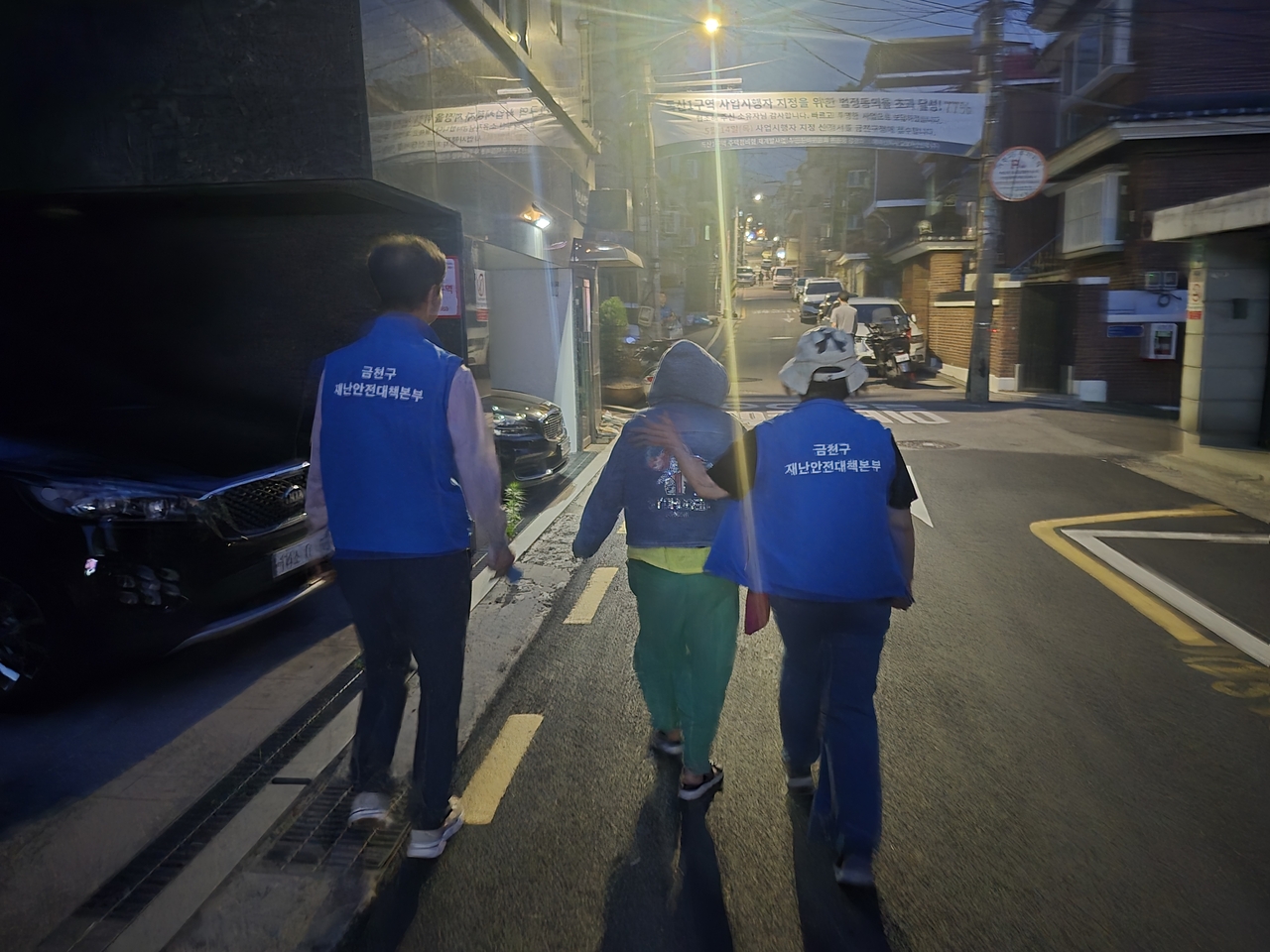
Geumcheon-gu (district mayor Yoo Seong-hoon) conducted its first-ever late-night evacuation drill for flood-vulnerable households on June 10, covering the Doksan 2-dong area.
The exercise was intended to assess the effectiveness of the district's "companion partner" system, under which volunteers help elderly, disabled and child residents of semi-basement homes evacuate quickly during a disaster.
Geumcheon-gu currently manages 230 households in total — 39 classified as disaster-vulnerable and 191 under general management — supported by 63 resident volunteers serving as companion partners.
It was the first time the district had fully simulated the entire evacuation process, from a late-night flash flood scenario through to semi-basement residents reaching a temporary shelter.
The drill unfolded in five stages: advance flood forecast notification, flood forecast issuance, situation assessment meeting, flood warning issuance and evacuation completion confirmation.
The district used a KakaoTalk group chat to relay information from the water management division to care civil servants, and from care civil servants to companion partners, who then escorted their assigned residents to a temporary shelter on the third floor of the Doksan 2-dong community center.
The drill showed that the step-by-step situation relay system functioned properly and that the division of roles between care civil servants and companion partners ran smoothly.
Geumcheon-gu plans to compile the drill results into training materials for use in future companion partner education sessions and meetings.
Experts say that as climate change makes heavy rainfall increasingly unpredictable, the on-site response capacity of local governments has never been more critical.
In practice, the Seoul Metropolitan Government has been reinforcing inspections of flood-prone areas across districts and strengthening evacuation frameworks to reduce the recurring flood damage that strikes every summer.
The joint agency drill in Gangseo-gu and the resident-participation evacuation drill in Geumcheon-gu go beyond simple manual checks — their significance lies in verifying how quickly each district can actually move when a real disaster strikes.
With the summer monsoon and typhoon season approaching, attention is turning to whether Seoul's districts can translate these proactive disaster preparedness efforts into a reliable safety net that protects residents' lives and property.
seouldream01@heraldcorp.com