
A train travel discount program under the "Travel Month" initiative drew 134,000 passengers and generated an estimated 37.7 billion won ($24.7 million) in production-inducing effects, with Free Independent Travel visitors to depopulated regions surging 31 times compared to last year.
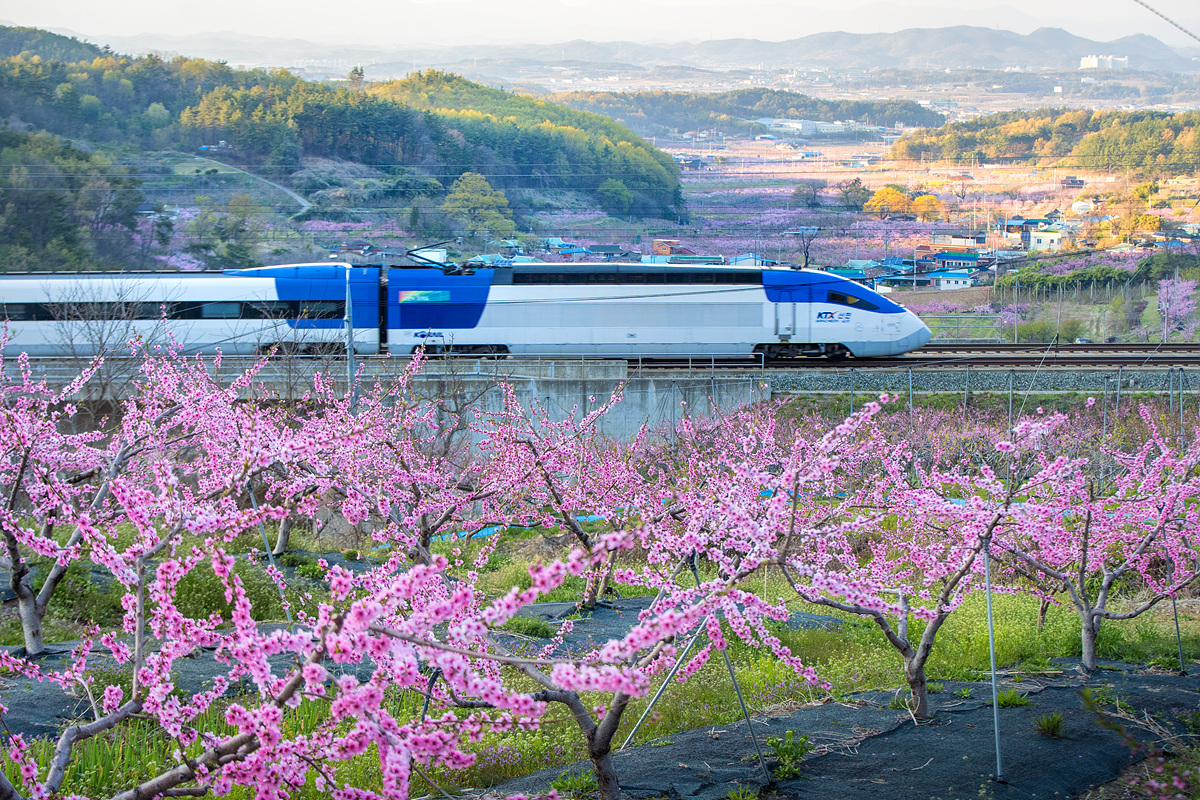
A train travel discount program under the "Travel Month" initiative drew 134,000 visitors to regional destinations and generated an estimated 37.7 billion won ($24.7 million) in production-inducing effects. Free Independent Travel visitors to depopulated areas surged 31 times compared to last year, contributing to local economic revitalization, according to an analysis of the results.
Korail said Sunday that rail ridership to regional areas rose sharply following the special discount event for train travel products under the "2026 Travel Month" program, hosted by the Ministry of Culture, Sports and Tourism and organized by the Korea Tourism Organization.
Supported by the Ministry of Culture, Sports and Tourism and the Korea Tourism Organization, the project offered discount coupons equivalent to 100 percent of train fares for Free Independent Travel products to depopulated regions, a 50 percent discount on theme trains, and a 20,000 won discount on the "Naeillo" Free Independent Travel pass. A total of approximately 134,000 people used the program.
Among them, visitors to 42 depopulated regions nationwide increased roughly 31 times compared to 1,618 during the same period last year. The most-visited destinations were Miryang in South Gyeongsang Province (5,773 visitors), Iksan in North Jeolla Province (4,151), Samcheok in Gangwon Province (4,130), Namwon in North Jeolla Province (3,378) and Yeongwol in Gangwon Province (2,644).
Ridership on discounted theme trains also climbed. About 79,000 passengers rode theme trains — including the Donghae Santa Train, the Baekdudaegan Valley Train, the West Sea Gold Train and the Namdo Ocean Train — up 92 percent from 41,323 the previous year. The top destinations by station were Buncheon Station in Gangwon Province (4,912 visitors), Cheolam Station (4,711), Suncheon Station (4,574), Gunsan Station (4,440) and Jeonju Station (4,302).
Korail also presented an estimate of the program's economic impact. Applying an average tourism expenditure of 127,000 won per trip and a production-inducing coefficient of 2.208 to the 134,487 users over the 45-day period, the corporation estimated the program generated approximately 37.7 billion won ($24.7 million) in production-inducing effects.
"Visits to depopulated regions exceeded expectations, demonstrating that rail travel has served as a genuine catalyst for regional economic development," said Lee Min-seong, head of Korail's Customer Marketing Division. "We will continue developing diverse travel products to lead the revitalization of regional tourism."
terry@heraldcorp.com



