
Pledges AI-driven administrative reform under the slogan 'Faster Mapo, Happier Residents'; plans rapid redevelopment and reconstruction task force; vows to overhaul lifestyle, sports and residential infrastructure including a new multiplex cultural and sports center
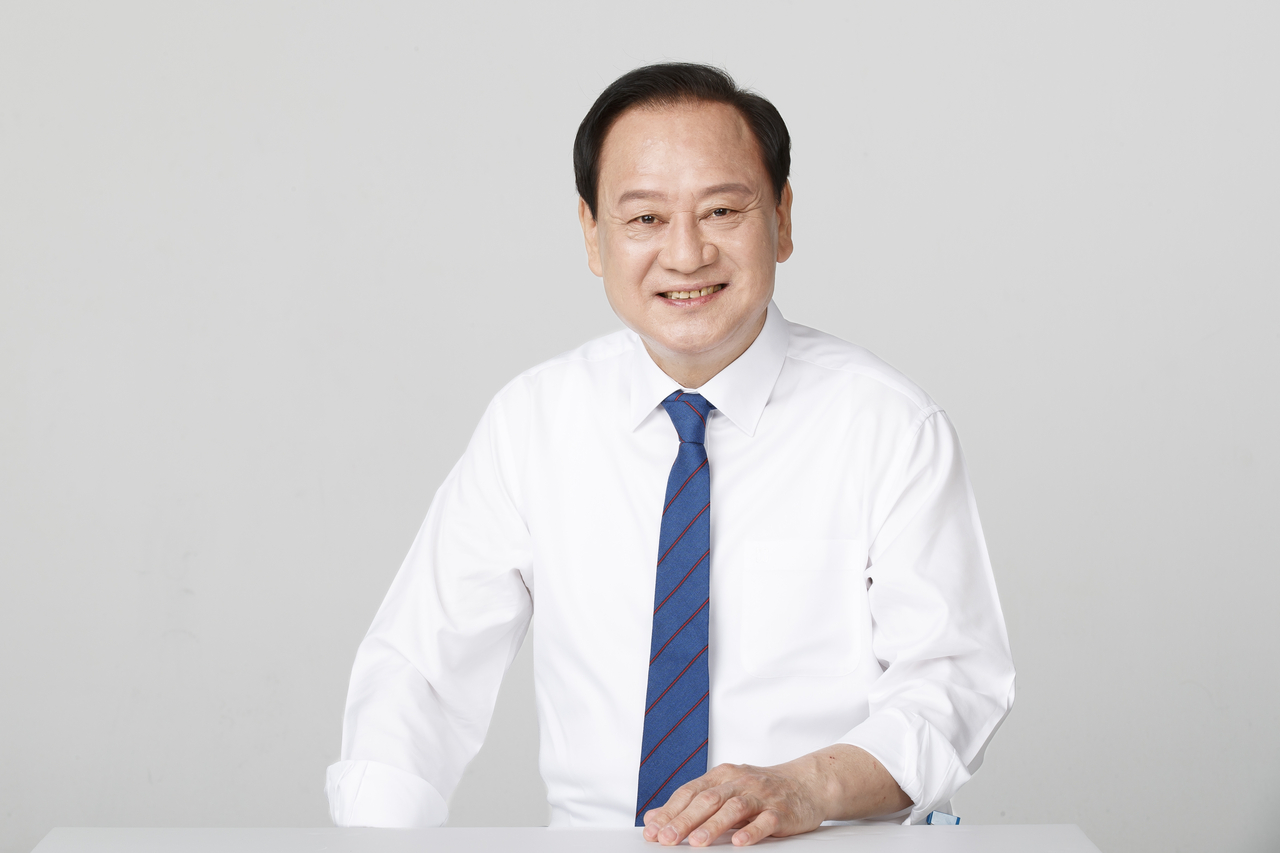
"Returning as district mayor after four years, I feel an immense sense of responsibility and deep gratitude at the same time. If the past years were about sowing seeds together with Mapo residents, the time has now come to make those seeds bloom and bear fruit — and to share that harvest generously. I will devote every ounce of my administrative capacity to building an era of greater happiness for our residents."
Yu Dong-gyun, the district mayor-elect of Seoul's Mapo-gu, made the remarks in an interview Friday, saying his election was possible because residents recognized him as a genuine administrator shaped by Mapo — someone who had laughed and cried alongside the community. He said he would pour all of his experience and capabilities into advancing the district during his term in the ninth round of popular local elections.
He identified AI-driven administrative reform as the top policy priority for Mapo going forward. Pledging to make Mapo "faster with AI and its residents happier," he said the speed of public administration is directly tied to residents' convenience. To that end, he plans to build "Mapo Brain," an AI-based administrative assistant that drafts basic ordinances and provides real-time answers to civil complaints, frequently asked questions and procedural inquiries.
Beyond that, he said he would pursue a range of AI-powered initiatives residents can tangibly feel — including integrated care services built around smart AI-equipped public health centers and operational reforms at district-affiliated institutions.
Safety, he said, is inseparable from residents' daily lives. The district plans to expand AI-powered CCTV coverage and build a safety experience center, shifting its safety policy from reactive response to prevention-focused management.
Redevelopment and reconstruction in Mapo are also set to accelerate under the new administration. While the district has seen significant redevelopment — including the Ahyeon New Town project — aging apartment complexes and worn residential areas remain scattered throughout. Residents' calls for renewal have grown louder, but project timelines have struggled to keep pace with those expectations.
Yu said he would immediately form a "Rapid Redevelopment and Reconstruction Task Force" upon taking office, with the district mayor personally overseeing it to speed up urban renewal projects and minimize inconvenience to residents.
He also plans to dispatch specialists to redevelopment areas to help resolve residents' frustrations and keep projects moving swiftly.
Those specialists would be drawn from a pool of retired civil servants who previously handled redevelopment and reconstruction work and retrained for the role. They would assist communities at every stage — from drawing up master plans and managing association-related matters to pre-sale announcements.
"I will make sure residents do not suffer losses due to a lack of information," Yu said. "A predictable urban renewal process actually reduces residents' anxiety more than one that is endlessly delayed." He said transparent and predictable administration can significantly curb unnecessary confusion and speculative behavior.
Yu also stressed the importance of upgrading everyday infrastructure most closely tied to residents' quality of life.
Plans include building a multiplex cultural and sports center — featuring an international-standard swimming pool — at Saetteosan (Saetteo Neighborhood Park), with additional centers to follow across the district. The district will also support the renewal of aging residential neighborhoods and improve alley environments so residents can clearly feel that their own neighborhoods have changed.
Zone-by-zone management offices will be established, and the district will upgrade alley security systems and lighting as well as garbage collection and disposal conditions, focusing on improving the environment in areas dense with single-family and multi-unit housing.
Yu said such resident-centered support can only deliver results where they are needed most when communication with residents flows freely. "The solution to every problem is communication — first, second and always," he said, adding that his administration would be built on open dialogue as its foundation.
"On my election thank-you banners, I wrote: 'Civil complaints — I'm taking them starting now,' and I made my mobile number public," he said. The gesture reflects genuine affection for residents and a determination to listen to every voice, large or small, and address whatever is bothering them.
Yu also plans to move quickly on leveraging Mapo's key tourism assets. He envisions creating a "Hongdae–Han River Cultural Belt" linking Hongdae's cultural and tourism resources with the Han River waterfront, transforming the corridor from a place people merely pass through into one where they linger. The goal is to move beyond a model where spending is concentrated in Hongdae alone and instead draw visitors to stay and spend across distinct zones throughout the district. The initiative is expected to create a virtuous cycle that offers visitors a rich cultural experience while delivering tangible economic benefits to residents.
Returning to lead the district after his earlier term, Yu said: "I will be a district mayor for everyone — embracing not only those who supported me, but also the hearts of those who chose another candidate." He added: "Together with our residents, I will open a new chapter for Mapo — a Mapo that runs again, with smarter administration and a city full of growth and happiness."
seouldream01@heraldcorp.com




