
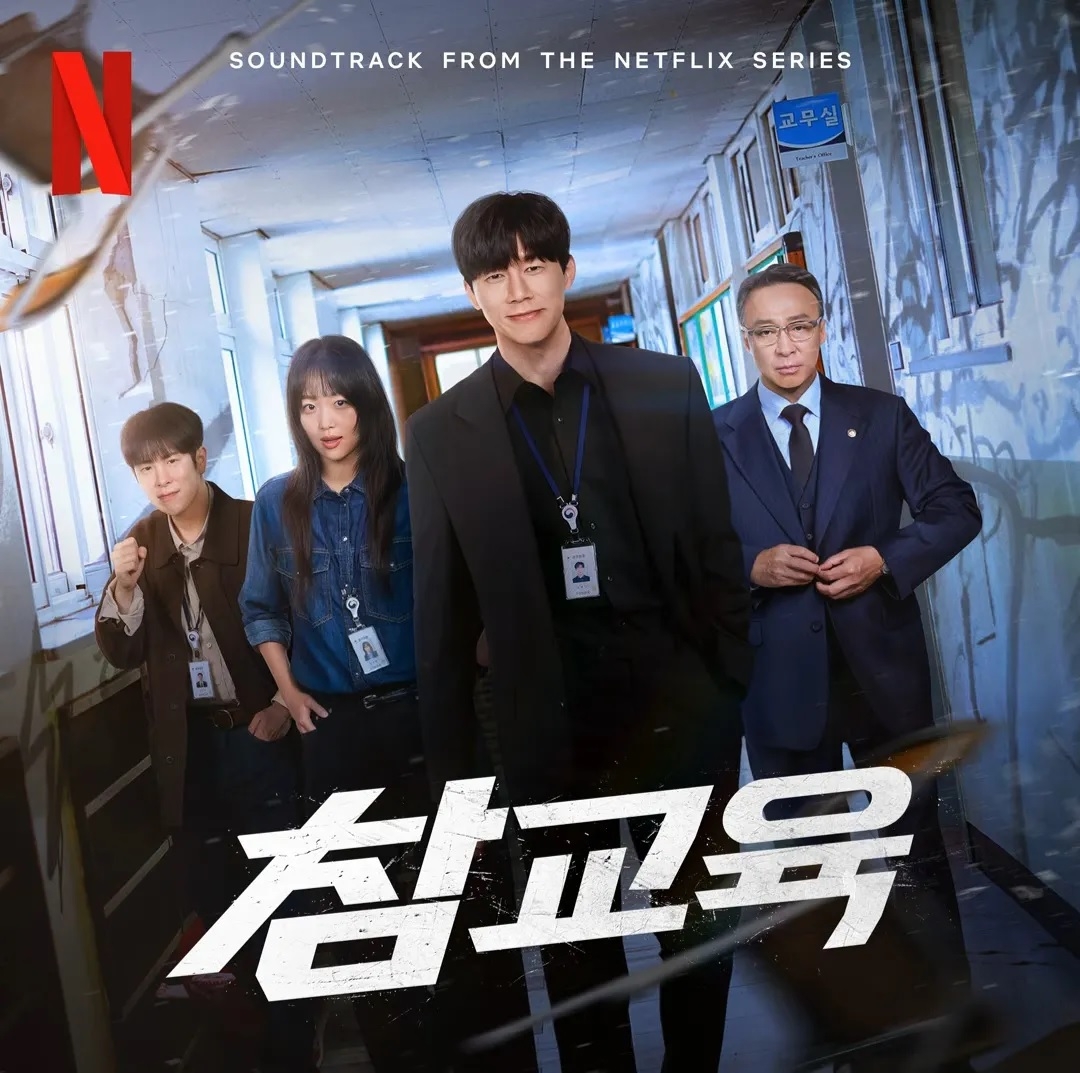
A proposal has emerged to establish a dedicated agency under the Ministry of Education to oversee violations of teachers' rights — modeled loosely on the fictional "Teachers' Rights Protection Bureau" in the Netflix drama series "Teach You a Lesson." The idea is that the state, not individual teachers, should take charge of responding to such violations.
The Democratic Research Institute, the think tank of the Democratic Party of Korea, published a policy brief Thursday on plans to create an "Educational Activity Protection Bureau" within the Ministry of Education.
"Teach You a Lesson," which has drawn wide audiences recently, follows a fictional government unit that tackles school violence, abusive complaints and teacher misconduct — sometimes through forceful means. The series has also drawn criticism for glorifying corporal punishment, violence and retaliation beyond legal bounds.
The report said the drama's premise is rooted in real problems that have accumulated in schools: violations of teachers' rights, abusive complaints, legal anxiety over legitimate student guidance, and schools' inability to respond effectively. It warned that such violations go beyond harm to individual teachers, leading to reduced classroom activity, avoidance of student guidance, fewer field trips and complaint-averse school management — ultimately eroding students' right to learn and public trust in education.
Rather than replicating the drama's punitive special unit, the report proposed an "Educational Activity Protection Bureau" designed as a state-accountability control tower for managing violations in an integrated manner. Specifically, it called for the bureau to be established within the Ministry of Education, for regional offices of education to set up legally mandated Educational Activity Protection Support Centers, and for field support teams to be placed at the district education office level — connecting what is now a fragmented response system into a coherent whole. The report stressed that violations of educational activity must be handled through an institutional response framework for which the state and education offices bear responsibility.
The report identified four core functions for the proposed bureau: building an integrated classification system for educational activity violations, establishing institutional accountability for abusive complaints, supporting teachers facing child abuse reports, and helping school communities recover.
Cases involving students disrupting classes, verbal abuse or assault, repeated abusive complaints from parents, child abuse reports filed after legitimate student guidance, and situations combining school violence with rights violations are difficult for individual schools to assess on their own, the report noted. It called for a centralized classification framework based on standards set by the Ministry of Education, linked organically to regional teachers' rights protection committees, school violence procedures, superintendent opinion letters, legal support and complaint-response systems.
Lee Gyeong-a, the research fellow who authored the report, said the structure in which teachers face abusive complaints directly must be minimized. She said parent complaints should be received and managed through official school channels, while cases involving repeated complaints, verbal abuse or threats, or the spread of false information that chills educational activity should be referred to the regional education office for legal review and formal response.
The report also proposed that when parents file child abuse reports against teachers for legitimate student guidance, a systematic support structure is needed so teachers are not left to navigate investigations and inquiries alone — including preparation of superintendent opinion letters, assistance with teacher statements, legal counseling, and follow-up recovery support for cases that result in a finding of no charges or no referral for prosecution.
paq@heraldcorp.com




