Chinese CDMO files suit in Washington D.C. federal court, seeking to void listing; December Biosecurity Act deadline looms as global supply chain uncertainty deepens; supply chains of 4,000 global big-pharma firms at risk as South Korean CDMOs poised to benefit
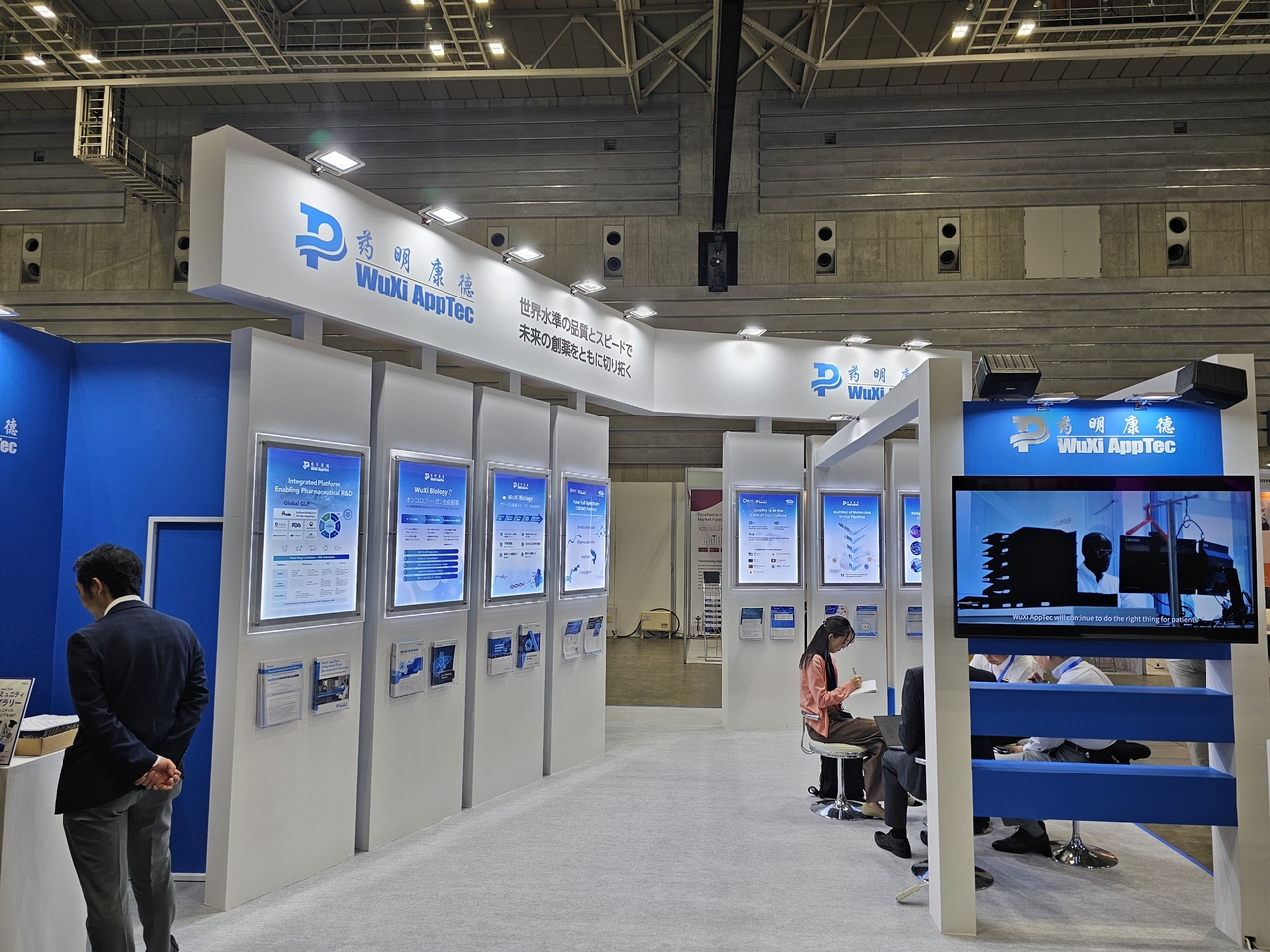
WuXi AppTec, China's largest contract development and manufacturing organization (CDMO), has filed a lawsuit against the US Department of Defense after the Pentagon officially designated it a Chinese military company.
With the final enactment of the Biosecurity Act — which would effectively bar the firm from the US market — drawing closer, the US-China biotech rivalry has spilled into the courtroom, pushing uncertainty across global supply chains to new heights.
WuXi AppTec disclosed through a voluntary filing that it filed suit Thursday against the Defense Department in the US District Court for the District of Columbia, according to the Korea Biotechnology Industry Organization's Bio-Economy Research Center and foreign media reports.
The legal action came just three days after the Pentagon added WuXi AppTec to its list of Chinese military companies under Section 1260H of the National Defense Authorization Act (NDAA) on Monday.
In its disclosure, WuXi AppTec strongly contested the designation, calling it a clear error that does not meet the factual or legal standards required under applicable law and precedent. The company asked the court to declare the Defense Department's designation void, order its cancellation and remove WuXi AppTec entirely from the Section 1260H blacklist.
The company called the lawsuit "an unavoidable measure to protect the interests of our customers, partners, employees and shareholders," and said it would continue to disclose developments in the proceedings.
The Defense Department had earlier published an updated list of 188 Chinese military companies in the Federal Register following due diligence, including BGI Group and WuXi AppTec from the biotech sector alongside Alibaba, Baidu and BYD.
At the time, the Pentagon stated that WuXi AppTec was closely linked to the State Administration for Science, Technology and Industry for National Defense (SASTIND) and the People's Liberation Army (PLA) through indirect ownership by China's State-owned Assets Supervision and Administration Commission (SASAC).
The lawsuit is widely seen as a survival strategy to ward off the severe economic consequences of the Pentagon's Section 1260H designation.
Under the regulation, companies designated as Chinese military companies under Section 1260H are immediately barred from entering into direct contracts with the Defense Department starting at the end of this month. From 2027, purchasing their products or services through third parties will also be prohibited entirely — meaning the countdown to WuXi AppTec's exclusion from the US government procurement market has already begun this month.
The more pressing concern, however, is that the designation is directly tied to the final list of "biotechnology companies of concern" to be confirmed under the Biosecurity Act, which is set to take effect in December.
The Biosecurity Act, passed as part of last year's NDAA, bars US government agencies from procuring equipment or services from designated biotech companies of concern and blocks any contracting that relies on government loans or subsidies. Under the law's provisions, biotech firms on the Pentagon's Section 1260H list are likely to be automatically included as primary targets on the list of biotech companies of concern that the Office of Management and Budget (OMB) is expected to release before December.
The market is also watching closely whether WuXi Biologics — a CDMO spun off from WuXi AppTec's biologics division and separately listed in 2017 — will be swept up in the same regulatory net. The Biosecurity Act explicitly extends its reach beyond a designated company's headquarters to cover its affiliates, subsidiaries and successor entities.
Founded in 2000, WuXi AppTec is Asia's largest CDMO, providing research, development and manufacturing services to more than 4,000 pharmaceutical and life sciences companies worldwide, including more than 1,200 blue-chip clients in the United States.
The company has mounted an extensive lobbying campaign on Capitol Hill to reassure its client base, but with the Pentagon's direct sanctions now in force and a countersuit underway, major global pharmaceutical companies are expected to accelerate their moves away from the firm.
Industry observers expect South Korean CDMO and genomics companies with independent manufacturing infrastructure to emerge as long-term alternative partners, positioning them to reap substantial benefits as the risk of WuXi AppTec's market exit becomes reality.
silverpaper@heraldcorp.com