First session set for June 19 at 3 p.m. at the Gwangjin-gu Office grand hall, targeting 100 residents, association members and promotion committee officials involved in improvement projects
Gwangjin-gu (District Mayor Kim Kyung-ho) will hold the "2026 First Residential Improvement Project Academy" to help residents better understand housing improvement projects and support their smooth implementation.
The session runs from 3 p.m. to 5 p.m. on June 19 at the grand hall on the fifth floor of the Gwangjin-gu Office. It targets approximately 100 participants, including members of improvement project associations and promotion committees as well as residents with an interest in residential improvement projects.
Gwangjin-gu is accelerating efforts to upgrade the urban residential environment, pursuing redevelopment and reconstruction projects across Jayang-dong, Junggok-dong and Gwangjang-dong.
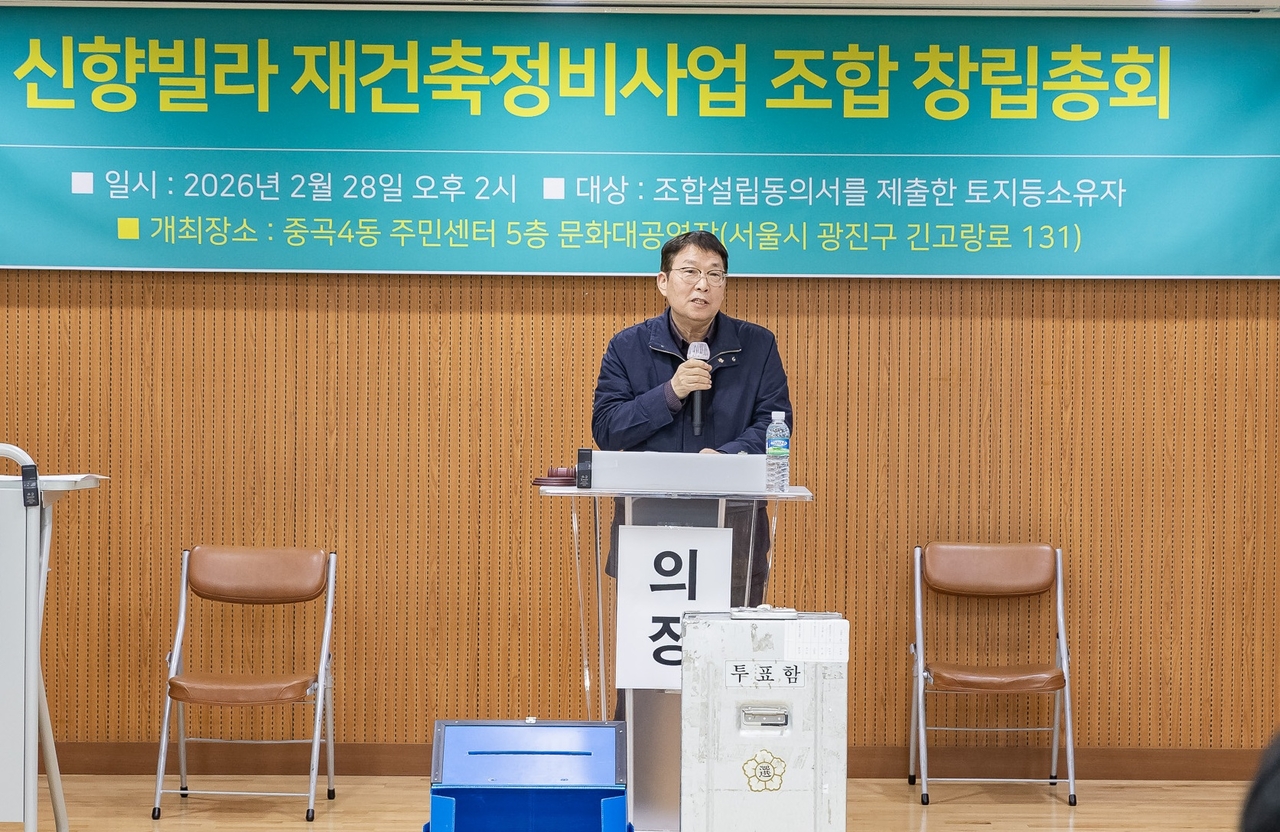
Large-scale improvement projects are taking shape across the district — among them, plans for a high-rise complex of up to 49 stories in Jayang 4-dong Zone A, the Gwangjang-dong Geukdong Apartment and the Junggok 4-dong Sinhyang Villa. Eight "Moa Town" projects and 19 small-scale housing improvement projects in the Jayang, Gwangjang and Guui-dong areas are also underway, tailored to each neighborhood's characteristics, alongside a fast-track integrated planning initiative in Guui 2-dong.
Residential improvement projects involve a lengthy series of steps — zone designation, association formation, project implementation authorization and completion — making an accurate understanding of the relevant regime essential. The district designed the program to reduce friction and conflict among residents stemming from a lack of information, and to support stable, efficient project execution.
A Seoul Metropolitan Government improvement project coordinator will lead the first academy session, focusing on the theme "Understanding the Basics of Improvement Projects." The session will cover the concepts and types of improvement projects, the procedures for each project type, and how to apply — providing the foundational knowledge residents need to navigate the process.
The district plans to run the program three times in total this year, starting with this session. Subsequent sessions will cover public support systems, appraisal and cost-sharing estimates, relocation and demolition, completion authorization, and association dissolution and liquidation.
"Residential improvement projects are vital undertakings that transform residents' quality of life and the future of the community, so accurate information and a thorough understanding are paramount," District Mayor Kim said. "We will strengthen practical guidance and administrative support so residents can easily grasp what these projects involve, and we will work to ensure they proceed smoothly and transparently."
seouldream01@heraldcorp.com