A barren desert is being transformed into an energy production hub.
According to China National Petroleum Corp. (CNPC), the Tarim oil field has generated more than 1.1 billion kWh of clean electricity this year by harnessing solar resources in the Taklamakan Desert. Five concentrated solar power stations are currently in operation at the field, with a combined installed capacity of 2.6 million kilowatts.
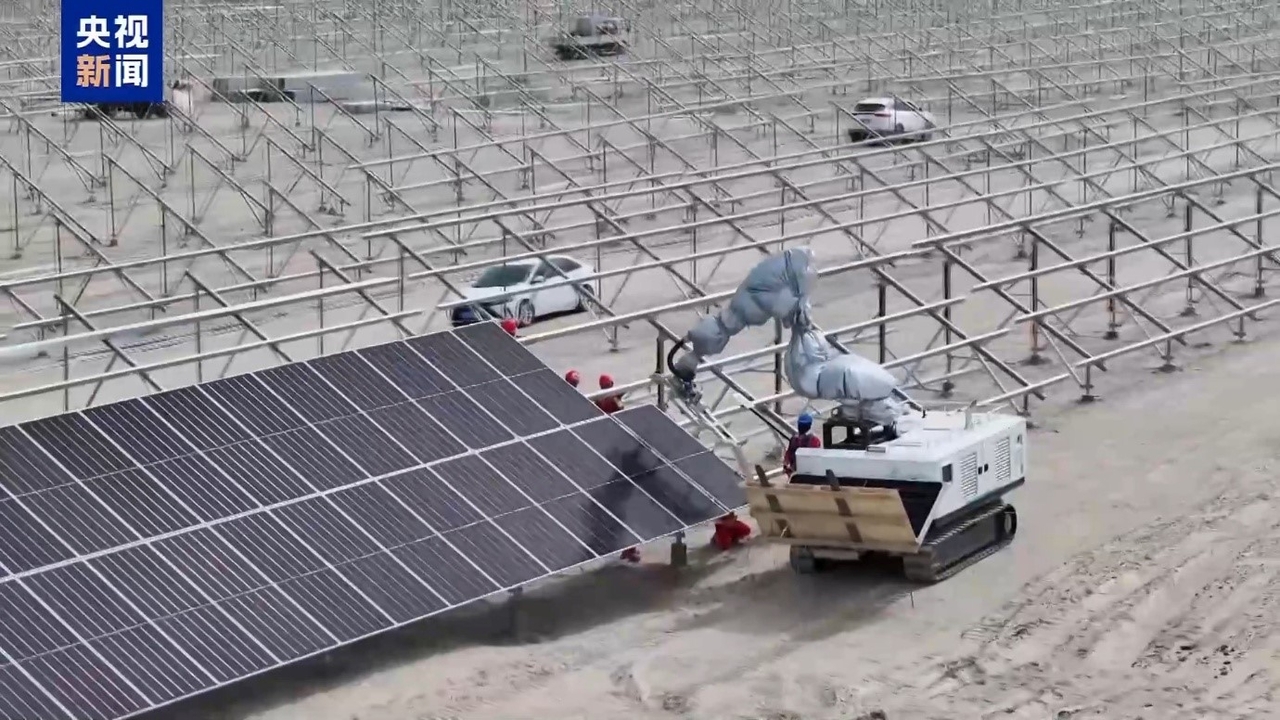
While maintaining stable operation of its existing plants, the Tarim oil field is pushing ahead with new projects. Construction is underway on a 1-million-kilowatt solar power station covering roughly 17.27 square kilometers in the southern Gobi Desert of Ruoqiang County in the Xinjiang Uyghur Autonomous Region. The project has deployed smart panel-installation robots on site, replacing human workers to lay panels across the vast desert terrain and accelerating the pace of construction.
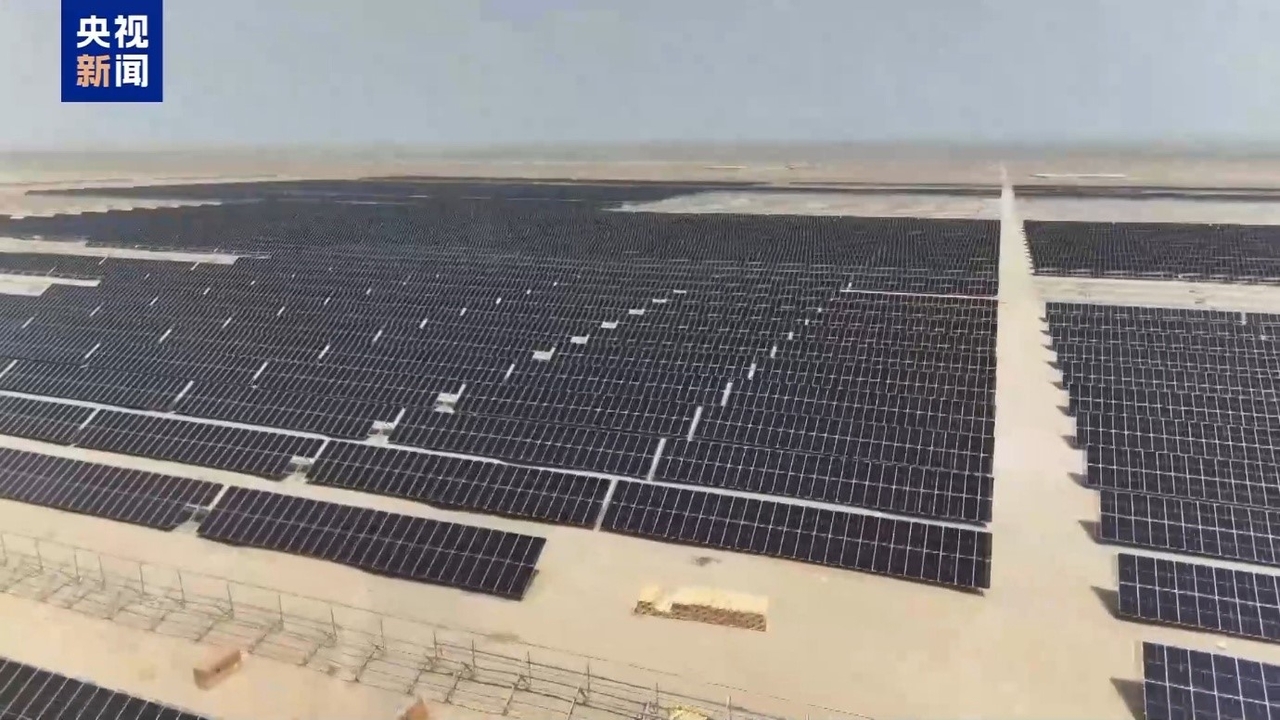
Liang Yulei, head of the renewable energy division at CNPC's Tarim oil field, said the Ruoqiang project is the field's second solar project at the 1-million-kilowatt scale and has now entered the large-scale panel installation phase. "We plan to complete construction and connect it to the grid by the end of November this year," he said, adding that annual output once operational is expected to reach approximately 1.617 billion kWh.
Beyond the Ruoqiang project, the Tarim oil field is building three additional solar power stations with a combined installed capacity of 1.8 million kilowatts. All four new projects are scheduled for completion and operation this year. Once finished, the field's total solar installed capacity will exceed 4.4 million kilowatts.
Long known as a traditional oil and gas production base, the Tarim oil field is reinventing itself as a renewable energy hub by capitalizing on the desert's abundant sunlight — a transformation widely cited as a prime example of how Chinese energy companies are pursuing carbon neutrality.
kim3956@heraldcorp.com