Four years of grassroots governance that changed everyday life in Yeongdeungpo — laying the groundwork for redevelopment, a future education foundation and a garden city
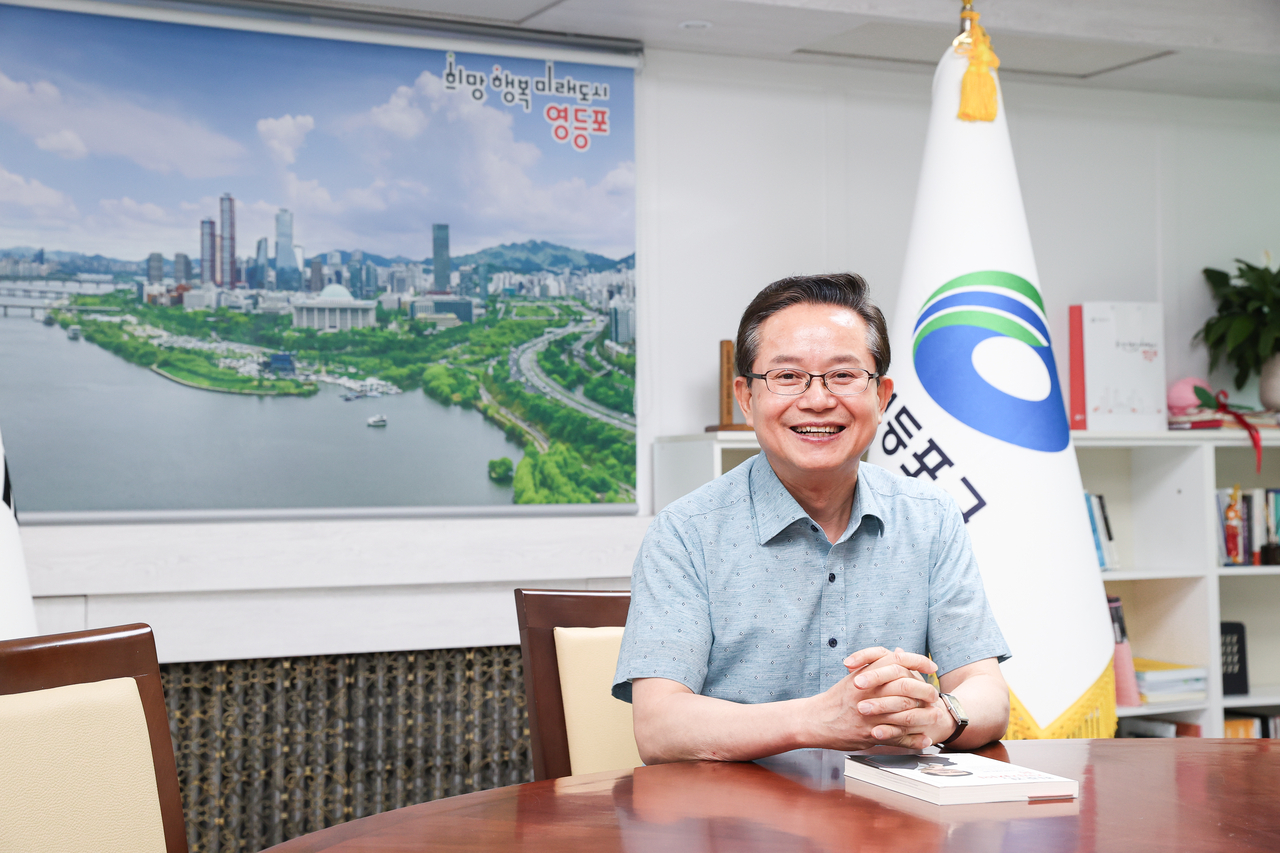
"Residents are the owners, and the district mayor is their worker."
That was the phrase Choi Ho-kwon, district mayor of Yeongdeungpo-gu, repeated most often over the past four years — and it was the guiding philosophy of the eighth elected-term administration.
On Wednesday afternoon, with just 21 days left in his term, Choi joined residents on a visit to Bamseom Island. Wearing work gloves, he pulled weeds and picked up litter alongside volunteers.
<style ref="s0">In this year's local elections, he was not even given the chance to compete in a primary.</style> He could have retreated into bitterness and regret, but he stayed by his residents' side until the end. That refusal to leave the field until the very last moment was perhaps the clearest portrait of Choi Ho-kwon as a public administrator.
When the eighth elected term began, Yeongdeungpo was already one of Seoul's foremost industrial and transportation hubs — but it still had no shortage of challenges when it came to residents' quality of life.
<style ref="s1">From the moment he took office, Choi focused on education and improving the living environment.</style>
He established a future education foundation — among the first of its kind in any autonomous district nationwide — to build an educational infrastructure for the AI era. He also actively supported redevelopment and reconstruction projects to upgrade aging residential areas. Swimming pools, libraries and sports facilities were expanded, and a garden city initiative brought more green spaces and rest areas to neighborhoods across the district.
But what residents remember is not the names of those projects.
What they remember is the swimming pool that appeared near their home, the library their children can walk to, the worn-out housing that became new living space. The everyday changes — being able to exercise, read and enjoy culture without traveling far — are what transformed their lives.
<style ref="s2">The true measure of governance is ultimately found in the lives of residents.</style>
The same was true in public safety.
Choi began his tenure amid record-breaking torrential rains. He went on to push flood-prevention projects — upgrading stormwater pump stations and installing continuous rainwater inlets — to reduce the risk of flooding.
In Daelim-dong, where sanitation complaints had persisted for years, he set up an on-site sanitation office and launched a sweeping environmental cleanup.
Those efforts showed up in the numbers.
During the eighth elected term, Yeongdeungpo-gu's ranking among Seoul's autonomous districts in livability assessments rose from 16th to 4th. The suicide rate fell to one of the lowest levels in Seoul, and the birth rate remained among the highest in the city.
In practice, residents felt the improvement in their quality of life.
<style ref="s3">The real keyword of Choi Ho-kwon's administration was not redevelopment, not the garden city, and not future education.</style>
<style ref="s4">It was "residents."</style>
Throughout his term, Choi handed out his business card personally whenever he met constituents. The card contained a KakaoTalk QR code that connected directly to the district mayor. Residents could send him a message at any time, and he made a point of replying — even if it came late.
"I have to talk directly with residents to understand the problems accurately," he said.
That was the reason he kept repeating it.
Ultimately, the local governance Choi envisioned was not grand politics.
It was listening to residents' frustrations, resolving them and reporting back — changing the problems of daily life one by one.
That is what makes his departure feel all the more regrettable.
He was closer to an administrator than a politician, and he looked to residents first rather than trumpeting his own achievements.
Good politics is judged by election results, but good governance lives on in the memories of residents.
<style ref="s5">Over the past four years, many changes took root in Yeongdeungpo.</style>
The demolition of the Yeongdeungpo Rotary overpass moved into full swing, and the redevelopment of the low-income housing district near Yeongdeungpo Station regained momentum. Ninety-three redevelopment and reconstruction projects are picking up pace, and the future education foundation is preparing children for what lies ahead. The garden city and cultural city initiatives are taking hold as new defining brands for Yeongdeungpo.
<style ref="s6">Yeongdeungpo now stands at the threshold of a great transformation.</style>
The changes begun together with residents will bear their fullest fruit only if they continue without interruption.
Choi Ho-kwon's term is drawing to a close, but the seeds of change he planted will keep growing.
Good governance does not disappear with the end of a term — it is completed in the lives of the people it served.
seouldream01@heraldcorp.com