
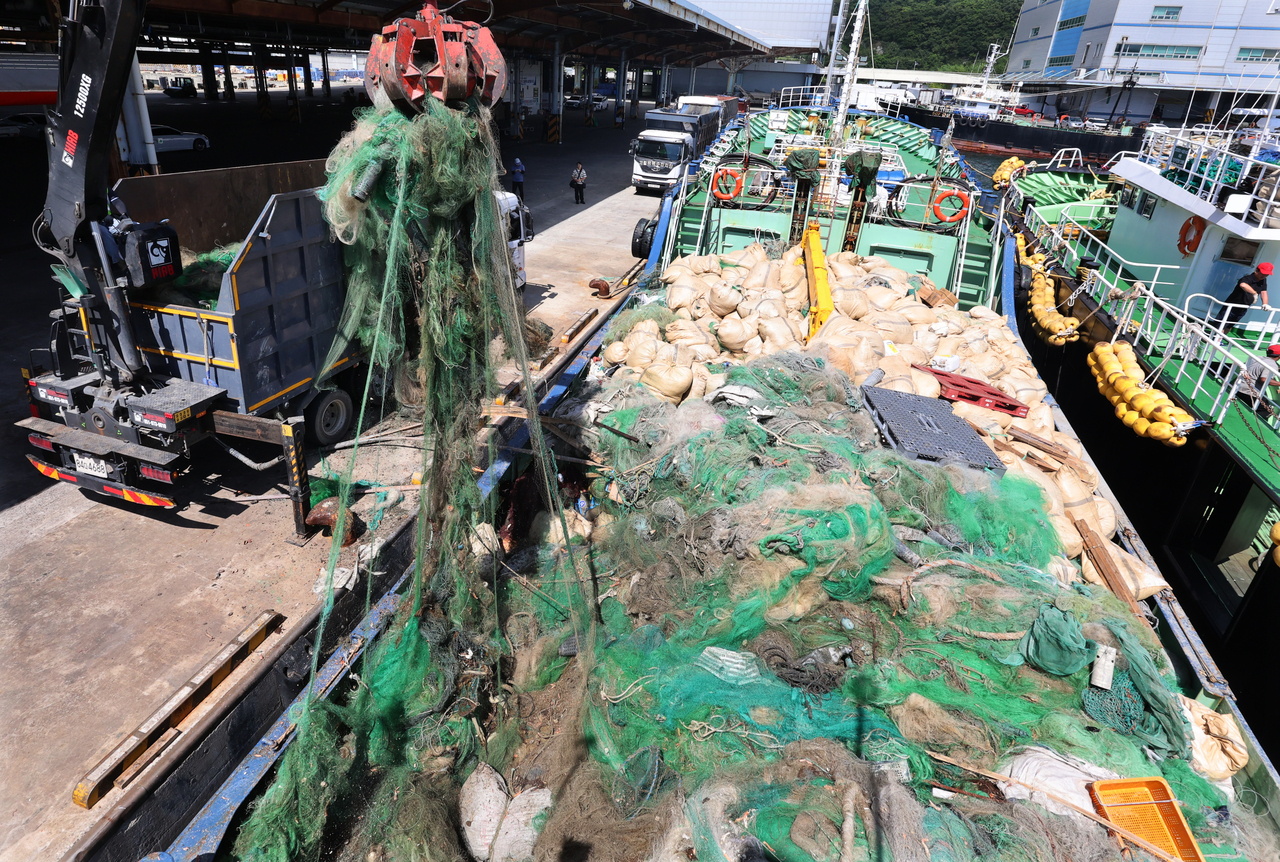
Gangwon Province has ranked first nationwide in participation in a program to collect abandoned fishing gear and protect the marine environment — surpassing South Jeolla Province, South Gyeongsang Province and Busan, which border the sea on two sides, despite Gangwon's coastline running along only its eastern edge and the province being divided by the inter-Korean border.
The Ministry of Oceans and Fisheries selected 54 organizations across nine cities and provinces nationwide to take part in the 2026 Fishing Industry Group Abandoned Gear Collection Project.
Gangwon Special Self-Governing Province led all regions, with 18 organizations from four cities and counties — Gangneung, Donghae, Goseong and Yangyang — chosen to carry out marine pollution prevention efforts aimed at creating clean ocean zones along the East Sea coast.
"Gangwon Special Self-Governing Province has the highest participation rate among fishing industry groups in the country," said Nam Jin-woo, director of the province's marine and fisheries bureau. "We will actively support fishermen to ensure the project proceeds smoothly, and will work to expand voluntary participation in similar initiatives to help establish clean ocean zones along the East Sea coast."
The Korea Fisheries Infrastructure Public Agency organized the project in May. It aims to reduce the generation of abandoned fishing gear — a leading cause of resource depletion and harm to marine life — and to build an efficient collection system through the direct involvement of fishermen who use the gear.
Under the program, fishing industry groups collect abandoned gear from coastal and offshore fishing grounds, sort it by type — fish traps, gill nets, ropes and the like — pack it into distributed sacks and store it at designated collection points. Incentives are paid based on the volume and type of gear recovered.
Gangwon Province expects the volume of abandoned gear collected and processed in 2026 to surge given the high participation rate. Officials anticipate the program will improve safety for fishing vessels, create a cleaner marine environment, advance sustainable ocean use and help build a healthy sea for future generations — all contributing to safer fishing conditions along the East Sea coast.
According to official data, approximately 145,000 metric tons of marine debris are generated in South Korean waters each year, with abandoned fishing gear accounting for roughly 40,000 metric tons — about 28 percent of the total — and identified as a primary cause of marine ecosystem damage and ghost fishing. Ghost fishing refers to the phenomenon in which marine creatures become entangled or trapped in lost or discarded gear and die, with their carcasses then acting as bait that lures and kills additional animals in a chain reaction.
abc@heraldcorp.com




