Parliamentary investigation request reported at Thursday's plenary session; first-ever probe targeting election commission expected; disputes over committee composition and scope foreshadow difficult negotiations; opposition pushes for special prosecutor while ruling party calls for end to 'political offensive'
By Joo So-hyun, The Herald Business
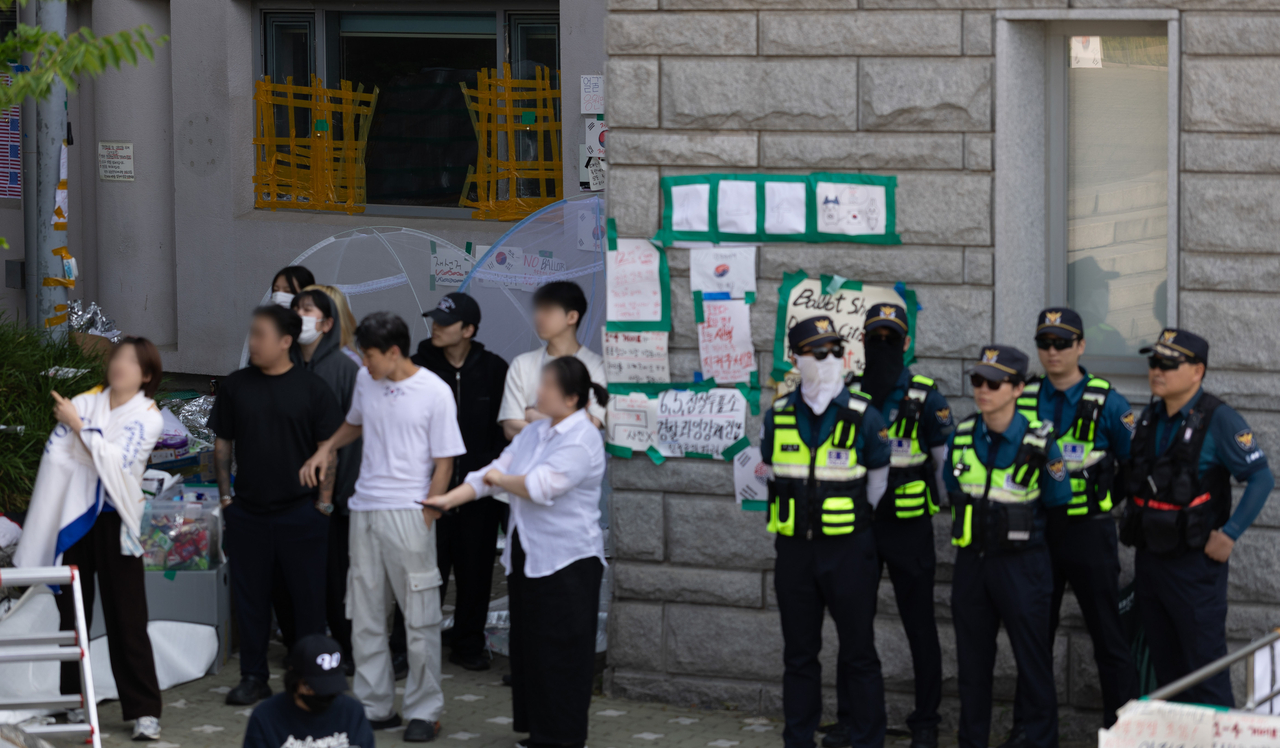
The ruling and opposition parties submitted a parliamentary investigation request to the National Assembly's plenary session Thursday over the ballot shortage that occurred during the June 3 local elections. Once party leaders complete negotiations on the composition of a special investigation committee and the scope of the probe, what would be the first-ever parliamentary investigation targeting the National Election Commission in constitutional history is expected to get underway.
The Democratic Party of Korea and the People Power Party each presented their respective investigation requests at Thursday's plenary session — one calling for a probe into the "truth behind the ballot shortage and reform of election administration," and the other seeking to investigate "the ballot shortage and the police crackdown on protesters."
Both parties had filed the requests on June 8 under the signatures of all their respective Assembly members and agreed to convene Thursday's plenary session.
Democratic Party floor leader Han Byung-do said at a party policy coordination meeting Thursday that the Assembly would schedule another plenary session after the report to adopt an investigation plan and "immediately set the special committee in motion." He added that the Democratic Party would "take full responsibility for the entire process — from uncovering the truth to punishing those responsible and preventing a recurrence."
With the requests formally submitted, the two parties will now negotiate to form the special investigation committee. The committee will then adopt an investigation plan, and once the full Assembly approves it, the probe will begin in earnest.
Both parties agree on the need for a parliamentary investigation, but disagreements over the committee's composition and the scope of the inquiry are expected to make negotiations difficult. The Democratic Party wants committee seats allocated in proportion to each parliamentary group's size, while the People Power Party is pushing for equal representation and insists that the PPP chair the committee.
Newly elected PPP floor leader Jeong Jeom-sik, attending a supreme council meeting Thursday, said the investigation "must be led by the People Power Party, with the opposition chairing the committee and seats divided equally between the two sides, in order to get to the full truth."
The two parties also differ on the scope of the investigation. The Democratic Party wants to focus on identifying the cause of the ballot shortage, determining whether any laws were broken, and drawing up measures to prevent a recurrence. The PPP wants the probe to also cover the validity of the election results and the police's use of force against protesters.
Whether the parties can agree on a special prosecutor for the election commission is another variable. Following its investigation request, the PPP on June 9 introduced as its official party bill the "Special Prosecutor Act to Investigate Allegations of Fraud in the 9th Nationwide Simultaneous Local Elections and Violations of Citizens' Voting Rights." The bill would give the PPP the right to recommend two candidates, one of whom the president would appoint as special prosecutor.
The Democratic Party, by contrast, believes there is no rush to appoint a special prosecutor before seeing the results of the parliamentary investigation and a joint police-prosecution inquiry. Rep. Park Gyun-taek said on KBS Radio Thursday that the PPP's push for a special prosecutor from the outset amounted to a "political offensive," arguing that the truth would emerge clearly once both parties participated in the parliamentary probe and the joint police-prosecution investigation got underway. "If public suspicion grows further and there are calls that the police-prosecution inquiry and the parliamentary investigation cannot be trusted, a special prosecutor is always an option — but insisting on that first seems to be getting the order wrong," he said.
Floor leader Han also urged the PPP to stop trying to exploit "a matter of grave national importance for political gain," saying the investigation "is not a question of political advantage or disadvantage." He called on the party to join forces in finding "a fundamental solution through identifying the cause and reforming the election commission."
PPP floor leader Jeong fired back, saying the joint police-prosecution investigation body under "the Lee Jae-myung administration" had "completely lost its credibility" during the earlier Unification Church gate investigation, which he characterized as an effort to shield Rep. Jeon Jae-soo. "The government and ruling party should abandon the gimmick of a joint investigation body and accept a special prosecutor," he said.
addressh@heraldcorp.com