US military says strikes were proportional response to Apache downing; Iran warns foreign forces to leave the region; renewed hostilities cast shadow over nuclear negotiations
Armed conflict has resumed between the United States and Iran amid last-minute efforts to finalize a nuclear deal, triggered by the downing of a US Army Apache helicopter over the Strait of Hormuz. The flare-up comes as negotiators were said to have made significant progress on limiting Iran's nuclear program in exchange for sanctions relief, deepening both hopes for an end to hostilities and fears of broader escalation.
President Donald Trump said Tuesday on social media that he had received reports that a US Army Apache attack helicopter patrolling over the Strait of Hormuz had been shot down by Iran. "The two pilots are safe, but the United States has no choice but to respond to this attack," he said.
Iran did not acknowledge shooting down the helicopter but pushed back sharply against the prospect of US retaliation. Iranian Foreign Minister Abbas Araghchi warned that any attack would be met with decisive punishment. "If you want safety, leave our region," he said.
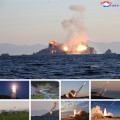
US forces subsequently struck Iranian facilities near the Strait of Hormuz, and Iran fired missiles and drones at American targets in the region in response.
US Central Command said the strikes were a proportional act of self-defense in response to the Apache downing. In a statement posted to its X account, CENTCOM said it had completed "a self-defense strike" in response to Iran's downing of the US Army Apache helicopter, adding that US Air Force and Navy fighter jets used precision-guided munitions to strike Iranian air defense facilities, above-ground control stations and surveillance radar sites near the Strait of Hormuz.
Iran retaliated immediately. The Islamic Revolutionary Guard Corps claimed it had struck the US Navy's Fifth Fleet, based in Bahrain, and said it was targeting additional American military bases across the Middle East.
Despite the renewed armed conflict, both sides said they were keeping diplomatic channels open. Trump told the BBC on Monday that "we are very close to making a very powerful deal," adding, "No nuclear weapons. No anything else." He also said of Israeli Prime Minister Benjamin Netanyahu, "When I tell him to do something, he does it," suggesting he was keeping Israeli military action — which could complicate the talks — in check.
According to The New York Times, the US and Iran are in final-stage negotiations over four key issues: the duration of a uranium enrichment suspension, the disposal of enriched uranium, the dismantlement of nuclear facilities, and an international inspection framework. The two sides are also at odds over how to release approximately $25 billion in frozen Iranian assets.
The US government still appears to favor a negotiated settlement. Trump's Middle East envoy Steve Witkoff and former senior White House adviser Jared Kushner recently visited Oak Ridge National Laboratory to review options for handling nuclear fuel — a sign that Washington is already preparing for the implementation phase that would follow any agreement.
Uncertainty over the talks remains, however, as the Apache incident and ongoing military clashes between Israel and Iran continue to cloud the outlook. Analysts say the scale of the US response could prove a decisive turning point for the ceasefire negotiations.
sjy@heraldcorp.com