Customers who entrusted gold and cash for retirement savings say owner promised dividends, then disappeared
By Jung Joo-won, The Herald Business
"Because of my mom losing even my daughter's first-birthday ring … I'm sitting here thinking about how to start cutting back, starting with hagwon."
Jung Ji-eun (a pseudonym), a woman in her 40s, stood outside Hyehwa Police Station on Tuesday and struggled to continue speaking. She had been raising her third-grade daughter and had originally planned to take parental leave this summer to spend time with her child.
Instead, she said, she now faces the reality of having to become "a breadwinner overnight" — a situation she described as deeply unfair to her daughter. Everything from her daughter's first-birthday gold ring to her severance pay and retirement savings had become tied up in a single jewelry store in Jongno.
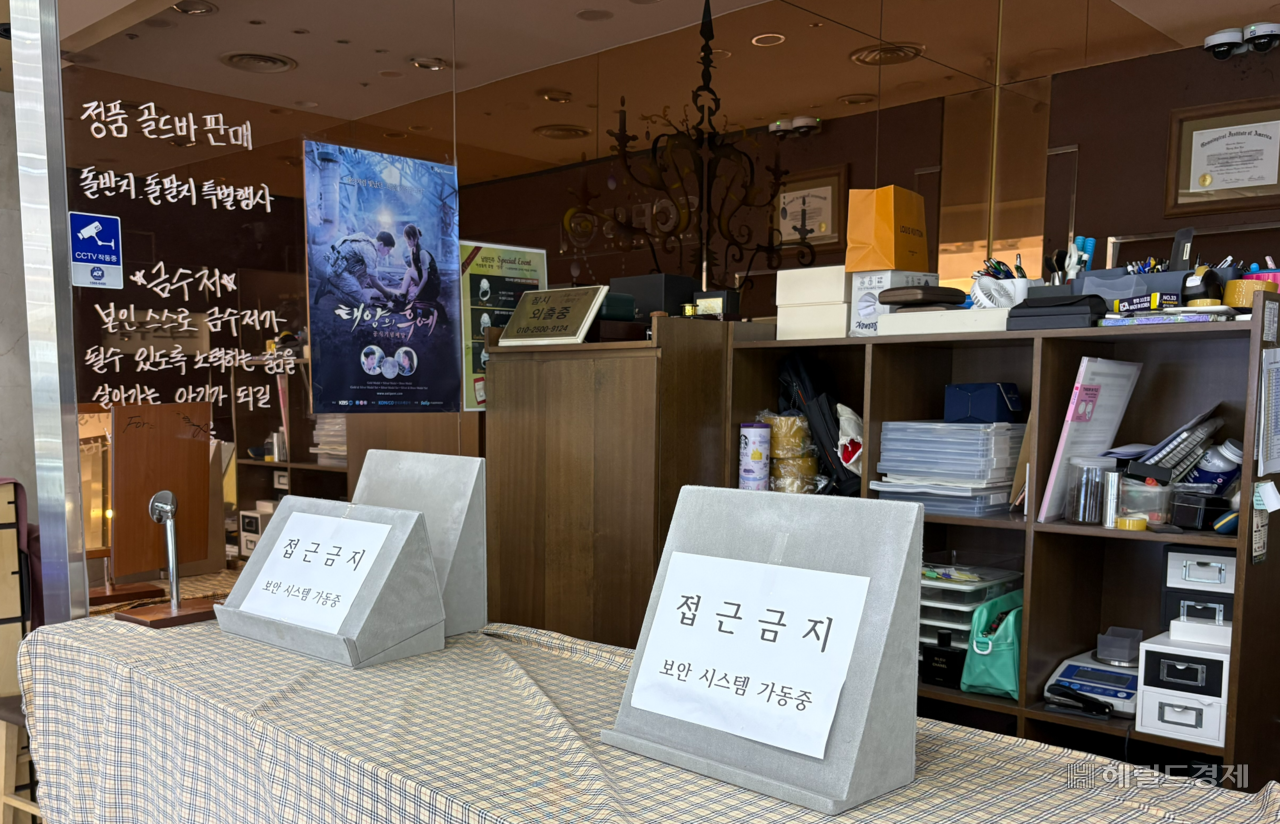
The owner of that store — a man in his 50s identified only by the surname Lee, who ran a shop on the first floor of H Jewelry City in Jongno-gu, Seoul, for more than 15 years — is suspected of collecting cash and gold from customers with promises of investment returns and dividends before vanishing. According to police and victims, more than 100 complaints have been filed since the first was submitted on June 3. Police have consolidated the cases into a single investigation.
A decade of trust: Customers thought they were saving for their children
Jung's relationship with Lee dates to 2017, when she first visited the store to have a first-birthday ring made for her daughter. Lee was personable and easy to talk to, she recalled — he spoke about buying gold for his own children and described it as an asset that could secure their futures.
Jung had been buying herself small gold rings as personal gifts on birthdays and anniversaries since before her marriage. Over the years she accumulated her daughter's first-birthday ring, bracelets, necklaces and a gold key received from both sides of the family, as well as gold given by her employer to mark years of service. She thought of it as steadily building an inheritance for her child.
After nearly a decade, her collection had grown to well over 100 don (375 grams). In February last year, Lee proposed turning all of it into gold bars at no fabrication charge, as a reward for their long relationship. Jung handed over everything she had saved — including her daughter's first-birthday ring.
The following month, Lee came to her with another offer: leave the gold with him and he would pay monthly dividends. For every 100 don deposited, customers would receive a fixed monthly payment. "All dealers do this," Lee told her.
"He said it was a tip he was sharing because we had done business together for so long," Jung said. "H Jewelry City is an open space with many other jewelry stores around it, so it seemed like a natural way to do business."
The first dividend payment arrived as promised. She put part of it into a savings account and used some to buy more gold. As gold prices rose, the value of what she had deposited grew with them. It seemed like a sound investment. "I thought it was good information, so I quietly passed it on to a few close people," she said. "Now I feel deep guilt wondering whether they've been hurt too."
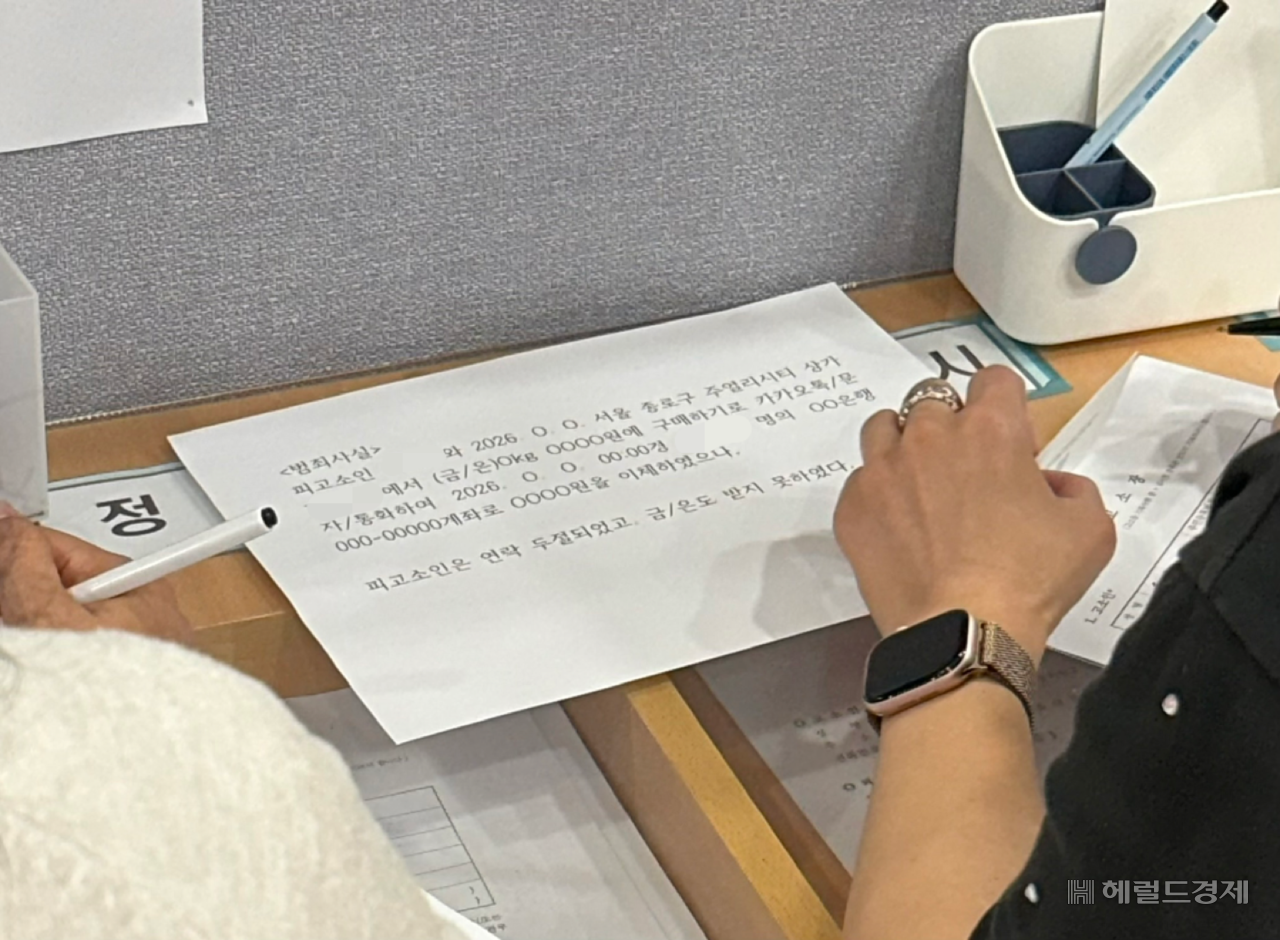
Lee also used a second scheme: persuading customers to pay upfront for gold at below-market prices on the promise of delivery at a later date, on the expectation that prices would rise further. Son Moo-ssi, a woman in her 50s who filed a complaint at Hyehwa Police Station on Wednesday, lost approximately 10 million won ($6,550) through this "buy now, receive later" arrangement.
"Other stores had no customers, but that place in particular was always busy," Son said. "The owner told me I could buy gold cheaper than the market price if I picked it up three months later, so I paid in advance and signed a contract." Son had been scheduled to receive her gold in July, but Lee disappeared before the delivery could be made.
A man in his 50s identified by the surname Kim, who said he had done business with Lee for nearly 20 years, lost approximately 7.2 million won through the same method. "It was the place I always went to for first-birthday rings and gold rings," Kim said. "It's more shocking because I knew him for so long."
Lee used these two approaches to draw victims into investments and transactions. Losses ranged from small sums to hundreds of millions of won, and some victims are believed to have pooled money with acquaintances to invest together.
Retirement plans in ruins, victims left with guilt and anxiety
Warning signs had appeared about two months earlier. Lee told customers his bank account had been frozen due to a voice phishing incident. "He kept saying he couldn't buy gold to return because his account was blocked, and kept delaying," Jung recalled. "I was so worried I thought he might do something drastic."
Jung found herself consoling Lee instead. She even accepted his offer to sell her gold at a price far below market value as compensation for her patience. Phone calls continued as recently as June 2. "I will make sure your case is resolved," Lee told her. After that, contact went silent.
She reached out to the building management office and sent KakaoTalk messages, but received no reply. "That's when I knew something had gone seriously wrong," she said.
More than 150 people have joined an open group chat set up by victims. They said they cannot even determine the full scope of who has lost how much, and described a pervasive sense of anxiety.
Some in the group chat called for a coordinated response, but police advised victims to file individual complaints first. "The police seemed to recognize that the scale of the case was larger than expected," Jung said. "Recently they have been contacting victims to schedule interviews."
![Gold products on display at a jewelry store in Seoul. [Yonhap]](https://wimg.heraldcorp.com/news/cms/2026/06/12/rcv.YNA.20251009.PYH2025100903280001300_P1.jpg)
"I had an ordinary plan to use gold to build a stable retirement, and it collapsed in an instant," Jung said. "I was going to take parental leave and spend time with my daughter, but now I have to abandon all of that." She added that she feels sorry for her daughter that providing for the family must now come first.
Neighboring merchants at H Jewelry City said they were stunned. One vendor who operates a store in the building said: "This is someone who ran a business here for 15 or 16 years — I never would have imagined it. I heard he was paying high interest on gold deposits. I suppose he must have run short of funds."
An industry expert said the practice of managing customer assets to pay dividends or interest is not a standard way to operate a jewelry store. Yoon Jung-hyun, 52, who runs a precious metals retail business, said: "There's a possibility he built trust early on by paying high interest, then later ran it like a Ponzi scheme, using new money to cover old obligations."
Attorney Yang Hee-jae of IBS Law Office said recovering money would be difficult in practice if the suspect holds no assets in his name. "Whether he has hidden assets is something that will need to be established through the investigation," Yang said.
jookapooka@heraldcorp.com