
Seoul Craft Museum and UNESCO Asia-Pacific center co-host expert workshop
Seoul, Wonju and Namwon to convene on joint inscription strategy
Finely crafted lacquerware and mother-of-pearl inlay pieces are rarely found outside Korea. Iran and Saudi Arabia — heirs to the Persian and Sassanid traditions that once had close ties with the Silla and Goryeo kingdoms — preserve some lacquerware objects, but those pieces survive only as rare cultural relics. Unlike in Korea, no living lineage of artisans has carried the craft forward, nor does it circulate as a living art form in everyday life.
Korea is now moving to seek UNESCO Intangible Cultural Heritage of Humanity status for its lacquerware culture.
An international academic symposium titled "Current Status and Challenges in the Transmission of Lacquerware as a Shared Asian Heritage" and an accompanying expert workshop on shared lacquerware culture are set to run June 16-18 across Seoul, Wonju and Namwon. Co-hosted by the Seoul Craft Museum and the UNESCO Regional Centre for the Safeguarding of Intangible Cultural Heritage in Asia and the Pacific, with the participation of Wonju and Namwon, the three-day event is expected to produce concrete strategies and a roadmap for the inscription bid.
The symposium and workshop are part of an international cooperation initiative aimed at pursuing a joint UNESCO inscription for Asian lacquerware culture. On June 16, the opening day, participating countries will deliver thematic presentations on their respective lacquerware traditions at the Seoul Craft Museum.
From June 17, representatives of participating institutions will take part in expert workshops and community exchange programs. The programs are designed to give specialists from across Asia firsthand exposure to Korea's lacquerware production and transmission sites and to share cases of community-based traditional craft preservation.
On June 17, participants will visit Wonju — the country's only domestic lacquer production site and the heartland of mother-of-pearl lacquerware culture.
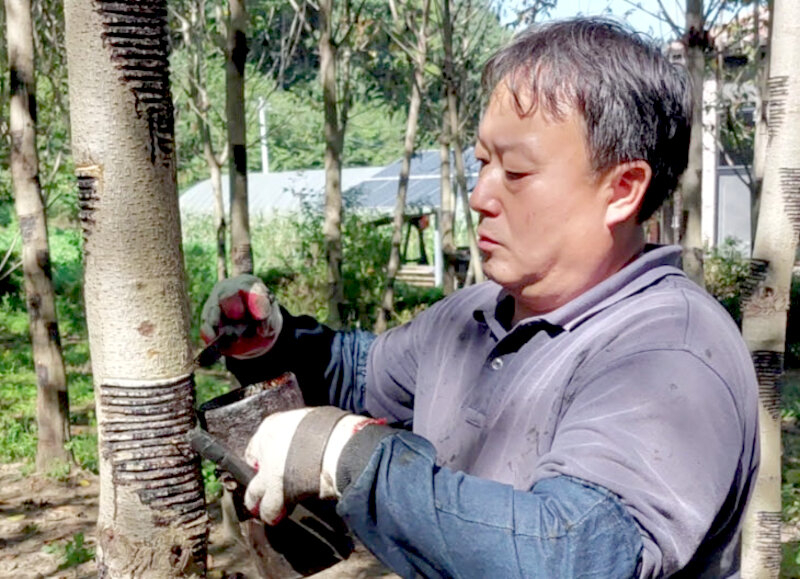
They will tour lacquer tree plantations and harvesting sites to observe the raw lacquer extraction process. At the Wonju Lacquer Culture Center, they will attend public demonstrations by Park Won-dong, a master of lacquer refining, and Yang Yu-jeon, a master of painted lacquerware, both recognized holders of Gangwon Province intangible heritage.
Participants will also view past prize-winning works from the Wonju Korean Lacquerware Craft Competition, which has run for 25 years. At Wonju City History Museum, they will examine regional lacquerware pieces — including works by the late Ilsa Kim Bong-ryong, a former holder of the national intangible heritage designation for mother-of-pearl inlay — to deepen their understanding of how Korea's najeon chilgi tradition has been passed down.
An expert workshop at Wonju City History Museum will focus on practical discussions about drafting a joint inscription application and mapping out a future implementation roadmap. Participating countries plan to use the sessions to share the current state of lacquerware transmission in their respective nations and to develop concrete plans for joint research, investigation and international cooperation.
Lacquerware is itself a significant cultural heritage, and it also plays a role in preserving other cultural heritage objects.
abc@heraldcorp.com




