Oh Sung-jin, UC Berkeley professor and 2026 Ho-Am Prize laureate
Finished middle school, high school and KAIST early — became a US professor at 31
Disliked math until a boarding school friend changed everything
Samsung scholarship let him study abroad: 'I could focus on research without worrying about money'
Used math to unlock secrets of black holes; watched as a future Fields Medal candidate
Invited to speak at the 'math Olympics' in Pennsylvania in July
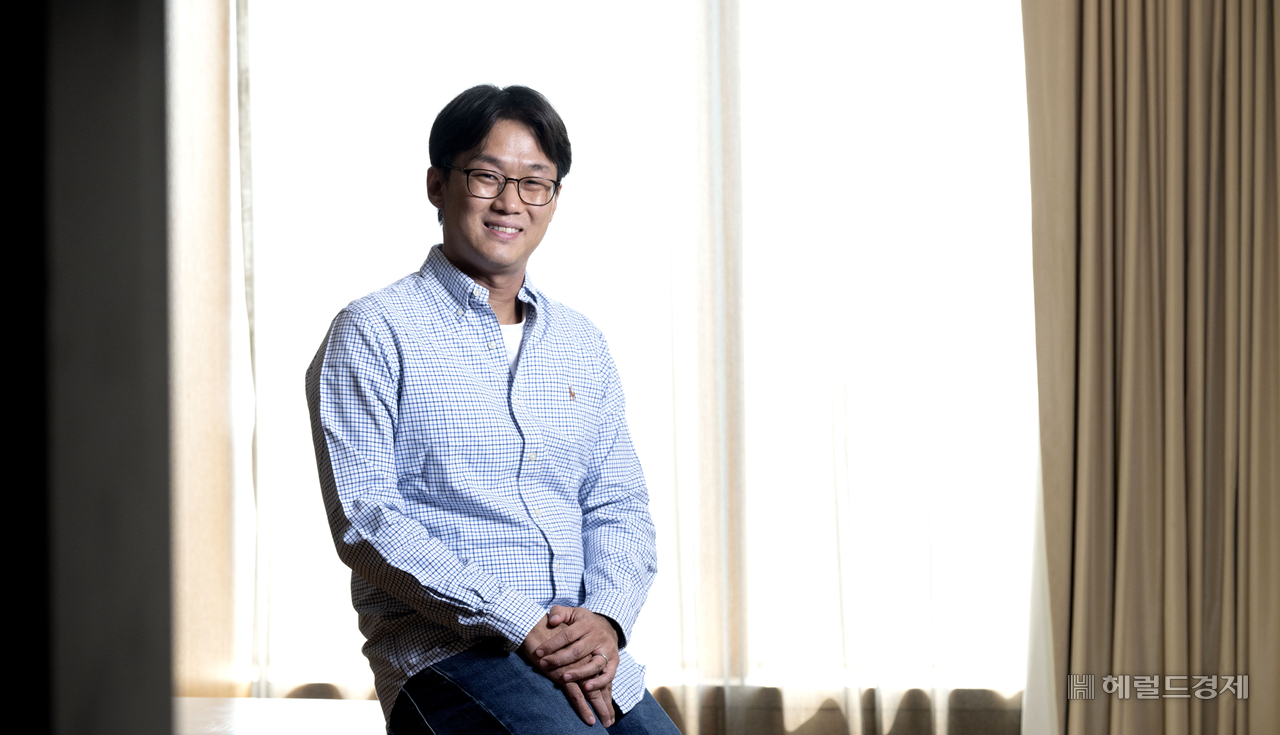
At 14, the boy passed the entrance exam for Korea Science Academy — the country's first school for gifted students — completing middle school early. He then graduated from the academy six months ahead of his peers and enrolled at KAIST at 17.
He finished the KAIST undergraduate program in just two years and set foot in the United States at 19 on a Samsung scholarship. After earning his doctorate in mathematics from Princeton University, he joined the faculty of UC Berkeley's mathematics department in 2019 — a university that has produced more than 100 Nobel laureates. He was 31 at the time.
Oh Sung-jin spent his school years skipping grade levels and collecting "youngest ever" distinctions. He stepped back into the spotlight when he was named the 2026 Ho-Am Prize laureate in the physics and mathematics category of the science award — the 36th edition of the Samsung Ho-Am Prize.
The Korea Herald met Oh the day after the award ceremony, on June 2, at the Shilla Hotel in Jung-gu, Seoul. Looking young enough to pass for a college student, he currently teaches mathematics at UC Berkeley while maintaining an active research program.
Oh arrived in South Korea on May 29 for a break, but there has been little rest since the Ho-Am ceremony. He was already deep in preparations for the Korean Mathematical Society's international conference marking the society's 80th anniversary later this month, and for his invited lecture at the 2026 International Congress of Mathematicians in Pennsylvania in July.
From math-avoider to mathematician — a friend made the difference, and his father backed the switch
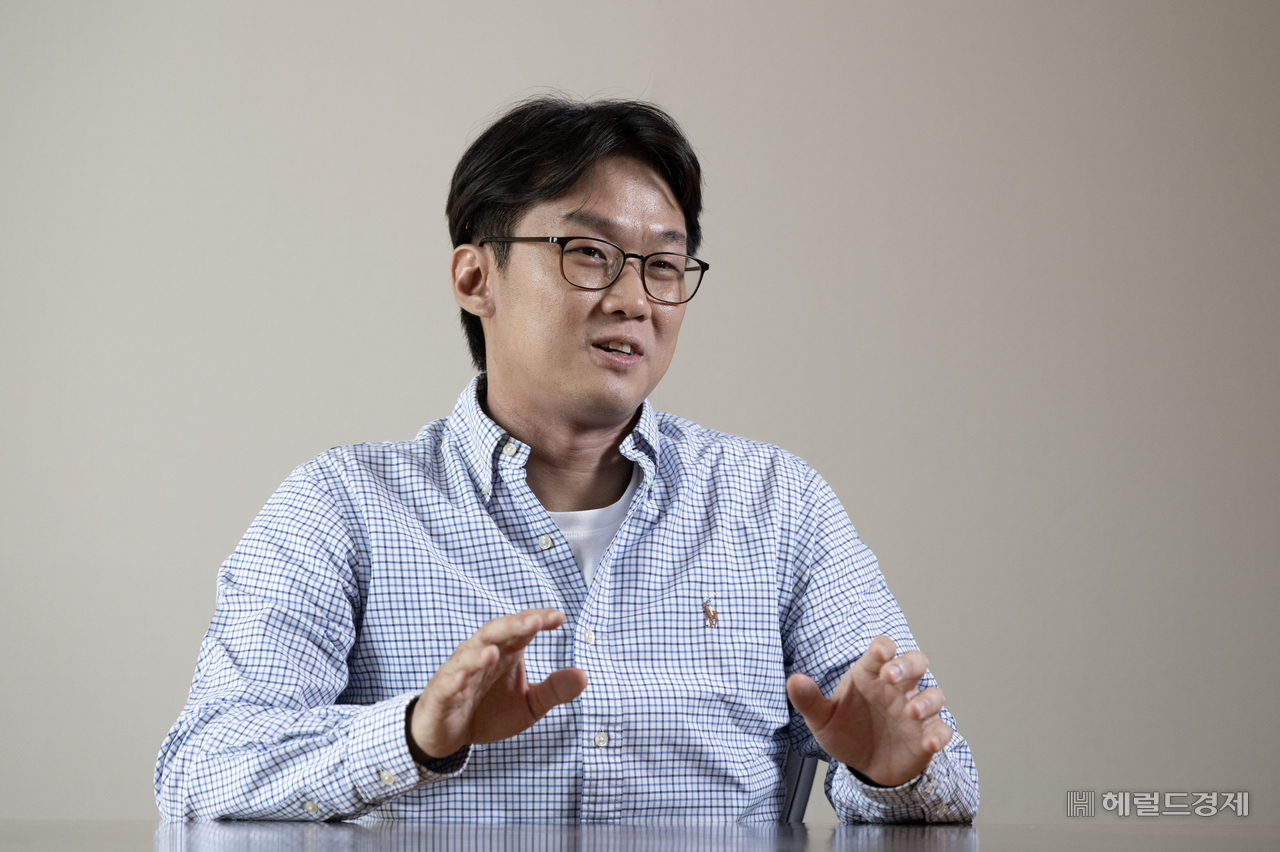
As a student, Oh disliked mathematics and was passionate about biology instead. His original dream was to follow his father into medicine. That changed in his second year at Korea Science Academy, when he befriended a classmate who loved math.
"In high school we would stay up all night talking about mathematics," Oh said with a laugh. "I had been planning to go to medical school, but that friend's influence turned me into a mathematician. And my influence turned him into a doctor. Even now, when we talk, we tell each other we found our calling thanks to the other person."
Oh described the world of mathematics — the process of rigorously proving how a proposition holds — as "beautiful." Captivated by the language of math, he decided to pursue it seriously during his time in the Department of Mathematical Sciences at KAIST.
His father respected the decision. "My parents didn't oppose it, but I think they quietly supported me while worrying at the same time," Oh said. "They don't worry anymore. With this award, they've been receiving a lot of congratulations from people around them."
At the award ceremony itself, Oh used his acceptance remarks to thank the dormitory friends who first showed him the joy of mathematics in high school, the mentors who opened the path for him, and his parents for supporting his switch to becoming a mathematician.
His wife, Park Ji-hyun — a fellow Korea Science Academy alumna who holds a bachelor's degree in physics from KAIST and a doctorate in physics from Princeton — said of her husband: "I still remember how full of curiosity he was as a student. He's exactly the same now."
Samsung recognized him early — 'Thanks to that support, I could focus purely on research'
![The 36th Samsung Ho-Am Prize ceremony was held at the Dynasty Hall of the Shilla Hotel in Seoul on June 1. Pictured from the back row, clockwise: Oh Sung-jin and his wife (science award, physics and mathematics), Oh Dong-chan and his wife (social service award), Yoon Tae-sik and his wife (science award, chemistry and life sciences), Ho-Am Foundation Chairman Kim Hwang-sik, Seoul National University President Yoo Hong-lim, Kim Beom-man and his wife (engineering award), soprano Jo Su-mi (arts award), Eva Hoffman and her husband (medical award), and Samsung Electronics Chairman Lee Jae-yong. [Provided by Ho-Am Foundation]](https://wimg.heraldcorp.com/news/cms/2026/06/10/news-p.v1.20260602.660944f8756e4b80a05d9c5f2d87ed69_P1.jpg)
Established in 1990 to honor the spirit of Samsung founder Lee Byung-chul, the Ho-Am Prize selects winners each year in five categories — the science award (physics and mathematics; chemistry and life sciences), the engineering award, the medical award, the arts award and the social service award — presenting each laureate with a medal and 300 million won (about $198,000).
The Ho-Am Foundation assembled a 46-member judging committee of domestic and international experts last December and conducted three rounds of evaluation, followed by an assessment by an advisory panel of overseas scholars including Nobel laureates. The winners were selected after four months of deliberation.
"I am deeply moved to be recognized by respected colleagues and scholars in my field," Oh said. He added that he was especially grateful that the science award has been split into physics and mathematics, and chemistry and life sciences since 2020. "I got the impression that they believe in the importance of fundamental disciplines like mathematics and physics," he said.
Oh's connection with Samsung dates to 2008, when he entered Princeton's graduate program on a Samsung scholarship and completed his doctoral dissertation while focusing entirely on research.
In 2017, his research project was selected for support under the Samsung Future Technology Cultivation Project, allowing him to pursue deeper work. "It was a very long-term research effort," Oh said. "Because I received five years of funding, I didn't have to worry about research costs. My recent results also trace back to that project."
For the Ho-Am ceremony, Oh invited not only his wife and parents but also his collaborators in South Korea, sharing the joy of the award with them.
Invited to the 'math Olympics' in July — and watched as a future Fields Medal candidate
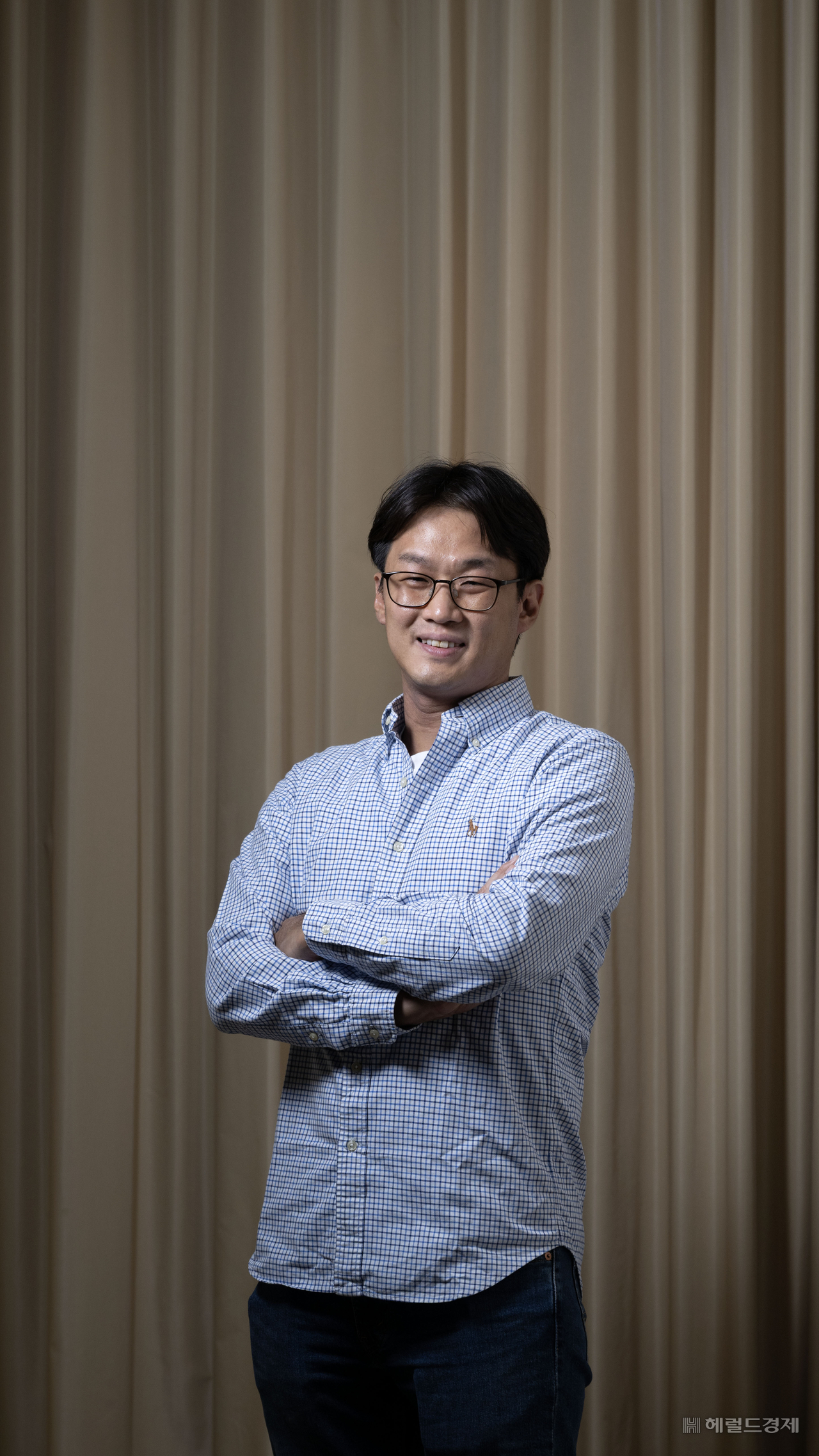
After years of calculating how waves behave inside and outside black holes, Oh discovered that waves decaying outside a black hole amplify explosively the moment they cross inside. The finding provided the first mathematical proof that the existence of a gateway to another universe — long theorized — is highly unlikely.
"Newton invented calculus because he wanted to calculate and describe the movement of planets in the night sky," Oh said. "The simple one-line formula F=MA contains the entire universe within it. I feel the mathematical beauty that comes from that kind of depth."
He added: "It's not that I have a particular interest in physics — it's more that physics seems to generate a lot of good problems that meet the standards of pure mathematics."
The global academic community took notice of Oh's work using nonlinear hyperbolic partial differential equations to characterize the instability inside black holes — a breakthrough toward solving one of modern mathematics' hardest open problems — and invited him to speak at the 2026 International Congress of Mathematicians.
The congress, held every four years, is often called the "math Olympics." June Huh, a Princeton University professor who received the 2021 Ho-Am Prize in physics and mathematics, went on to win the Fields Medal — mathematics' equivalent of the Nobel Prize — at the following congress, becoming the first Korean to do so. Oh is now widely regarded as a future Fields Medal candidate.
Single-minded about math — 'I want to be remembered as someone who made hard problems easy'
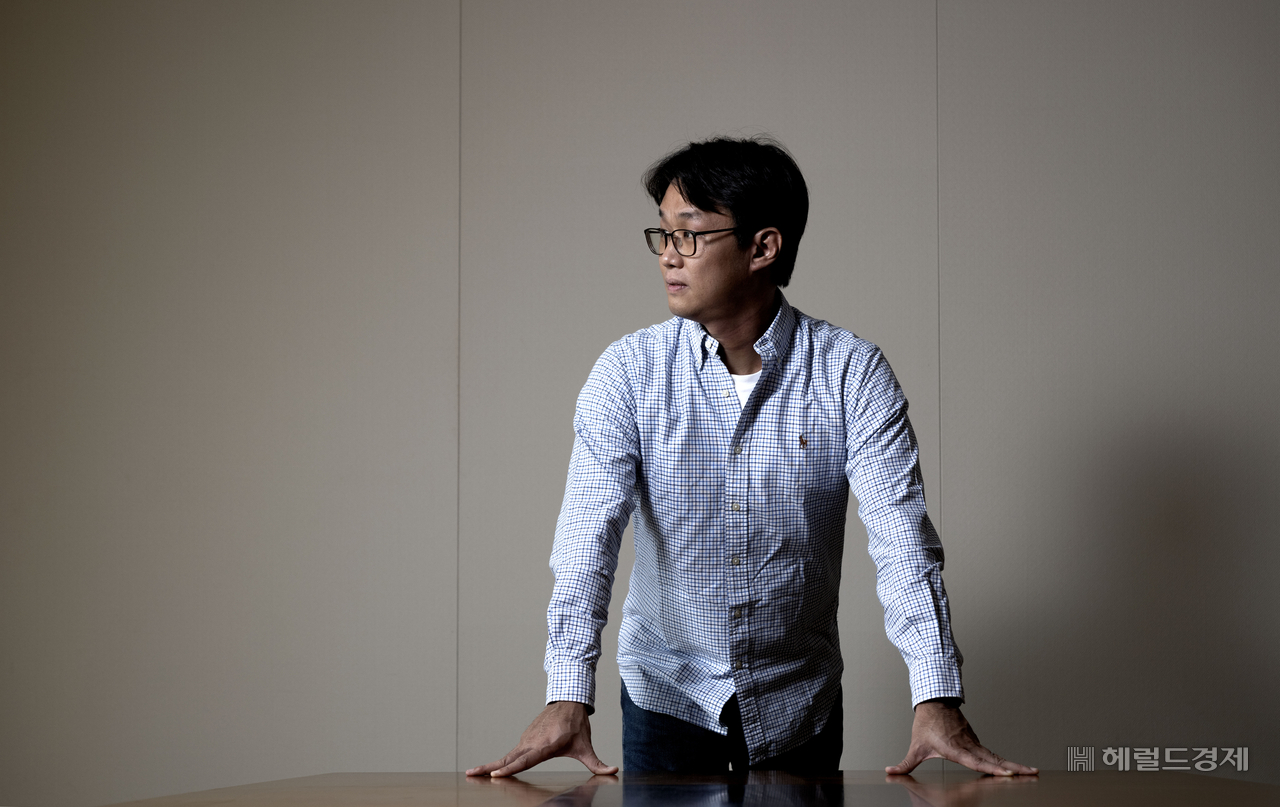
Asked how students who have given up on mathematics — a phenomenon common enough in South Korea to have spawned its own slang — might find a way back to the subject, Oh gave a surprising answer: "It matters who is around you."
"In high school, talking with friends who found math fun amplified my own enjoyment of it," he said. "Without those experiences, I don't think I would have fallen this deeply into mathematics."
Even now, as a working mathematician, he said he places great importance on communication with the people around him.
"In collaborative research, you always get ideas through conversation," Oh said. "Even with someone who knows nothing about mathematics, talking things through can help develop your thinking."
Asked whether anything rivals his love of mathematics, he paused before answering: "I don't think so. I'm pretty single-minded." He added that he used to enjoy basketball but has had to give it up because sitting at a desk for long stretches of research has left him with back problems.
Asked what kind of mathematician he hopes to be remembered as, he said: "I want to be remembered for work where people look back and say that problems which were once incredibly difficult became truly easy problems through Oh Sung-jin's contributions."
Even during his stay in South Korea, Oh has continued working at a research office at the Korea Institute for Advanced Study. He plans to return to the United States with his wife and son in early July.
A timeline of Oh Sung-jin's career: born in 1989; early graduation from Sinmok Middle School in Seoul in 2004; early graduation from Korea Science Academy in 2006; early graduation from KAIST's Department of Mathematical Sciences in 2008; doctorate in mathematics from Princeton University in 2013; Young Scientist Award from the Korean Academy of Science and Technology in 2016; UC Berkeley mathematics professor from 2019; winner of the 36th Samsung Ho-Am Prize in science (physics and mathematics) in 2026.
joze@heraldcorp.com