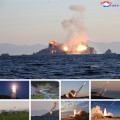
Military satellites — commonly known as spy satellites — are spacecraft used for military purposes including reconnaissance, communications, early warning and navigation. They were first launched by the United States and the Soviet Union during the Cold War in the 1970s, and were used primarily for aerial photography over enemy territory, missile launch detection and military communications. In the early days of space development, most satellites were built for military ends, and the intense superpower competition of that era is credited with driving rapid advances in satellite technology.
Communications and broadcasting satellites serve as relay stations in space, transmitting television and audio signals from one point to another. Unlike ground-based receiving towers, which can be disrupted by obstacles such as buildings and mountains, these satellites broadcast signals from orbit, reducing the number of areas with poor reception.
Weather satellites are designed primarily for meteorological observation, measuring a wide range of data including cloud cover, precipitation, atmospheric temperature and humidity, wind, sea surface temperature and land surface characteristics. They are classified by orbit into two types: sun-synchronous polar-orbiting satellites and geostationary satellites. The former observe Earth from low orbit and carry a variety of sensors suited for numerical weather forecasting and climate monitoring. The latter excel at tracking and analyzing diverse weather phenomena using high-temporal-resolution data.
Remote sensing satellites are used to observe Earth's surface and atmosphere and to capture imagery, enabling the creation of globally connected world maps and the charting of undersea terrain.
GNSS satellites — also called navigation satellites — broadcast signals containing positioning data to ships, aircraft and individuals, allowing them to determine their current location. The GPS systems commonly used in vehicles rely on a network of GNSS satellites operated by the United States.
Scientific satellites observe Earth and its surrounding environment and conduct various space science experiments. Russia's Sputnik 1 was the world's first scientific satellite. South Korea has also launched scientific and technology satellites aboard its Nuri rocket.
Small satellites have drawn growing interest worldwide in recent years. Countries are developing and launching microsatellites weighing 10 to 100 kilograms, nanosatellites weighing 1 to 10 kilograms, and CubeSats weighing under 1 kilogram. These small satellites offer significantly better cost-effectiveness than conventional large satellites weighing more than 1 ton.
nbgkoo@heraldcorp.com