Four portable battery smoke incidents occurred on Seoul subway trains between April and May this year; Seoul Metro urges passengers to alert staff and move to another car rather than forcing open doors, and has equipped all stations with cooling tanks, heat-resistant tongs and gloves
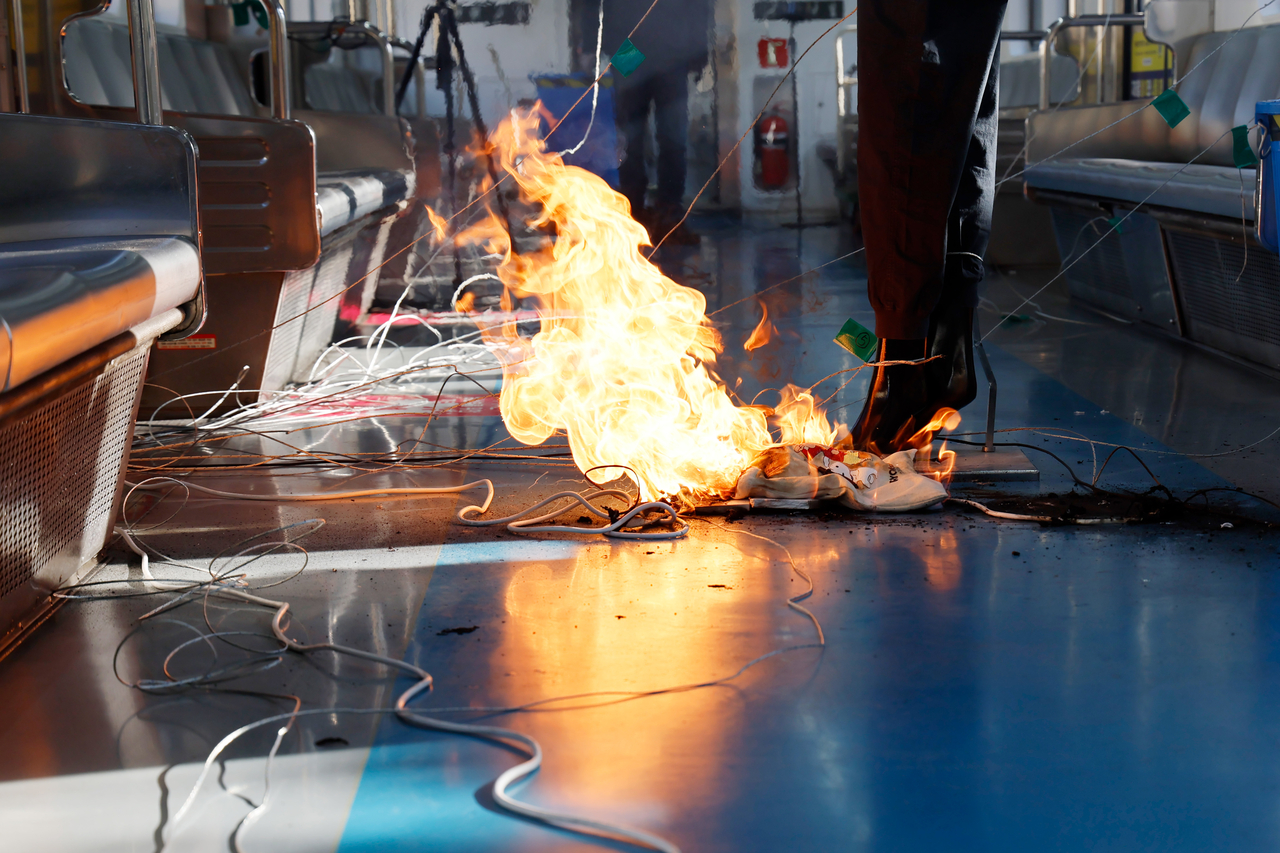
Four portable battery smoke incidents occurred on Seoul subway trains between April and May this year.
All four incidents were traced to portable batteries carried by passengers. No serious injuries resulted thanks to swift initial responses, but battery incidents inside train cars can threaten the safety of many passengers at once, making heightened caution essential.
Seoul Metro said it is issuing guidance on how to respond to battery incidents in order to raise public safety awareness, as accidents involving portable batteries have continued to increase alongside growing use of personal electronic devices.
Lithium-ion batteries offer high charging efficiency and portability, but can produce smoke or catch fire if damaged by physical impact, compression or overheating. Batteries that are deformed or swollen should be taken out of service immediately.
All four recent incidents involved portable batteries carried by passengers aboard trains. The first occurred April 27, when smoke emerged from a battery inside a passenger's bag on a Line 3 train bound for Ogeum, with the situation brought under control at Yeonsinnae Station. Three further incidents followed at roughly weekly intervals — on May 12, May 18 and May 26 — each involving a passenger's portable battery. All were resolved quickly at nearby stations with no serious injuries.
Last year, two similar incidents were recorded. In one, smoke came from a battery carried by a foreign passenger aboard a Line 4 train and was handled at Ichon Station. In the other, smoke from an electric scooter battery carried by a passenger on the platform at Hapjeong Station prompted Line 2 and Line 6 trains to pass through without stopping.
Seoul Metro stressed that calm responses from passengers are paramount when a battery incident occurs. Rather than operating the emergency door-release mechanism and evacuating onto the tracks, passengers should move to a car away from the one where smoke is detected and immediately notify staff using the in-car emergency intercom.
Stepping onto the tracks while a train is running between stations can create far greater danger. Jumping from a train carries a risk of injury, and trains may be operating on adjacent tracks, making a trackside evacuation likely to result in a more serious accident.
To prepare for portable battery fires, Seoul Metro has placed cooling tanks for battery immersion at every station under its management.
Heat-resistant gloves and tongs are also on hand at each station to enable rapid first response when an incident occurs. On top of that, the operator is running battery fire response training and drills for station staff.
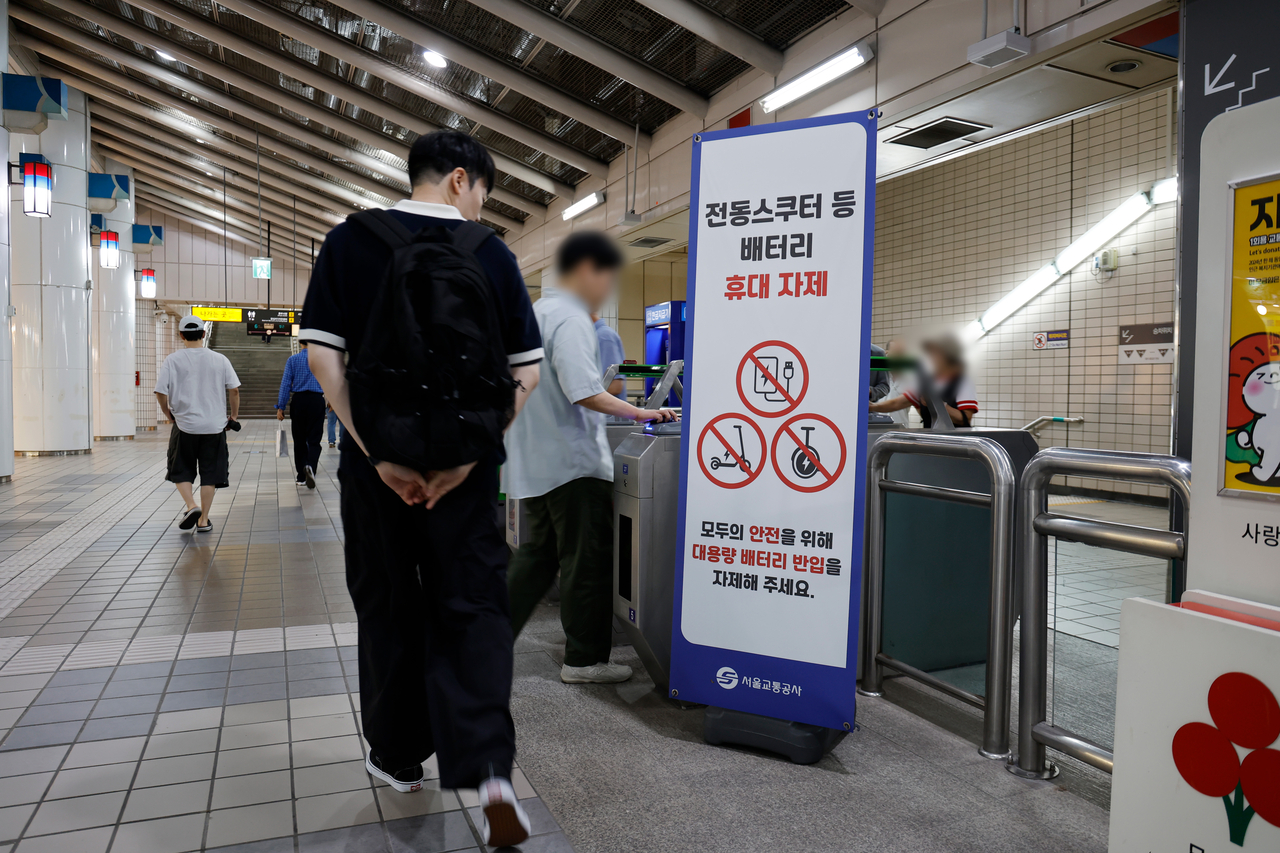
Going forward, Seoul Metro plans to use its own promotional channels — including in-station and in-train displays — to continuously inform subway riders about the correct actions to take in the event of a battery fire, and to work toward a safer subway environment.
"Smoke incidents involving the portable batteries that people use in their daily lives have been occurring on trains one after another recently," said Na Yun-beom, head of Seoul Metro's Safety Management Division. "If smoke comes from a battery, please don't panic — move to another car and let our staff know. We will do our utmost to keep passengers safe."
seouldream01@heraldcorp.com