![Washing hair in iris water on Dano day [Provided by Yeonggwang-gun]](https://wimg.heraldcorp.com/news/cms/2026/06/08/news-p.v1.20260608.f3a026136838464ea82f9bae8762db39_P1.jpg)
"Why is Dano a holiday?"
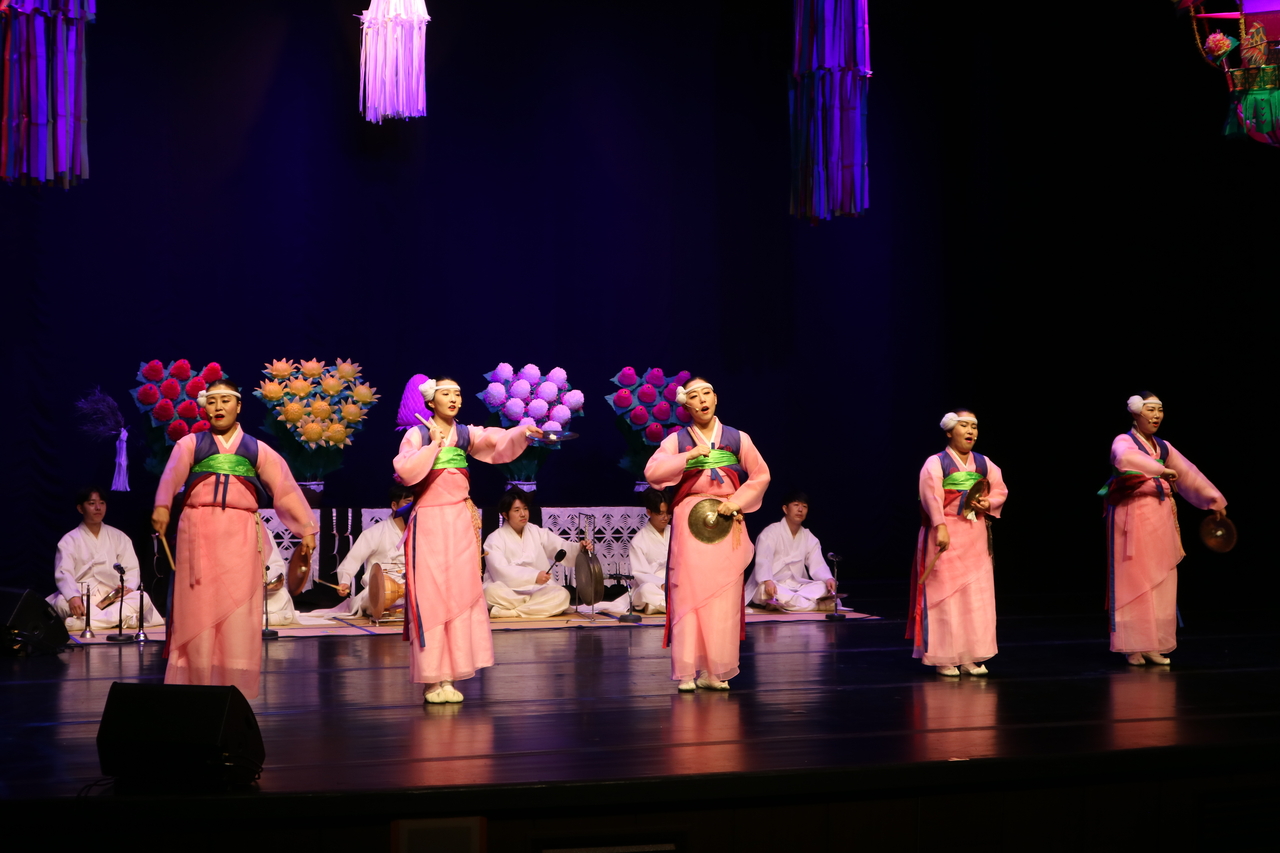
Celebrated around the fifth day of the fifth lunar month each year, Dano is recognized as a UNESCO Intangible Cultural Heritage of Humanity — with the Gangneung Danoje singled out under the "Masterpiece" designation. This year the date falls on June 19, and the Gangneung Danoje, the festival's flagship event, runs June 15–22 across the city.
Yet many people are not quite sure why Dano ranks among the great national celebrations.
Gangneung City Library is hosting a book curation exhibition titled "Reading Dano, Connecting Gangneung" through June 30, inviting visitors to explore the deeper meaning of the traditional holiday and its place in local cultural heritage.
Dano falls roughly at the opposite point on the calendar from the winter solstice and sits close to the summer solstice. Koreans, who have long revered the sun, regard Dano as the moment when yang energy — the vital, luminous force — reaches its annual peak. The winter solstice, by contrast, marks yang energy at its lowest ebb, and the following day was traditionally celebrated as a fresh start.
If the winter solstice is a "little seollal," or minor New Year, then Dano is the radiant, dynamic center of the year. It is also known as Cheonjungjeol — meaning "the heart of the sun's path" — and as Surinnal.
During Dano, as at the winter solstice, people perform rituals to drive away evil spirits. They also take folk and practical measures to fortify themselves against the coming summer heat, and hold ceremonies to pray for a bountiful harvest.
Wellness practices take center stage as well: washing hair in water infused with iris root (changpo), a ritual called "marrying off the jujube tree," and gathering mugwort and motherwort.
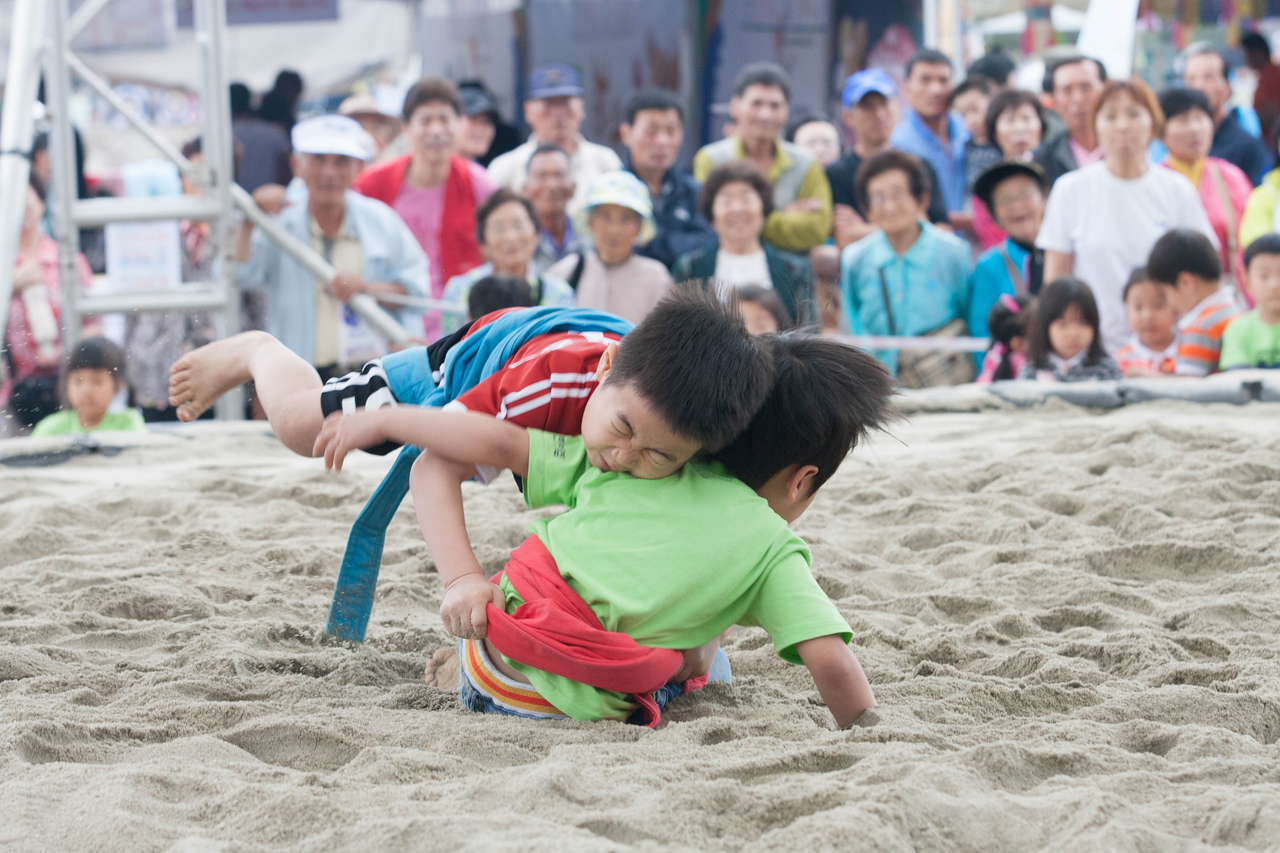
The festivities also include ssireum — traditional Korean wrestling, a fight-fire-with-fire way to build stamina in the heat — and swinging competitions enjoyed for the cool breeze they bring. It is the very scene in which the fictional Yi Mongnyong of Bonghwa is said to have fallen instantly for Chunhyang of Namwon. (Scholars note that the character was likely modeled on Seong I-seong, who served as a local magistrate across the Namwon region — including as county chief of Damyang-gun — and whose father was the magistrate of Namwon. The yangban family is thought to have attached Seong's given name to the Chunhyang story to launder a scandal they wished to keep hidden.)
![A folk painting depicting swinging on Dano [Provided by the National Folk Museum of Korea]](https://wimg.heraldcorp.com/news/cms/2026/06/08/news-p.v1.20260608.3199efa2659b4f218cf0402fc12db331_P1.jpg)
![Surichwiddeok rice cake [Provided by the National Folk Museum of Korea]](https://wimg.heraldcorp.com/news/cms/2026/06/08/news-p.v1.20260608.567087723b0c4d2aac0f88d6f6a522a2_P1.jpg)
Across the country, communities mark Dano in their own ways. In Beopsungpo, Yeonggwang-gun, South Jeolla Province, residents hold a dragon-king ritual to pray for a good catch at sea. In Uljin, a costumed performance parade brings the spirit of Dano to life. At the Yongin Folk Village, visitors have been treated to surichwiddeok — a healthful rice cake made with ssurchwi thistle — prepared and handed out on the day.
The Gangneung book curation was designed to help residents engage more closely with the history and cultural significance of the Gangneung Danoje through reading. The exhibition centers on books covering a wide range of Dano-related themes — the holiday's origins, seasonal customs, traditional games, food and ritual — so that visitors can develop a richer understanding of what Dano means.
Gangneung is particularly well placed for such an initiative, as the city is the living home of the Gangneung Danoje, inscribed on the UNESCO Representative List of the Intangible Cultural Heritage of Humanity. Organizers hope the curation will offer residents a meaningful opportunity to reconnect with the region's traditional culture and identity. Through the books on display, visitors can discover that Dano is far more than a holiday — it carries the rhythms of local life, community spirit and cultural value passed down through generations.
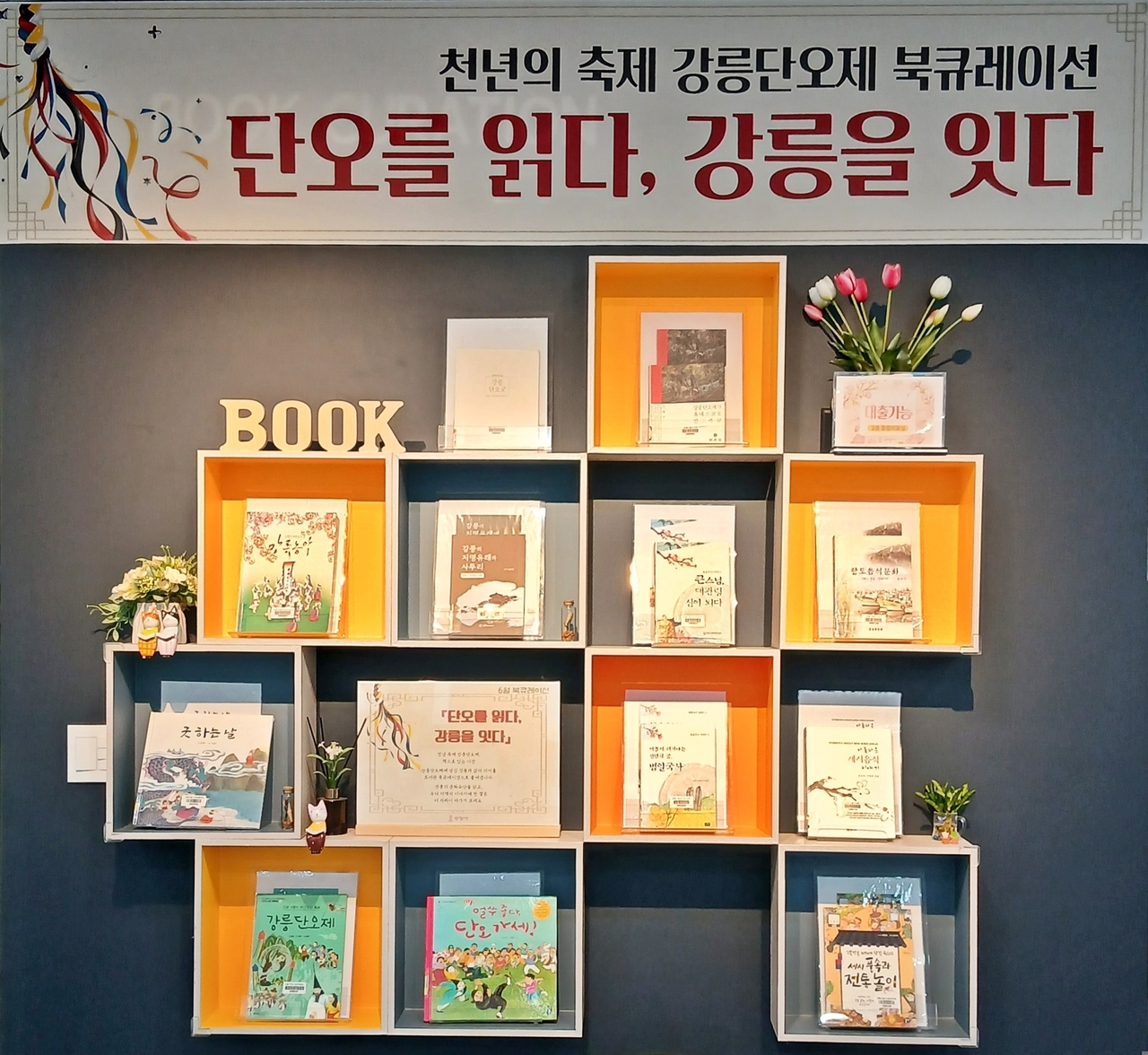
The exhibition runs through June 30 in the second-floor lobby of Gangneung Central Library, and any library visitor may borrow the featured books free of charge.
"I hope this book curation becomes an opportunity to share the meaning and value of the Gangneung Danoje with our community," library director Kim Nam-rim said. "We will continue to develop a variety of reading culture programs that connect local cultural heritage with books."
abc@heraldcorp.com