
Yu Chan-jong's victory in the June 3 local elections is attributed to four years of relentless grassroots organizing after his 2022 defeat, Jongno-gu's relatively small electorate, and widespread discontent among district office staff over personnel decisions under the outgoing district mayor.
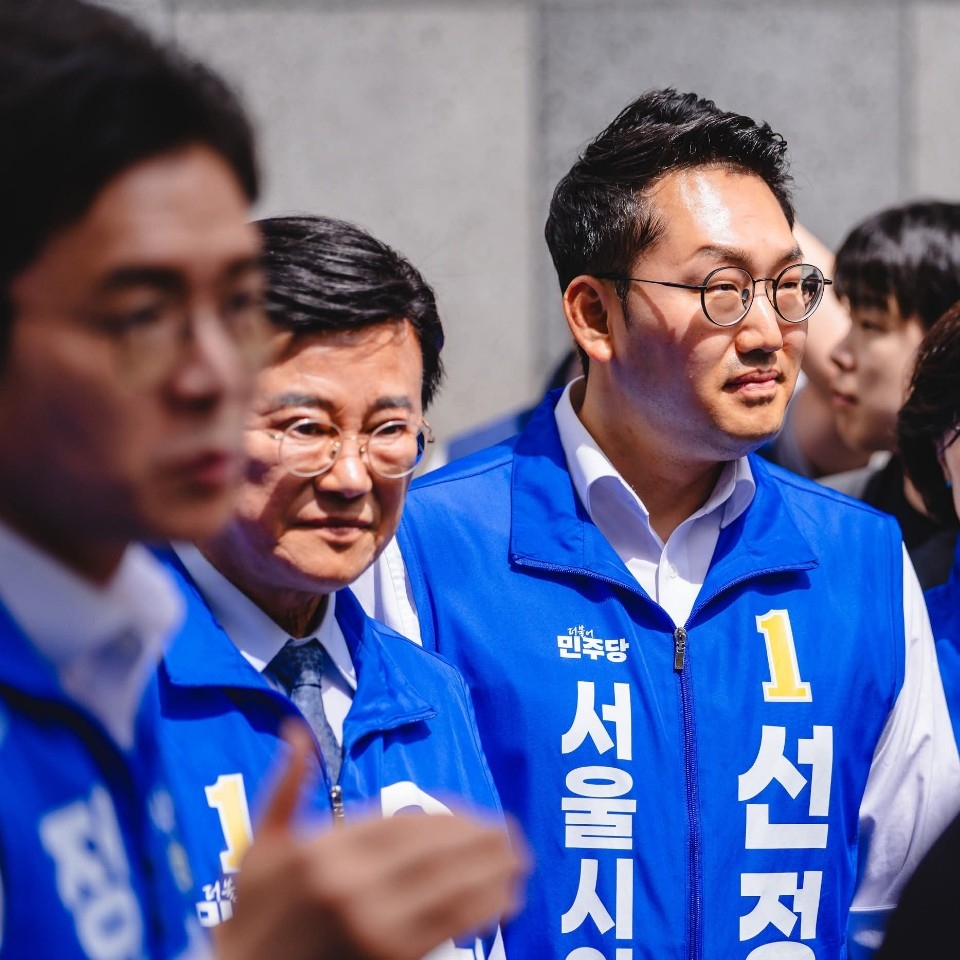
Jung Mun-heon, the sitting district mayor of Jongno-gu — long regarded as the symbolic heart of Korean politics — lost his reelection bid to Democratic Party candidate Yu Chan-jong, drawing wide attention.
Jung, who led the district through the eighth directly elected term, fell short by roughly 3,959 votes in Wednesday's local elections, ending his bid for a second term.
Over the past four years, Jung pursued a string of high-profile projects — revitalizing tourism following the opening of Cheong Wa Dae to the public, urban regeneration in Changsin-dong and Sungin-dong, improvements to the Bukchon and Seochon neighborhoods, and development of a cultural tourism district — earning a reputation for relatively steady district governance.
Despite that record, Jongno-gu residents chose a new direction at the ballot box.
Jongno's political character sets it apart from other autonomous districts. Home to the presidential office, the Government Seoul Complex and Gwanghwamun Square, its residents tend to be more attuned to national political currents than those elsewhere in the city.
Analysts say the Jongno race ultimately turned less on the individual candidates' strengths than on party dynamics and the broader political mood.
Yu's four years of determined groundwork after his previous defeat also emerged as a key factor in his win.
After losing to Jung by roughly 2,000 votes in the 2022 local elections, Yu spent the intervening years crisscrossing the district and rebuilding his organization. Drawing on his experience as both a Jongno-gu council member and a Seoul Metropolitan Council member, he put forward community-focused campaign pledges and worked to expand his direct contact with residents.
He is particularly credited with tapping into residents' expectations around development issues in the Changsin-dong, Sungin-dong and Sewoon Sangga areas.
In fact, Jongno-gu's political landscape is notably divided: traditional residential neighborhoods such as Seochon, Pyeongchang-dong and Samcheong-dong tend to lean differently from areas like Changsin-dong and Sungin-dong, where demand for redevelopment runs high.
Analysts say votes from areas with strong expectations for redevelopment and improved residential conditions shifted toward Yu.
Early voting results also proved a decisive variable. Yu built a lead from the out-of-precinct early ballots from the start of the count, and observers say the race was in effect settled at that point.
Internal discontent within the district office also weighed on Jung's support. Staff grew frustrated after outside hires were brought in through open recruitment for positions such as audit officer and investigator, shrinking internal promotion opportunities. Civil servants from certain regions who made up roughly 50 percent of the workforce reportedly found themselves passed over in personnel decisions, and there was additional resentment over what staff described as arbitrary conduct by those in charge of appointments.
That internal dissatisfaction was compounded by a painful result closer to home: Jung failed to carry even Buam-dong and Gahoe-dong, the neighborhoods where he himself lives.
Jung had won in 2022, but four years later the outcome was reversed.
Through this election, Jongno-gu residents sent a political message that went beyond a simple verdict on district governance.
As the ninth directly elected term begins, observers say building a fairer personnel system — one that gives civil servants a genuine incentive to work — is an urgent priority. A Jongno-gu official said: "What motivates civil servants to work hard, if not the prospect of being recognized and promoted? In that sense, fair personnel management is an invaluable principle in public service. We hope the ninth term brings a more equitable approach to appointments."
A Seoul district mayor leads a relatively compact unit of local government. District office employees are, in many cases, local specialists who spend 20 to 30 years at the same workplace before retiring. Earning the trust of those staff, observers note, is ultimately what earns the trust of residents.
seouldream01@heraldcorp.com




