
Jung Won-oh carried Seongdong-gu overall, but lost by 1,705 votes in Seongsu-dong — the very neighborhood he spent 12 years as district mayor transforming into his political brand
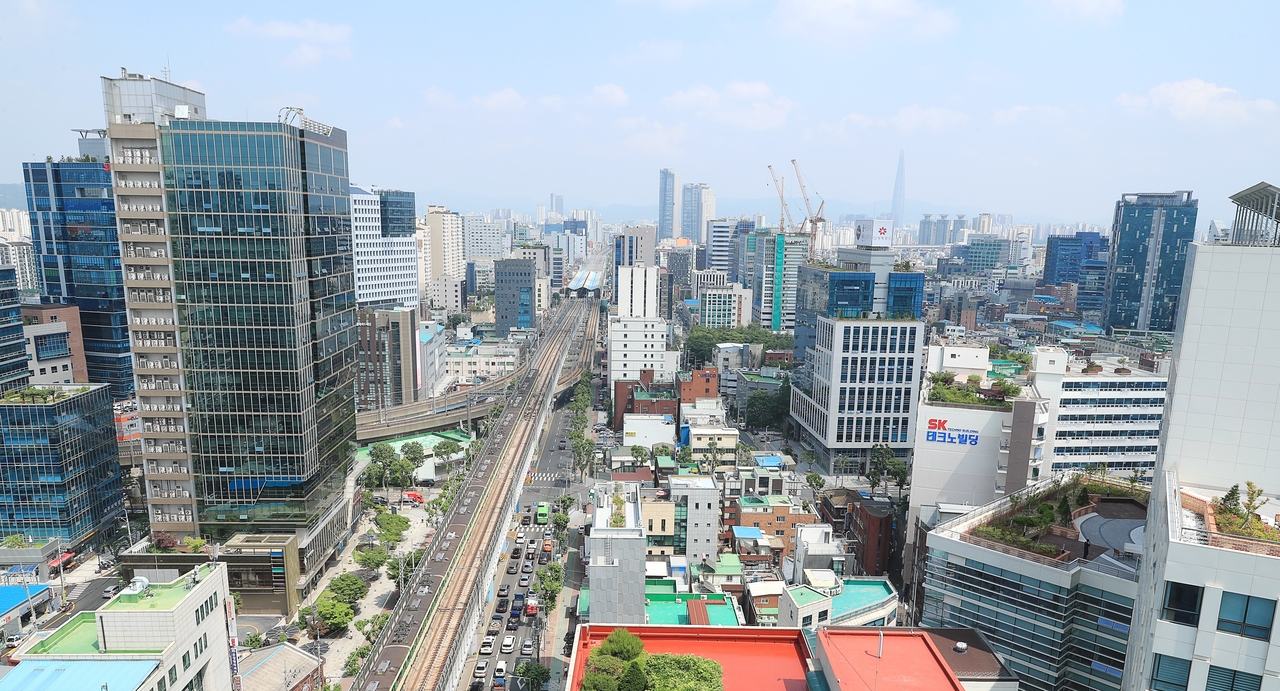
Jung Won-oh, the Democratic Party candidate who lost the Seoul mayoral race to Oh Se-hoon in the June 3 local elections, had secured his party's nomination on the strength of his 12-year record as Seongdong-gu district mayor — edging out Assembly members Park Ju-min and Jeon Hyun-hee with a reputation as a "district mayor who gets things done."
Yet when the votes were counted, Jung managed only 83,051 votes (51.21 percent) in Seongdong-gu against Oh's 76,515 (47 percent) — a margin of roughly 6,500 votes that fell well short of a convincing home-turf victory.
Adding to the surprise, Democratic Party district mayoral candidate Yoo Bo-hwa outperformed Jung in the same ward, pulling in 86,103 votes (53.48 percent) — some 3,052 more than the man at the top of the ticket.
The gap points to substantial split-ticket voting: many residents backed Yoo for district mayor while casting their Seoul mayoral ballot for Oh Se-hoon.
Particularly striking was Jung's defeat in Seongsu-dong itself — by 1,705 votes — the very neighborhood he had pledged to replicate 20 times over across the city.
Looked at closely, the results reveal a politically telling picture. Jung led across Seongdong-gu as a whole, but trailed Oh in Seongsu-dong specifically.
Seongsu-dong is no longer a simple residential district. It has become Seoul's most dynamically changing neighborhood — a new political, economic and cultural hub drawing young professionals, startup workers and people from the arts. Analysts increasingly describe it as a political barometer for the capital.
The prevailing view is that many of those voters were put off by the controversy over Jung's alleged heavy drinking and his repeated refusals to debate Oh — grievances that appear to have cost him meaningful support in the area.
For Jung, winning Seongdong-gu overall was an achievement, but losing Seongsu-dong — the symbolic heart of his political home base — leaves him with considerable unfinished business.
<style ref="s0">Why does Seongsu-dong matter?</style>
Seongsu-dong has undergone the most dramatic transformation of any neighborhood in Seoul over the past decade.
What was once a district of factories and warehouses has reinvented itself as Seoul's Brooklyn — a magnet for global brands, startups and young entrepreneurs. Rising apartment prices have drawn a growing upper-middle-class professional population to the area.
These residents tend to hold political views that differ from the Democratic Party's traditional base.
They prioritize pragmatism over ideology and are sensitive to issues of urban competitiveness, development, transportation and economic vitality. Their votes tend to follow policy results rather than party loyalty.
Seongsu-dong's choice of Oh Se-hoon in this election appears closely tied to that demographic shift.
<style ref="s1">A warning signal for the Democratic Party</style>
The fact that Jung lost Seongsu-dong even while winning Seongdong-gu overall sends an important message to the Democratic Party.
Relying on its traditional base alone is no longer enough to feel confident about future elections.
Key neighborhoods across Seoul are increasingly responsive to bread-and-butter issues — reconstruction and redevelopment, expanded transit, business attraction and job creation.
The Seongsu-dong result can be read as voters signaling: "We're watching what you deliver, not which party you belong to."
<style ref="s2">A hopeful sign for Oh Se-hoon</style>
For Oh Se-hoon, the Seongsu-dong victory carries strong symbolic weight.
It shows he has built competitive support not only in Gangnam but also in key stretches of the Han River belt.
Seongsu-dong is widely regarded as a future anchor for the development of Seoul's northeastern corridor, Han River redevelopment and the creation of a global business hub.
His strength there also suggests that his administration's urban competitiveness strategy has resonated, at least in part, with residents.
<style ref="s3">The real message: Seongsu-dong as swing territory</style>
The true winner of this election may well be the voters of Seongsu-dong themselves.
They demonstrated the behavior of classic swing voters — not locked to any party, but choosing based on policy and results.
They handed Jung Won-oh the challenge of reading Seongsu-dong's evolving demands more carefully, while pressing Oh Se-hoon to convert a one-time show of support into lasting trust.
Ultimately, the Seongsu-dong result is more than a local win or loss. It is a symbolic marker of a broader shift in Seoul's political landscape — away from traditional ideological camp warfare and toward the politics of everyday life and urban competitiveness.
Seongdong-gu chose Jung Won-oh, but Seongsu-dong sent a different message — one that may well serve as a significant signpost for where Seoul politics is headed.
seouldream01@heraldcorp.com




