Democrats weighed down by real estate issue, losses among women in their 30s and in Gangnam; PPP lawmakers call for leadership overhaul after party fails to run 'election of contrition'
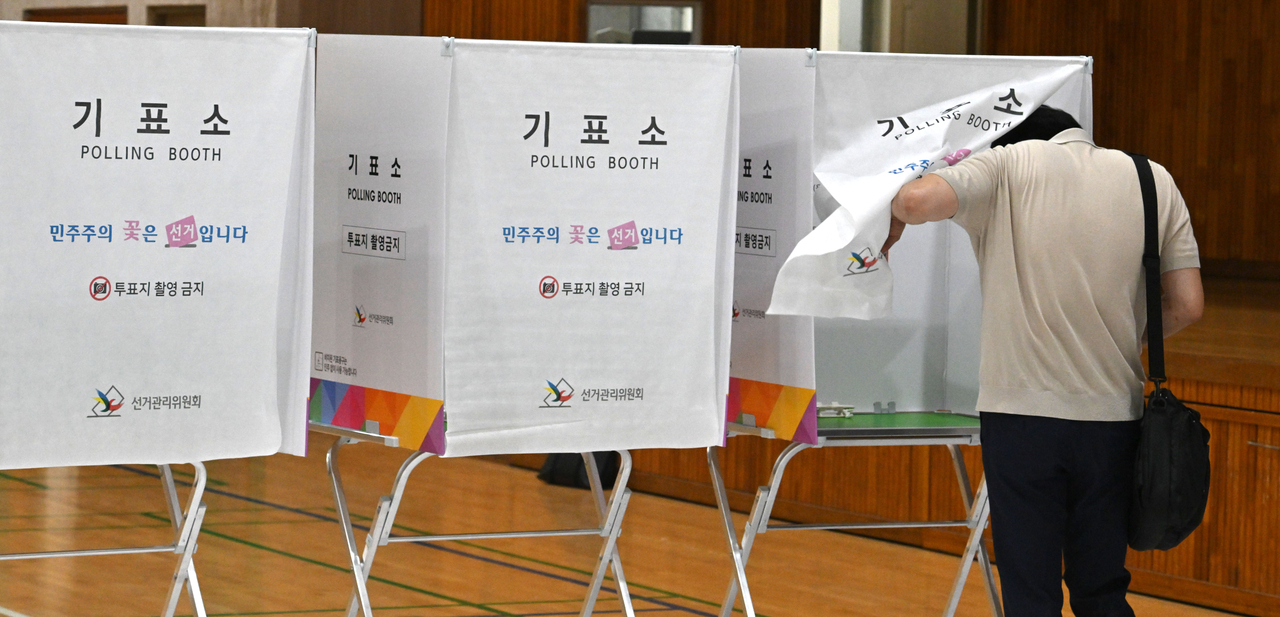
The Democratic Party of Korea claimed a nationwide victory in the June 3 local elections but acknowledged losing the Seoul mayoral race as a painful shortcoming, while the People Power Party declared the results a public rebuke and called for change and reform.
Democratic Party leader Jung Chung-rae said at a press conference Thursday that he was "deeply grateful to the people for delivering a great victory to the Democratic Party across the country," but added, "It hurts that we failed to retake Seoul."
Party Secretary-General Jo Seung-rae attributed the Seoul defeat to a mix of factors, including the candidate's profile and name recognition as well as the city's demographic composition, saying the race was always going to be closely contested. Within and outside the party, the real estate issue and the voting patterns of specific demographic groups have been identified as decisive variables.
Floor spokesperson Kim Hyeon-jeong, appearing on KBS Radio on Friday, said the party "lost by tens of thousands of votes in the three Gangnam districts," adding that the voters there were "likely those sensitive to the real estate issue" and that the government and ruling party needed to offer alternatives.
She also said that while the Democratic Party won among women in their 20s, it "lost by a wide margin among women in their 30s." She said that demographic is particularly sensitive to the real estate issue, and that Democratic Party candidate Jeong Won-o's relatively low name recognition was also a factor.
The People Power Party struck a sharper tone of self-criticism. Rep. Yoon Sang-hyun said at a post-election assessment forum Friday that the party "should have approached the election with an attitude of contrition and accountability," but that "the strategy was not properly carried out." Citing past examples, he said the party had delivered results "when it led with reflection and responsibility, but fell short this time."
He pointed to internal divisions and a lack of vision as key reasons for the defeat, saying "the outcome would have been different if there had been unity and a clear vision," and called for change and renewal.
Criticism also emerged over the party's central leadership-driven structure. Rep. Choi Hyeong-du said the election "showed that both the ruling and opposition parties' central organizations had failed," pointing to delays in candidate nominations and an excessive concentration of authority at the top. He said some districts had won independently of the central party, which demonstrated the need for structural reform.
Skepticism toward the party leader-centered system also surfaced. Rep. Eom Tae-yeong said the current leadership had "failed to break from past mistakes even after the election and failed to present a clear vision for the future to centrist voters," adding that its "halfhearted evasion of responsibility and reflection" was making the electoral defeat all the more painful.
rimsclub@heraldcorp.com
sunpine@heraldcorp.com