
Blind-date booths multiply at university spring festivals
Departments and clubs pack campuses with creative matchmaking setups
Trend reflects a generation struggling to form connections naturally
Dating shows fuel perception of matchmaking as hip, mainstream culture
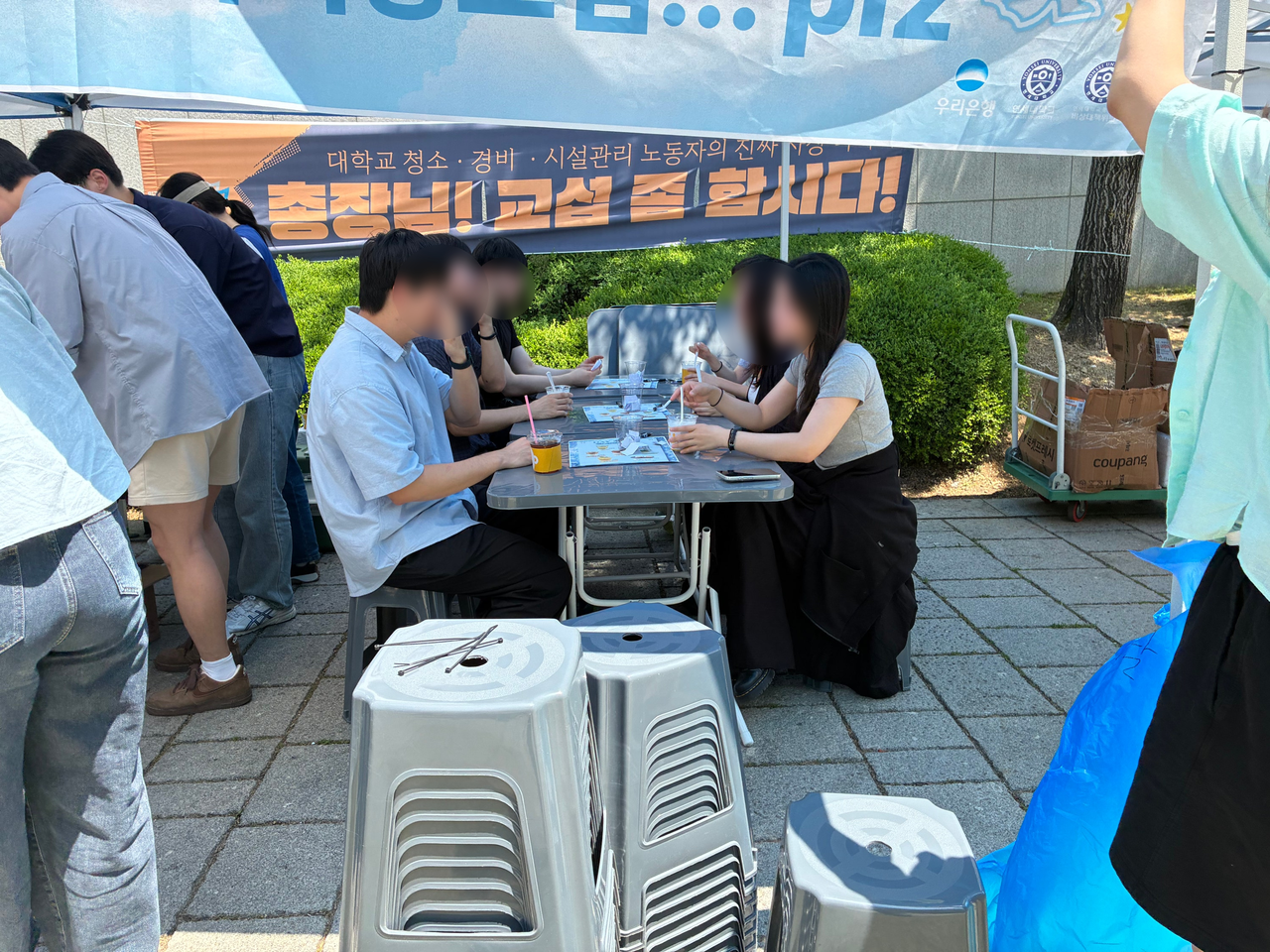
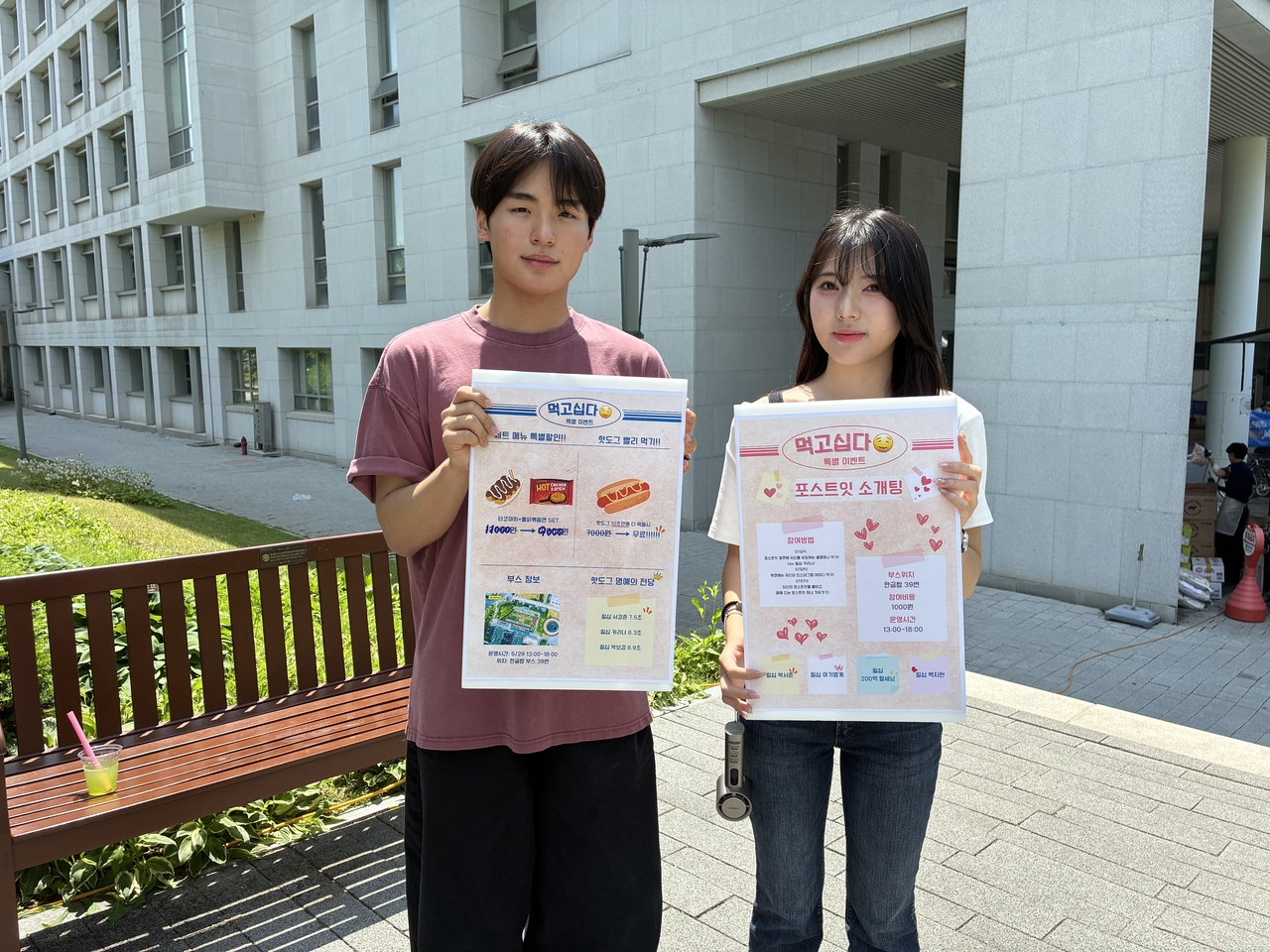
Around 1 p.m. on May 29, the Sinchon campus of Yonsei University in Seodaemun-gu, Seoul, was alive with students hawking their booths through megaphones. "We'll deliver your love letter!" "Tell someone how you really feel!" The calls mingled with live music from a band club and the laughter of passersby. Under a cloudless early-summer sky, students found themselves pulled into queues at nearly every turn — even those heading to the library stopped in their tracks.
Baengnyangno, the roughly 800-meter main boulevard running through campus, was lined wall-to-wall with festival booths. Yonsei's student council, which organized this year's Daedongje spring festival, set up 110 booths in total — and a significant number centered on blind dates. Bars sold drinks and snacks while running note-passing events through servers to other tables. Non-bar booths went further, putting matchmaking front and center.
A reporter who walked the festival grounds found that roughly half of the non-bar experience booths were running some form of matching program. A comics club connected people who shared a favorite character. A counseling club ran an "avatar blind date," seating participants across from each other and feeding them conversation missions through walkie-talkies. A blind-date booth where participants decided whether to meet in person based solely on conversation — without ever seeing each other's face — also drew attention.
The tea blind-date booth run by Yonsei's central tea ceremony club, Gwanseolchahoe, stood out for its calm amid the festival noise. As participants took their seats across small tables, staff placed a cup of tea in front of each person. At first, eyes stayed fixed on the cups — but questions like "What kind of tea do you like?" and "Have you had a chance to explore the festival?" gradually drew people into conversation. After 20 to 30 minutes, when the tea had cooled and the round ended, participants rose to meet their next partner.
Shin Ji-in, 23, who took part in the rotation blind date, said she appreciated being able to get to know someone over tea rather than alcohol. "Everyone is so busy with studying and extracurriculars that there aren't many chances to meet new people," she said. "It was nice to talk naturally with people whose backgrounds you can at least partially verify, all within the campus."
Organizers across the matchmaking booths agreed that blind-date content had clearly become a defining trend of this year's festival. Gwanseolchahoe said the rotation format was inspired by how little time a cup of tea actually lasts. "We capped it at 30 couples and filled up on a first-come, first-served basis — the response was great," a representative said, adding that the club had previously only run tea-tasting booths and that this was its first matchmaking program.
At the film blind-date booth run by the Department of Media and Communication, participants lingered in front of a list of movie titles, visibly deliberating. The concept: choose a favorite film from a selection spanning romance, action and independent cinema, and get matched with someone who picked the same one. "Will choosing this make me seem too emotional?" some wondered aloud, laughing before carefully settling on a title. Matched pairs broke the ice with a simple opener: "So why did you pick this one?"
"Yeonpli" — short for "Yonsei playlist" or "romance playlist" — one of the most popular matchmaking booths on campus, also returned this year. Inside, five baskets were arranged by music genre. Participants chose a favorite song, then wrote their MBTI type, a few self-describing keywords and their Instagram handle on a slip of paper, tucked it inside a ball and dropped it into the corresponding basket. They then drew a ball left by another participant who had chosen the same song and reached out.
Seong Jun, 23, was standing near the Yeonpli booth, phone in hand, dropping another ball into a music basket. Attending his first college festival since completing his military service, he said the atmosphere felt "much more pink" than before he enlisted. He had visited the Yeonpli booth the previous day and been matched with a woman who had chosen the same song. "We walked around the festival together, grabbed some chicken skewers — but when I texted asking if she got home safe, she never replied," he said with a laugh. "Still, having the same music taste felt like something, so I came back Thursday."
That day, Seong chose "DM" by girl group fromis_9. "Listening to that song was one of the things that kept me going during my service," he said. Normally 2,000 won ($1.45) per entry, he received a 1,000-won discount for coming back two days in a row.
The blind-date boom is spreading beyond Yonsei. At Seoul National University's festival, held June 12 through June 14, a variety of matching booths also drew strong student interest.
Lee Dong-gi, 25, a student at Seoul National University, said a goldfish-scooping booth — where matching numbers meant a pairing — was particularly popular. "There were quite a few other blind-date concept booths as well," he said.
The concentration of matchmaking content has drawn some criticism, however. At Chung-Ang University's festival, which ran through May 22, the dominance of blind-date booths prompted complaints on campus online communities that "festival content has become homogenized." Lee Seok-hyeon, 24, a Chung-Ang student, said that as recently as last year there had been a wider variety of experience and game booths. "This year it felt like everything funneled into blind-date content," he said.
Experts say the surge reflects a post-COVID revival of in-person social culture, with content centered on forming connections expanding rapidly. Ku Jeong-woo, a sociology professor at Sungkyunkwan University, said the trend mirrors a generational difficulty with building relationships organically. "If a structured setting like a festival is not provided, this generation simply has fewer opportunities to meet people of the opposite sex," he said.
Ku added that a growing preference for meeting people with similar backgrounds — what he called a tendency toward "homogeneous dating" — combined with a desire to meet people whose identities are at least partially verifiable within a campus setting, was also driving the phenomenon. "Formats like rotation blind dates are now being embraced as a natural and hip way to meet people, partly thanks to dating reality shows and local government matchmaking programs," he said.
By Jeon Sae-nal
newday@heraldcorp.com



