As recreational activities such as running and walking become more widespread, proximity to parks and trails is emerging as a key factor in choosing where to live. Interest in residential complexes near new town central parks — where residents can exercise and relax as part of daily life — continues to grow.
According to the Korea Sports Promotion Foundation's 2024 National Recreational Sports Survey, the participation rate for running recorded one of the largest increases among major recreational sports, reaching 6.8 percent. A separate Gallup Korea survey found that the share of respondents who jog or run rose from 23 percent in 2021 to 32 percent in 2023.
Running culture is spreading beyond any single age group to span multiple generations. According to the Shinhan Card Big Data Research Institute, running-related spending grew 232 percent among people in their 30s and 225 percent among those in their 40s in 2024 — both outpacing the 177 percent increase recorded among those in their 20s. As lifestyles that prioritize health and leisure become more common, demand for living environments that support physical activity is also rising.
Amid this shift, central parks in new towns are drawing increased attention. Serving as the main green corridor of a city, these parks combine walking trails, sports facilities and rest areas, making them a hub for residents' leisure and recreational activities.
Dongtan Central Park in Hwaseong's Dongtan 2 new town is a prime example. The park features a range of recreational facilities — including soccer fields, tennis courts and a park golf course — alongside walking paths, and consistently draws heavy use from local residents.
Industry observers consider park access one of the factors that shapes residential satisfaction. A survey published by Korea Research found that 78 percent of respondents cited parks and walking trails as important when choosing a home. According to real estate data firm Budongsan R114, complexes adjacent to green spaces in major new towns — including Pangyo, Dongtan, Gwanggyo and Wirye — posted average price appreciation above the overall market average last year.
"Parks have evolved beyond simple green spaces to serve as everyday infrastructure that residents rely on," a real estate expert said. "Preference for environments where people can exercise, rest and enjoy leisure activities close to home is growing."
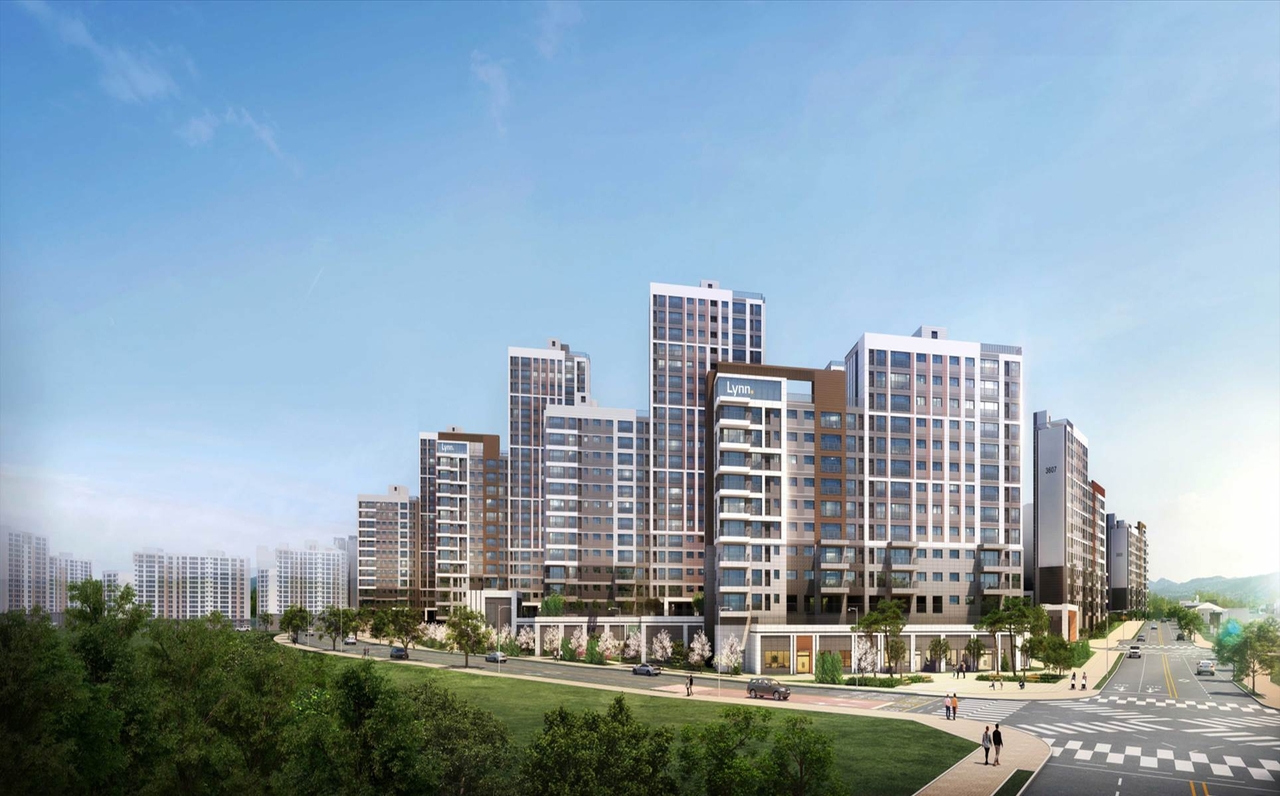
Against this backdrop, a consortium led by Woomi Construction plans to launch Pyeongtaek Godeok Woomilin Prestige in Pyeongtaek's Godeok International Planning District in June.
The complex will comprise 11 buildings with a total of 743 units, rising from two below-ground floors to 20 above-ground floors. It is situated adjacent to Hambaksan Central Park, giving residents convenient access to the park's walking trails and green spaces.
The Godeok International Planning District is home to Samsung Electronics' Pyeongtaek campus and is being developed to include an administrative town and an international exchange district. An education site where an international school is being established is also located nearby.
On the transportation front, residents will have access to the SRT at Pyeongtaek Jije Station as well as Metropolitan Line 1, and can reach major parts of the greater Seoul area via the Pyeongtaek Godeok interchange. Future plans include extensions of the Suwon-origin KTX and GTX Lines A and C, along with a bus rapid transit route.
For education, a planned elementary school — Godeok Elementary School No. 8 — as well as middle and high school sites are located near the complex. At the Godeok international school site, Pyeongtaek city has signed a memorandum of agreement with Annie Wright Schools, a private school based in Washington state, to establish an international school.
A model home for Pyeongtaek Godeok Woomilin Prestige is planned in the Godeok-dong area of Pyeongtaek, Gyeonggi Province, and is scheduled to open in June.
kim3956@heraldcorp.com