
Anxiety lies at the heart of mental illness in infants and adolescents
Parental anxiety transfers to children, switching anxiety 'on'
Root cause is social inequality, not the individual
![[Getty Images Korea]](https://wimg.heraldcorp.com/news/cms/2026/06/04/news-p.v1.20260604.78dbf4e1505a4fb1a515f5e6a1097b32_P1.jpg)
Some children are more sensitive than others — quick to rage over minor disagreements, prone to violence, and swept up in extreme impulses. Whether diagnosed with depression, attention deficit hyperactivity disorder, panic disorder, or addiction, the underlying problem is anxiety. Regardless of family environment, economic circumstances, or upbringing, teen depression surged 90 percent over the past five years while drug-related crimes among minors rose nearly 14-fold. Children, it seems, are breaking down in strikingly similar ways.
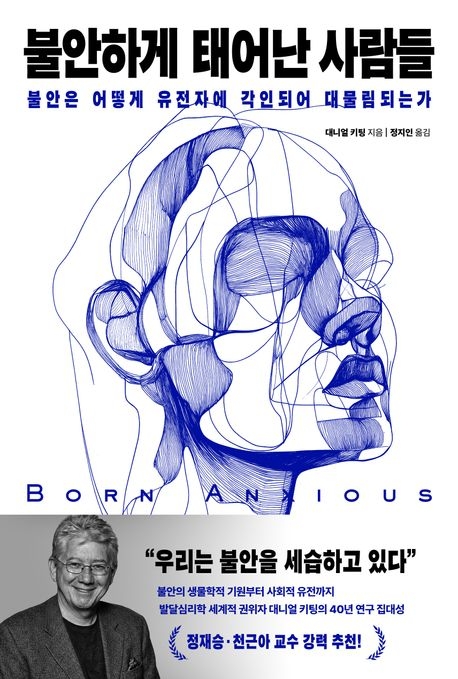
Daniel Keating, a developmental psychologist and professor at the University of Michigan, argues in his new book "Born Anxious" that troubled children have a broken biological stress switch. Over more than two decades at the Canadian Institute for Advanced Research, Keating and his colleagues tracked the developmental trajectories of hundreds of thousands of individuals. They found that sustained exposure to stress causes methyl groups to attach to NR3C1 — the gene that regulates stress response — suppressing its function in a process known as stress methylation.
The most critical window, Keating argues, runs from pregnancy through the first year of life, when a child's stress-regulation system takes shape. If a mother endures severe stress during pregnancy — from financial hardship, divorce, war, or similar pressures — her cortisol levels can rise high enough for the stress hormone to cross into the fetus's bloodstream. That surge effectively locks the child's stress gene, sending the infant into the world with its anxiety switch already flipped on. The same biological changes can occur, Keating contends, if the primary caregiver faces comparable circumstances during the baby's first year.
A child born with the anxiety switch on does not simply struggle with peer relationships or school life in early childhood. Into adulthood, that person remains more vulnerable to anxiety, depression, addiction, and burnout. After middle age, the risks extend further — to heart disease, immune dysfunction, and premature death. The stress parents experience during pregnancy and the first year of life shapes not just a child's emotional state but their academic performance, relationships, health, and lifespan. Anxiety, Keating argues, is inherited just as surely as wealth or social class.
Yet Keating does not lay the blame squarely on parents. He identifies social inequality as the true culprit behind the anxiety switch. A society structured around relentless comparison, competition, and the fear of falling imposes chronic stress on its members — stress that measurably affects their health and longevity. As evidence, he points to the Whitehall Study in Britain, which tracked tens of thousands of London civil servants over more than two decades. It found that those with lower status and less control within their organizations were up to four times more likely to develop heart disease, depression, and die prematurely.
That does not mean there is no hope. Because the human brain and stress system are shaped by environment, they can also recover, Keating says. Secure attachment, consistent caregiving, and school-based self-regulation programs all offer opportunities to break the chain of anxiety. Systemic changes matter too: policies that reduce excessive work and stress during pregnancy and the postpartum period — what he calls the golden hour — along with parental leave and social safety nets that ease income inequality, could stop parents from passing their stress on to the next generation. Keating refuses to confine anxiety to the realm of individual psychology, instead framing it as a societal problem and confronting readers with an uncomfortable truth: an unequal society is reshaping our brains.
"Born Anxious" / by Daniel Keating, translated by Jeong Ji-in / Woongjin Knowledge House
carrier@heraldcorp.com




