
Students from a Seongnam history club tour the former Namyeongdong Anti-Communist Bureau
Visiting the room where democracy activist Park Jong-chul was tortured, they say: 'It broke my heart'
Field trips let students 'learn history with their bodies,' teacher says
But budget and safety constraints make such visits rare — and teachers are calling for support
"What must it have felt like to drive a taxi in Gwangju back then? How terrified must he have been when he was framed as a spy and tortured?"
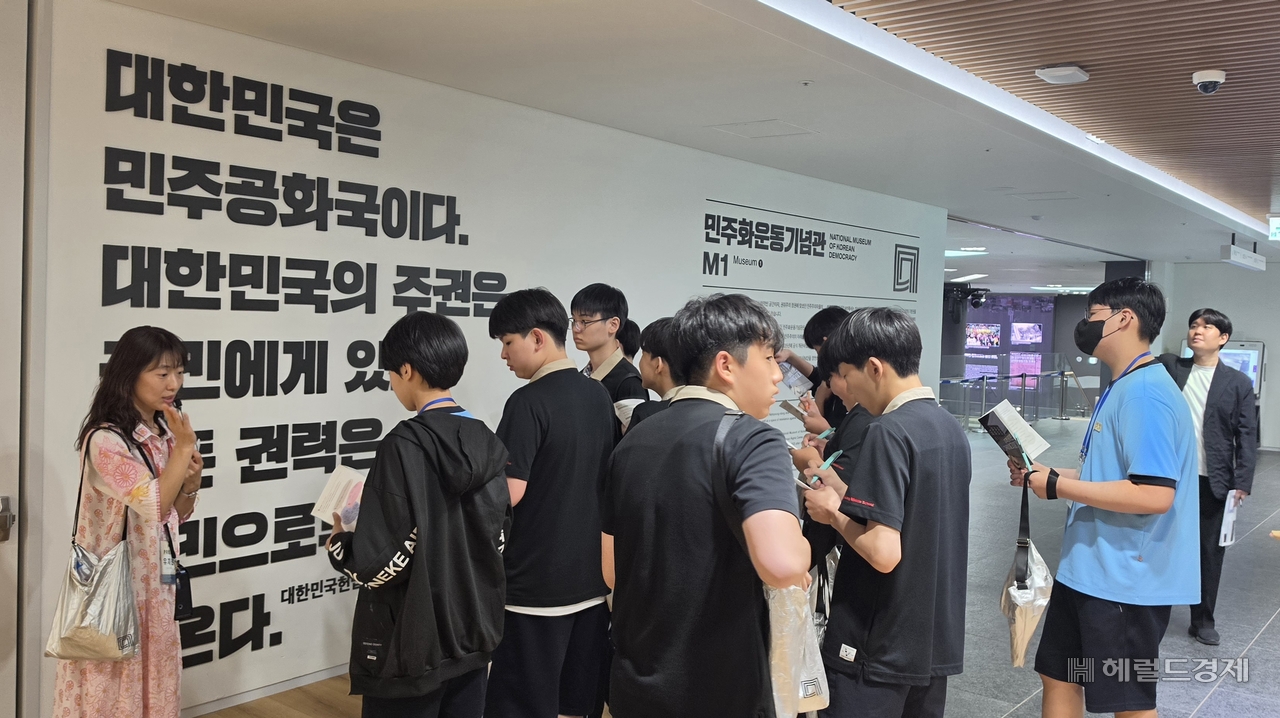
On the afternoon of June 1, fourteen members of "Peacemakers," the history club of Yeongseong Middle School in Seongnam, Gyeonggi Province, visited the Democracy Movement Memorial Hall in Yongsan-gu, Seoul — the building that once housed the notorious Namyeongdong Anti-Communist Bureau. Assigned the roles of rookie reporters on a fictional assignment, the students peppered memorial staff with pointed questions as they made their way through the site.
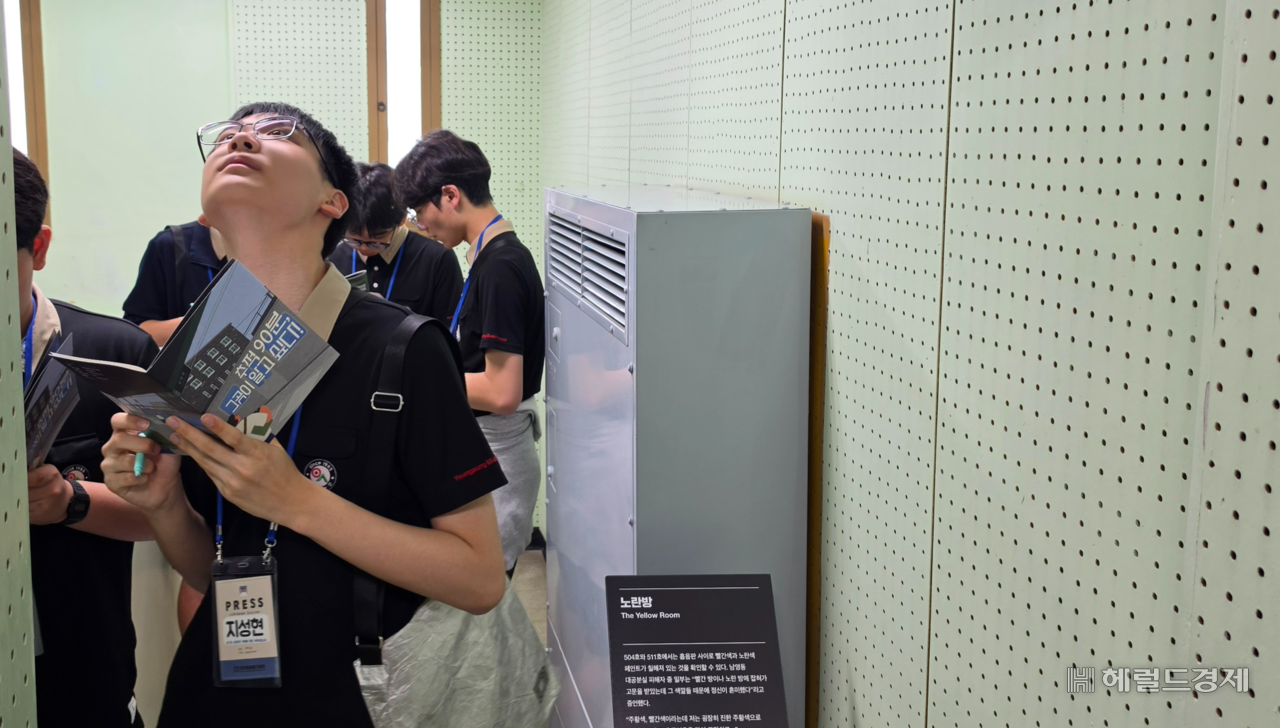
The visit was part of "Tracking 90 Minutes: We Want to Know What Happened There," a youth education program run by the memorial. Starting on the first floor of Building M2, where exhibits document the violence of the military dictatorships of the 1970s and 1980s, the students climbed to the fifth floor and Room 509 — the interrogation room where activist Park Jong-chul was tortured to death. With each floor they ascended, their expressions grew more solemn.
Notebooks in hand for their fictional reporting exercise, the students paused before the exhibits to brainstorm story angles. They shared ideas aloud: "What would it have felt like to be locked in a crowded room, framed as a spy?" and "The guard's pigeon letter revealed at Myeongdong Cathedral reignited the protests."
'You can feel the longing for democracy in your bones'
The students said they were struck by the weight of standing in a place where history had actually unfolded.
Kang Hyeon-jun, 16, said he had already known the phrase "he slammed the desk, and the man cried out and died" from books and films before the visit. "But you can't touch a book or a screen," he said. "Coming here in person, I could feel just how tragic it was — and how desperately people wanted democracy back then."
Kim Su-hyeon, 15, said he had first learned about the era through films and YouTube, then filled in the details from textbooks. "But actually coming to the site made me realize the reality was far more heartbreaking than I had imagined," he said.
Asked how they would have acted as college students in 1987, Kang said he might not have taken a leading role but would have worked quietly behind the scenes for democracy. Kim said he would have joined the protests, rallied people and spread the word about why democracy mattered.
Lee Jong-gwan, the history teacher who leads the club, said he is a firm believer in the power of on-site education. "Even as adults, when these kids come across related news, the history their bodies learned by coming to Namyeongdong in middle school will still be with them in their daily lives," he said.
Field trips face real obstacles at most schools, however. Lee said it is hard to carve out time during the regular curriculum on weekdays, and that budget constraints make it difficult to ensure student safety and arrange transportation. "Teachers need support so they can run history field experiences without bearing the financial burden themselves," he said.
'Break out of the classroom' — Ministry of Education revamps curriculum and expands funding
The Ministry of Education is developing a plan to revitalize school history education — including modern and contemporary history — in response to the challenges teachers face on the ground. The initiative aims to shift history teaching away from rote memorization toward in-depth inquiry and hands-on learning.
As a first step, the ministry plans to ask the National Curriculum Commission to restructure the curriculum framework. The proposal includes increasing the volume and class hours devoted to modern and contemporary history in middle school, and adding new elective history subjects at the high school level.
To prevent teachers from self-censoring during lessons on modern and contemporary history, the ministry also plans to establish a set of democratic citizenship history teaching principles that guarantee teachers the freedom to conduct lessons within the bounds of constitutional values.
Starting this year, the ministry will fund field trips for schools that plan history experiences, covering costs for 200 or more visits annually. That figure will expand to 300 or more from next year. The ministry will also support in-depth history research clubs at 100 schools nationwide.
In February, the ministry signed MOUs with related organizations, including the Korea Democracy Foundation, to expand the number of history experience sites available to students. It is also building a "history education resource archive" — consolidating modern and contemporary historical materials and hands-on resources scattered across various institutions — to provide to teachers in the field.
brunch@heraldcorp.com




