Hospital establishes AI Transformation Promotion Unit on Sunday, with Professor Lee Gyu-seong named inaugural head; initiative targets AI integration across clinical care, research and patient experience
As AI fever sweeps across industries, hospitals are moving quickly to restructure their organizations and adopt new AI technologies for medical applications.
Samsung Medical Center, led by President Park Seung-woo, is accelerating its AI transformation in pursuit of next-generation healthcare. The hospital announced Sunday the launch of its AI Transformation Promotion Unit, or AX Promotion Unit. The new body grew out of its predecessor, the Digital Innovation Promotion Unit, and is now dedicated to driving AI — which the hospital sees as the backbone of future medicine.
The AI Strategy Committee, established earlier, sets the hospital's AI-driven direction and serves a governance role, while the AX Promotion Unit oversees execution to embed AI across the entire organization. Professor Lee Gyu-seong, who led the predecessor Digital Innovation Promotion Unit, was named inaugural head of the new unit.
Lee, a professor of urology, is regarded as having deep expertise in AI. He spearheaded an in-hospital project on an AI-based research commercialization platform and medical AI research, producing 44 published papers, 26 patent applications and one technology transfer. He also served as director of the Institute for Future Medicine, where he successfully oversaw large-scale national research projects, earning a reputation as a strong organizational leader.
"Samsung Medical Center will undergo a sweeping transformation in which AI becomes embedded in every area of its operations," Lee said. "The newly launched unit will optimize AI technology for real-world workflows based on frontline feedback and provide close support throughout all related processes."
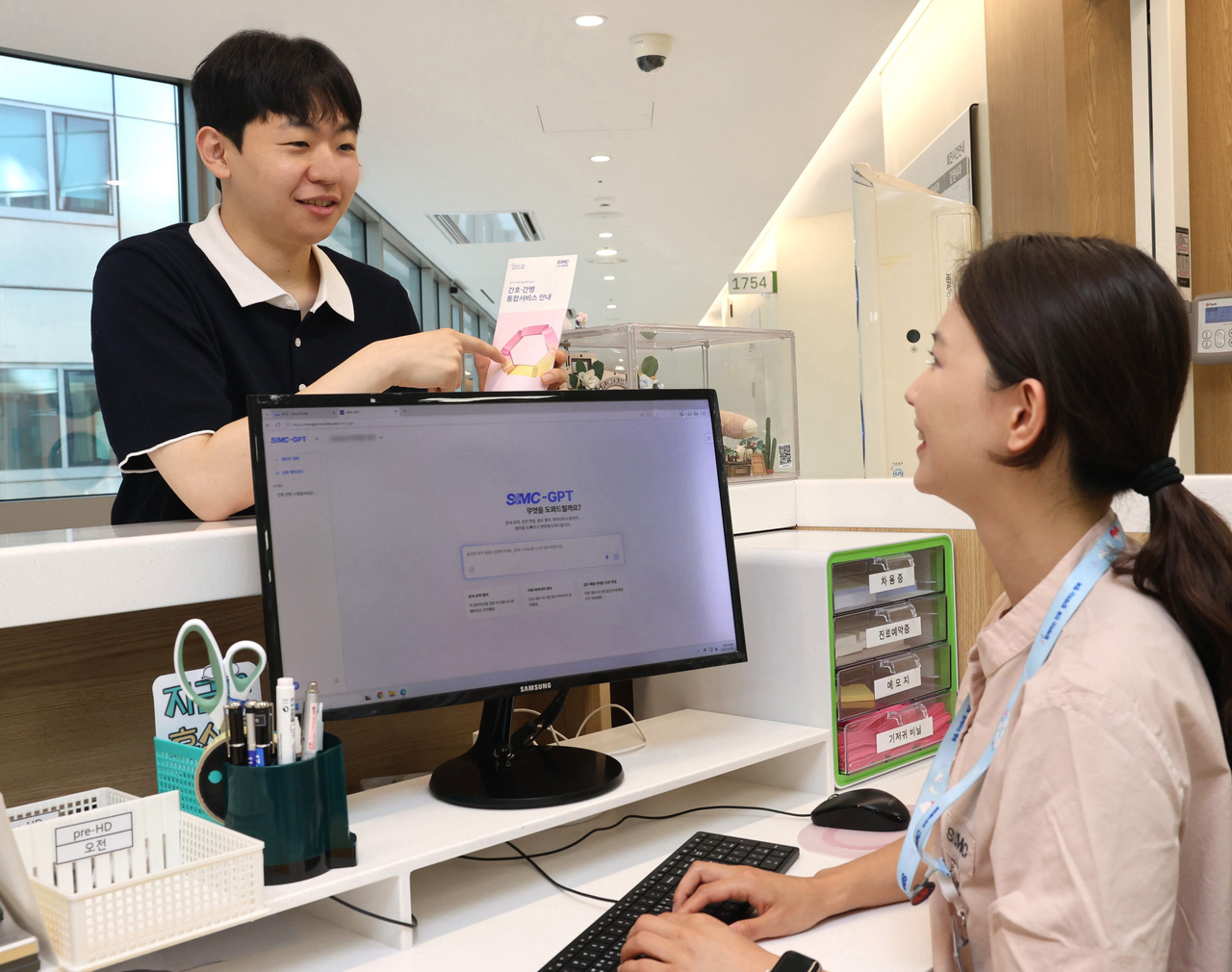
To accelerate the AI transformation, Samsung Medical Center is building cloud-based infrastructure. The hospital earlier relocated its data center to Sangam and laid the groundwork for the shift. It now plans to upgrade SMC-GPT — its proprietary conversational AI system — on a cloud foundation. SMC-GPT functions as an in-hospital AI assistant, supporting staff with task-related queries, summarizing medical records, drafting documents and providing guidance on hospital protocols and workflows. The system will also expand its role as an AI interface connecting medical robots and automated systems.
The hospital will also introduce DAIA, an AI service integrated with its in-house medical information system DARWIN. DAIA assists with searching and analyzing electronic medical records, summarizes patient information, and converts spoken consultations between clinicians and patients into text for automatic entry into medical records.
To improve the patient experience through its AI transformation, Samsung Medical Center plans to redesign its website to connect patients and clinicians through data. Biometric data collected from smartphones and smart devices, along with "My Data" — symptom information entered directly by patients — will be linked and reflected in clinical charts for physicians to review during consultations.
A platform called S-CARENet will also support the patient experience by strengthening ties with partner hospitals and improving care connectivity with regional medical institutions. Through S-CARENet, partner hospitals can make direct appointment referrals to Samsung Medical Center, and online remote consultations and clinical advisory services are available.
To eliminate the need for patients to carry physical documents, the platform uses optical character recognition — technology that converts text in images or printed documents into digital data — to read electronic records from partner hospitals and automatically transfer them into Samsung Medical Center's own records. Information that previously required separate entry by clinicians at each institution will now be processed automatically by the platform.
"Medical AI will evolve in a direction that saves lives, narrowing the gap between technology and people and realizing patient-centered care," Lee said. "We will lead this AI transformation with the resolve to build a model and set the standard for where medical AI should go."
kty@heraldcorp.com