
2026–2028 master plan draws on frontline voices to expand safety, burnout prevention and education support; welfare points pilot and pre-opening briefings aim to strengthen care workforce and infrastructure
Seoul's Gangdong-gu has unveiled its third master plan for improving the treatment and status of long-term care workers, covering 2026 to 2028, and is moving ahead with a range of on-the-ground support initiatives aimed at raising the quality of care services.
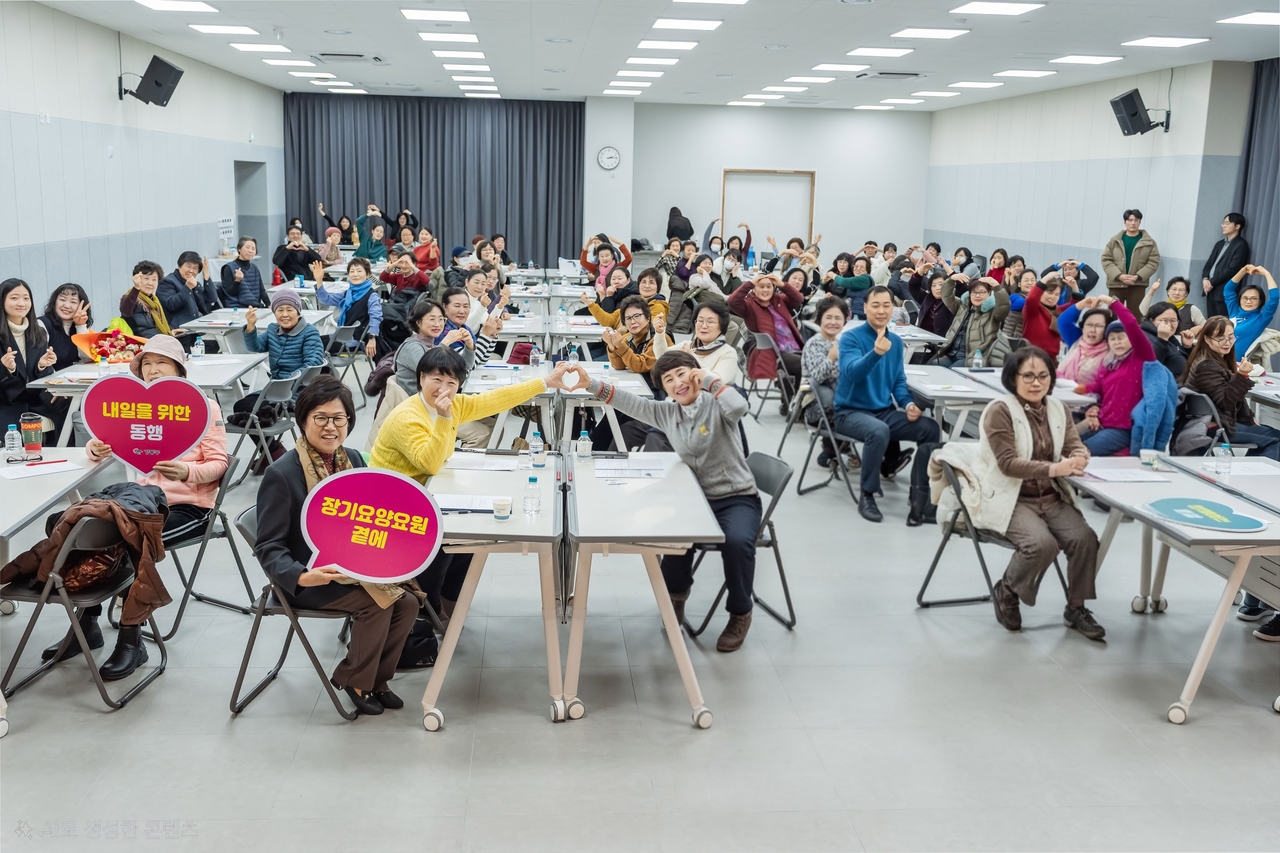
The district is home to 5,598 long-term care workers — including care assistants — employed across 182 facilities, providing services to 7,868 elderly residents. Despite being the backbone of elder care, these workers face difficult conditions: low wages, physically demanding workloads and emotional burnout.
Before drafting the plan, the district conducted a survey from October to December last year covering 600 long-term care workers and 100 service users and their guardians, supplemented by in-depth interviews with 24 workers across different institutions and job categories. The findings showed strong demand for across-the-board improvements — wage increases, burnout recovery support, safety measures, education and the introduction of welfare points. Service satisfaction among users and guardians exceeded 90 percent, indicating that workers are maintaining high standards of care despite the challenging conditions.
Drawing on that frontline feedback, the district built its plan around the vision of "care that protects people, Gangdong that protects care." With the goal of establishing a sustainable care system in which workers are respected, the plan includes providing crisis-response guidance materials, training on handling complaints and conflicts, psychological support and recovery programs, capacity-building education for facilities, and a welfare points pilot program.
A centerpiece of the plan is the welfare points pilot, designed to boost morale and encourage long-term retention. Workers at qualifying facilities — 584 people who meet criteria including evaluation records, administrative history and length of service — will receive 100,000 won (about $68) per year. Because 79 percent of care workers are in their 50s and 60s, the district also expects the program to help expand job opportunities for middle-aged workers and older residents who remain able to work.
Psychological support and online wellness programs for home-visit care workers will be expanded, and additional training to strengthen frontline response skills is also planned.
Starting this year, the district will hold pre-opening briefings for prospective operators preparing to establish long-term care facilities. As accreditation standards have tightened, many applicants find it difficult to navigate the process alone, so the district plans to provide detailed guidance on staffing and facility requirements as well as operational standards. The initiative is expected to help grow the number of high-quality care facilities and strengthen the district's overall care infrastructure.
seouldream01@heraldcorp.com




