
Donald Trump says he agreed to give the EU until July 4 after a call with European Commission President Ursula von der Leyen, delaying a planned increase on car and truck tariffs from 15 to 25 percent
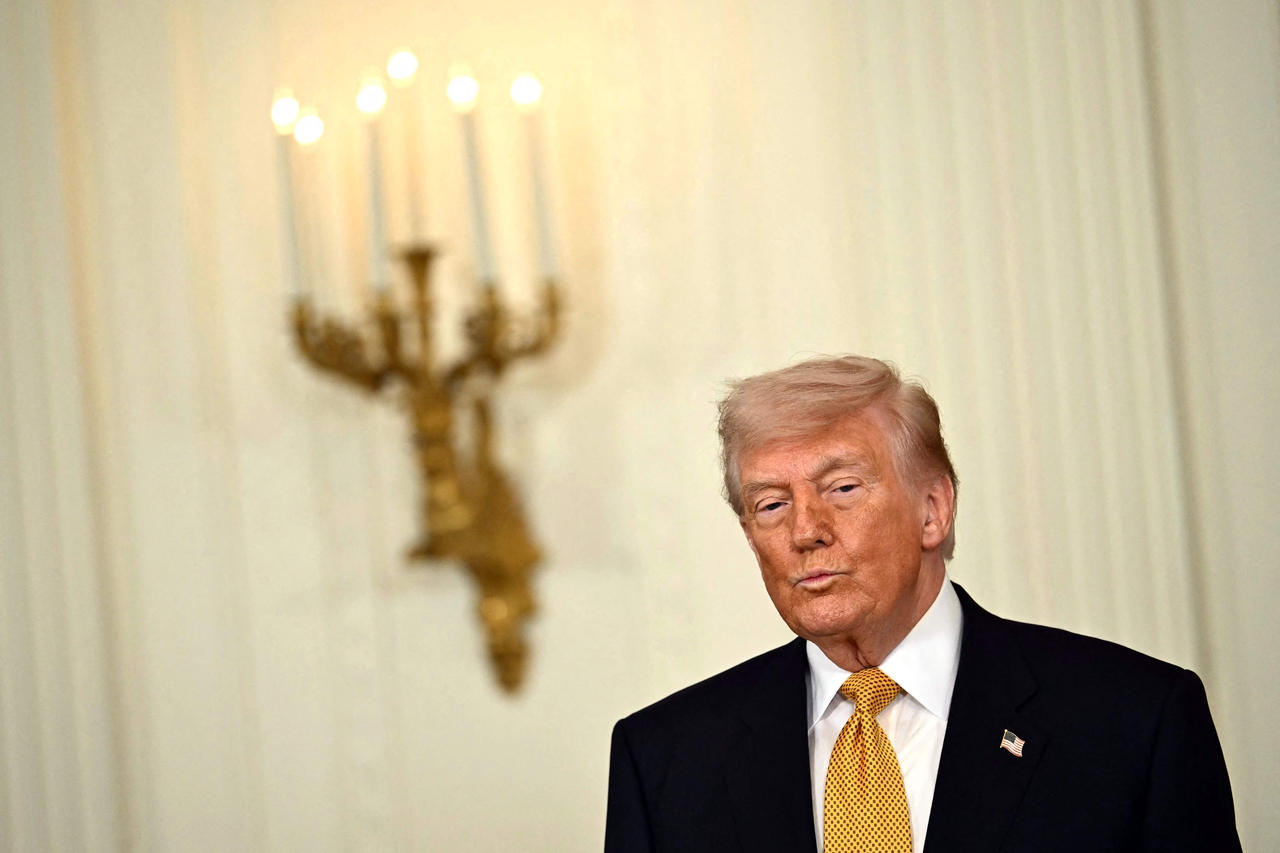
Donald Trump warned the EU on Wednesday that it faces sharply higher tariffs if it fails to fulfill an existing trade agreement by July 4 — the 250th anniversary of American independence — effectively shelving a tariff increase on European cars and trucks that had been expected this week.
Trump said on his Truth Social platform that he had a "great call" with European Commission President Ursula von der Leyen, and that the EU had promised to "do its part of the deal" and lower its tariffs on the United States to zero percent.
"I agreed to give her until July 4th, our country's 250th birthday," Trump wrote, adding that if the EU did not follow through, its tariffs would "immediately go up to a much higher level, unfortunately."
Trump had announced on May 1 that he would raise tariffs on EU passenger cars and trucks from 15 to 25 percent starting this week, citing the bloc's failure to implement the trade agreement. After Wednesday's call with von der Leyen, he stepped back from that move and gave the EU roughly two more months to complete the process.
The core issue is whether EU member states will finish ratifying the trade deal before the July 4 deadline.
Trump and von der Leyen had announced a trade deal at a summit in Turnberry, Scotland, on July 27 last year. Under that agreement, the EU committed to purchasing $750 billion worth of American energy and military equipment while directing an additional $600 billion toward the United States. In return, Washington agreed to lower reciprocal tariffs on EU goods to a flat 15 percent and bring sector-specific tariffs — including those on automobiles — down to the same level.
The European Parliament conditionally approved the agreement in March, but ratification by individual member states remains incomplete, leaving the deal short of final entry into force.
The tariff threat has also been linked to tensions over NATO, with reports that key alliance members effectively declined a US request for assistance during the conflict with Iran.
Trump said he and von der Leyen discussed a range of topics during the call, including their shared view "that Iran should never have a nuclear weapon."
"We also agreed that a regime that kills its own people cannot be in control of a bomb that could kill millions," he added.
mokiya@heraldcorp.com




