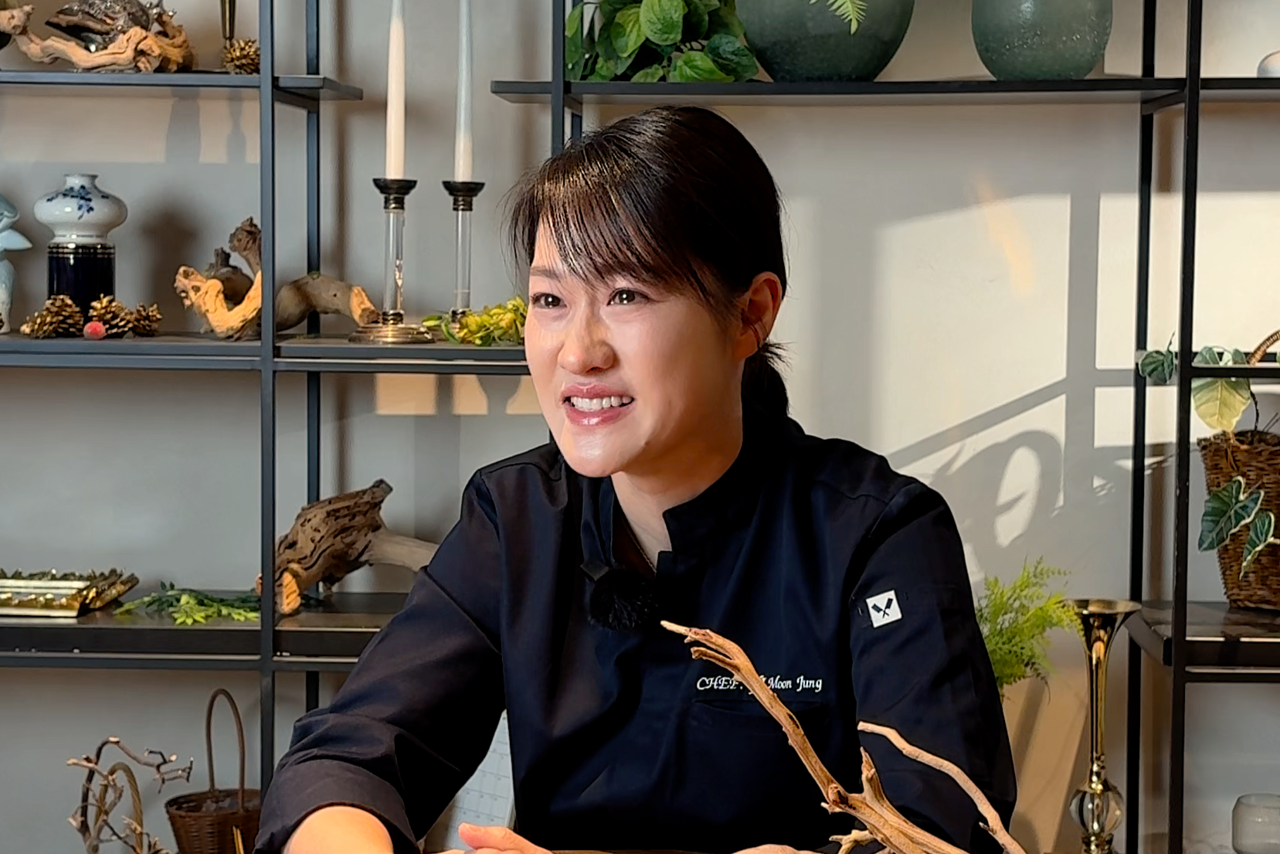
People call her the witch. But the person I met was someone moved to tears by wounds decades old — warm, and perhaps better described as tender.
Among the rising star chefs in the restaurant industry today, Lee Mun-jeong stands out. The charisma that radiates from her small frame, her striking looks, her sharp and witty way of speaking — her appeal cuts across generations.
Behind that confidence, however, lie 26 years that no short article can fully capture: years tangled with pain and achievement, loss and recovery. One thing came through clearly as she spoke — the resilience with which she has faced every hardship.
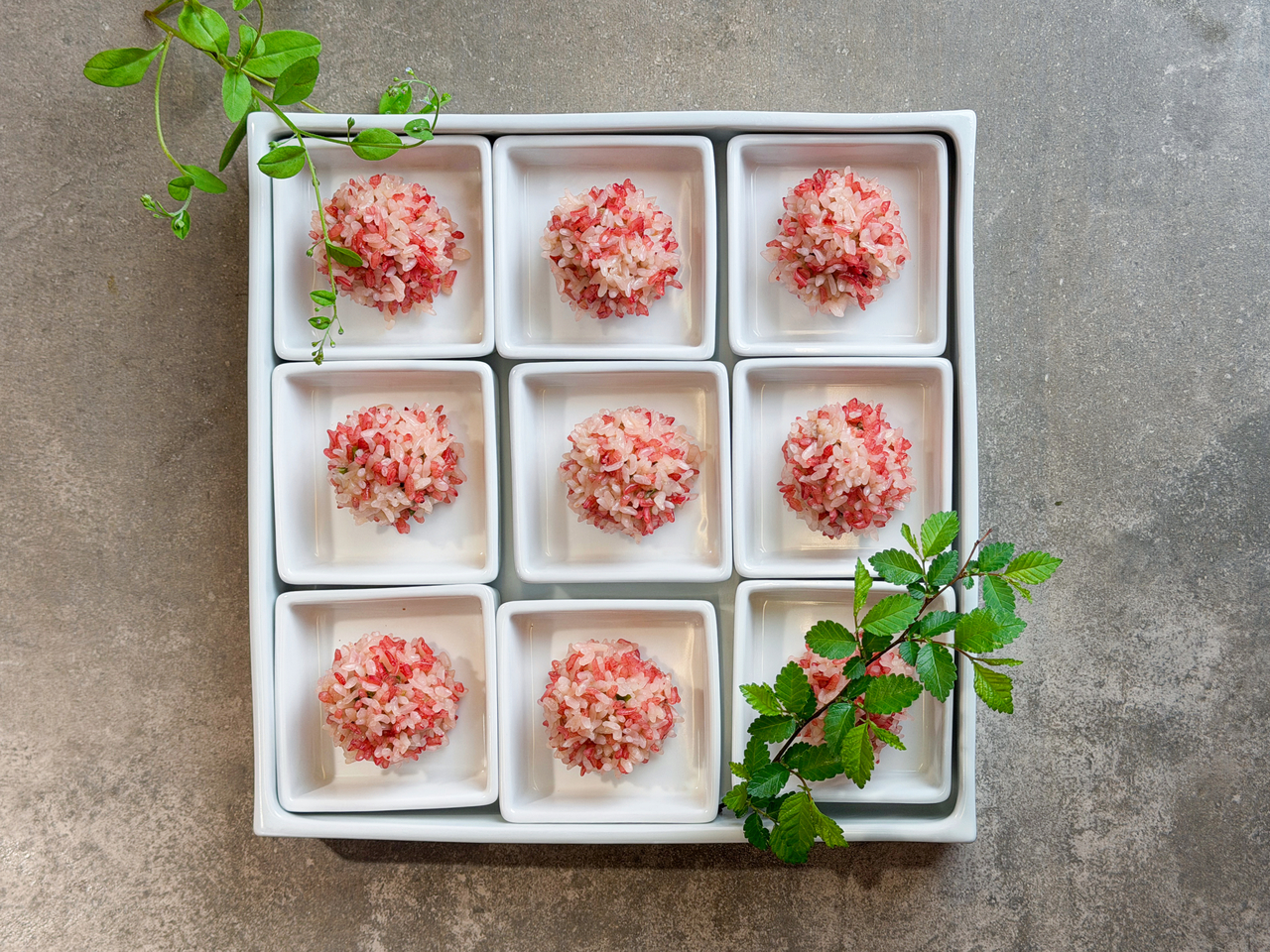
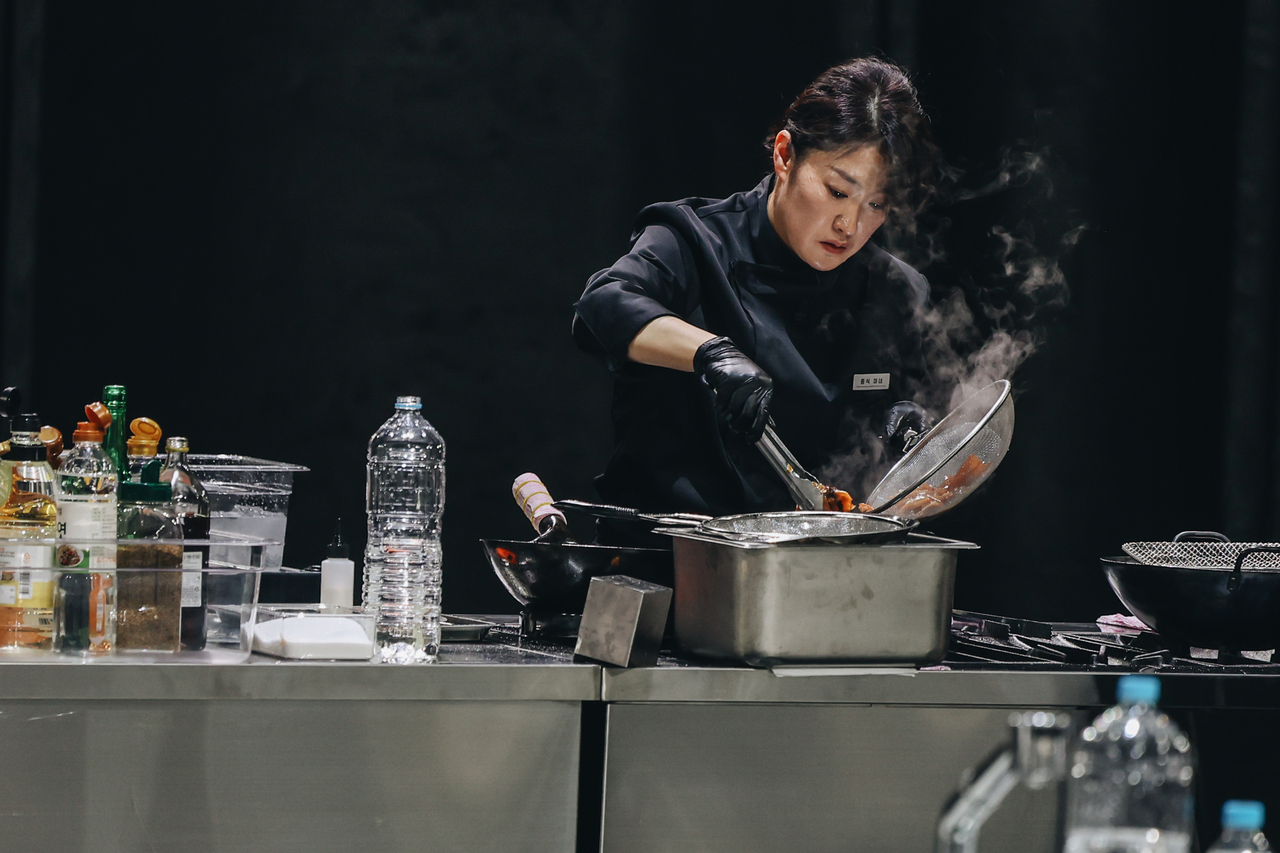
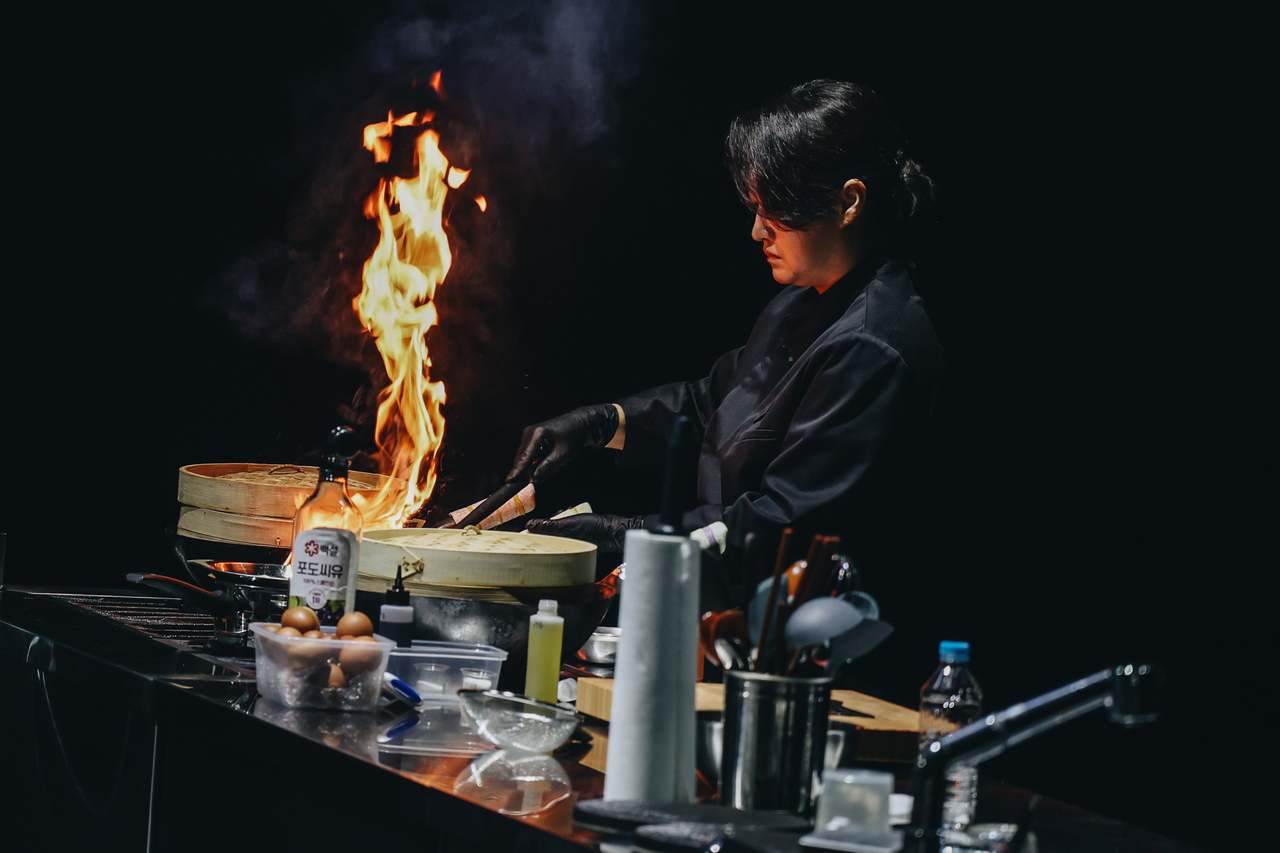
After graduating from university, Lee began her culinary career in 2001 at Geumnyong, the Chinese restaurant inside Walkerhill Hotel. At the time, Chinese-cuisine kitchens were an almost exclusively male world, and few would have expected someone of her slight build to handle a heavy wok over roaring flames.
"I was dexterous and detail-oriented, so I had wanted to work in Japanese or Western cuisine," she said. "I joined a Chinese restaurant to gain experience, and at first I thought, 'This is not where I belong' — it felt too rough. But as time passed, I became completely captivated: the flames shooting up like a dragon, the wok flying through the air, the knife skills, the dynamic energy of the cooks around me."
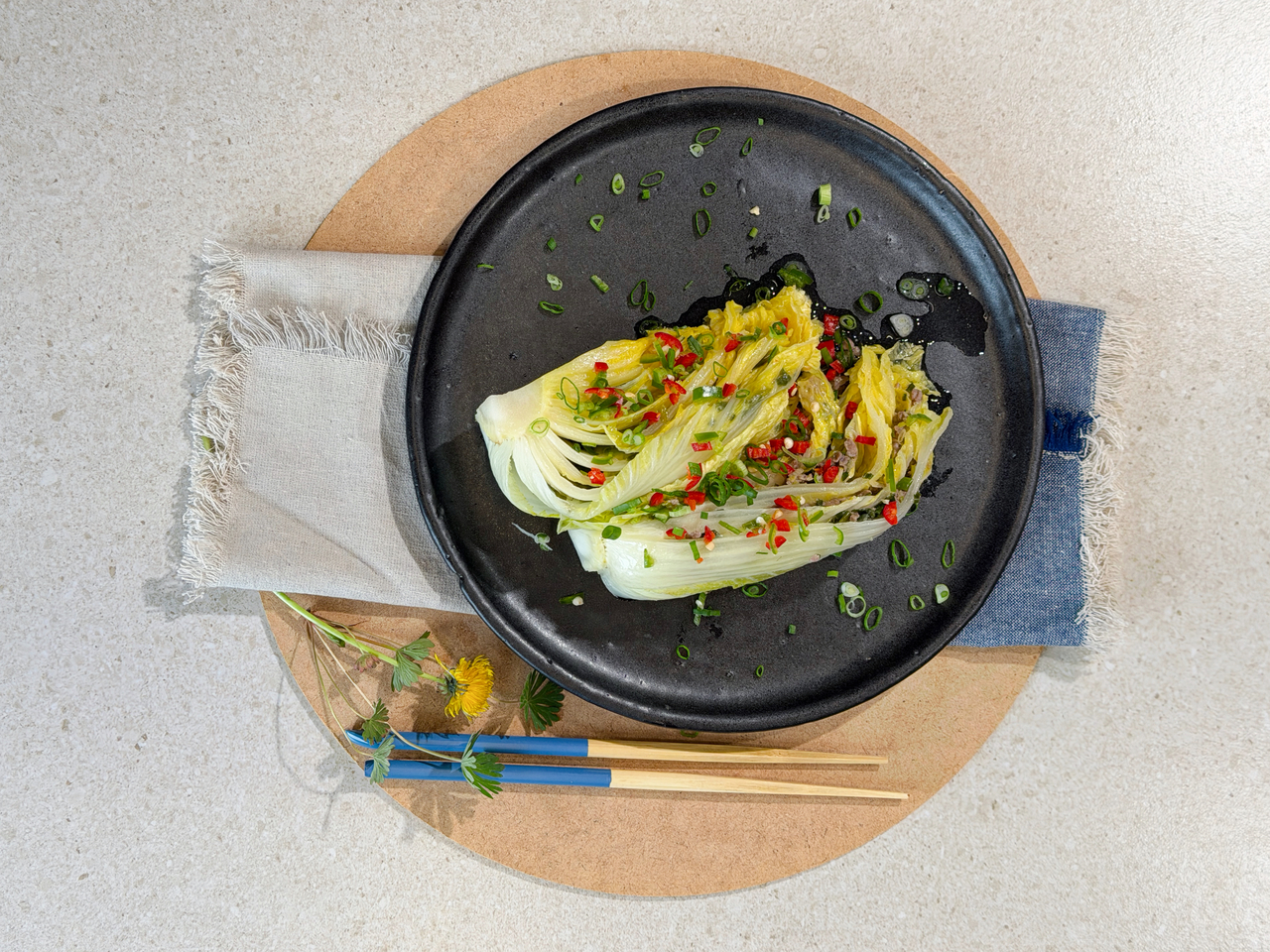
The path of a female chef in Chinese cuisine was far from easy. Physical limitations sometimes held her back. But she never defined herself as someone who could not do it because she was a woman. She pushed herself to work several times as hard, refusing to accept any lesser standard.
She endured for 10 years and became the first woman to take the wok at a top-tier hotel in Korea.
"Every day before entering the kitchen, I hypnotized myself: 'I am no different from them,'" she said. "For 10 years I lived without sparing my body. Thanks to that, I became the first Korean woman to take the wok. That moment is the most memorable of my life as a chef."
Miscarriage, career interruption — she had no choice but to push through on sheer grit
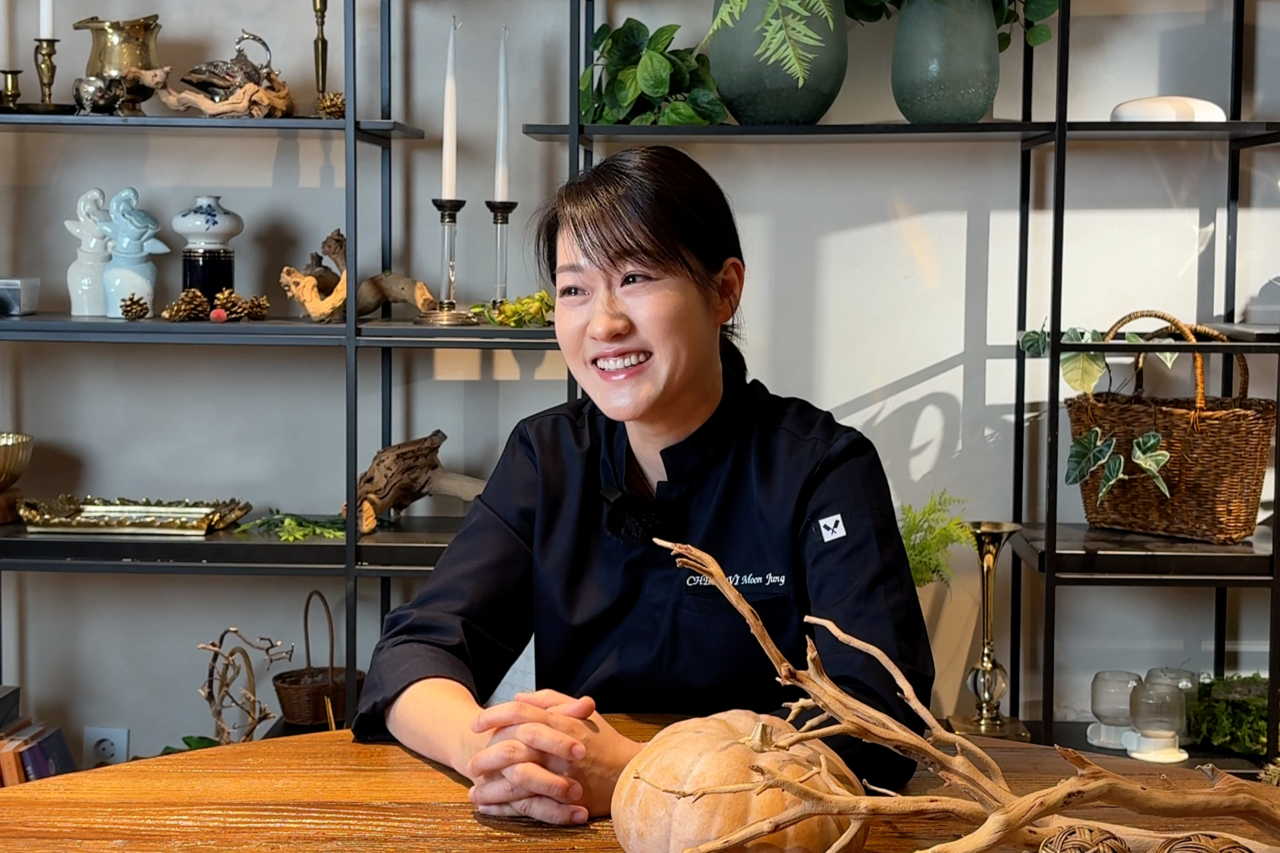
Yet hardship could not be avoided. A miscarriage, then the demands of raising a child — she had to set down the wok again. Recalling that time, Lee wept.
"With my first pregnancy, I didn't know anything. I couldn't cut back on work, and I ultimately lost the child," she said. "I was devastated, but I tried to tell myself I wasn't. That was the first time I understood what it truly means to be wounded. When I became pregnant again, I knew I had to protect that life. So I put down the wok. I didn't want to go through that pain again. To protect the life inside me, I had to let go of something it had taken me 10 years to earn."
She returned to the kitchen roughly a year and a half after the birth of her second child, but the gap left by caregiving was larger than she had expected. Her colleagues had already moved far ahead. Balancing motherhood and work proved far harsher than she had imagined.
"I wanted to catch up, but the gap was already wide," she said. "Leaving a young child to go to work was not easy emotionally. If the child suddenly fell ill, I had to go to my employer hat in hand and rush home to care for them. In that situation, I couldn't demand to be treated as an equal to the men around me."
Yet Lee did not simply despair. She pushed herself harder than ever, cutting her sleep to three hours a night to manage both work and childcare. She went on to earn a doctorate in culinary arts from graduate school. It was a period that felt as though she might break. She endured on nothing but sheer willpower.
"There was no option other than to endure — it was the path I had chosen," she said. "I really did just push through on pure grit. When things were truly unbearable, I told myself it was a road I had to travel to reach success."
The stronger a person appears, the more fragile they can be inside. Lee Mun-jeong is one such person.
"In truth, I am no different from anyone else — I have a tender heart," she said. "I cried so many times while working. I cried looking out at the Han River. I cried clutching my blanket. Because I knew I was not perfect, I cast a spell on myself: 'I am strong.'"
Knowing that pain firsthand, Lee said she wants to contribute, however modestly, to women whose careers have been interrupted. Planning a foundation for such women is one expression of that effort.
Creating a new genre — Lee Mun-jeong sets her sights on the world with 'K-Chinese cuisine'
In February, Lee left Walkerhill Hotel after 25 years and is now preparing the second chapter of her culinary life. She hopes to open a Chinese restaurant by the end of this year. Despite the fame that could easily justify a large-scale venture, she has in mind a small, 15-seat restaurant built around a counter — choosing depth of experience over spectacle.
"I wanted to work in a way that was fun and connected to my guests," she said. "Think of it as an omakase format, but with Chinese cuisine. Because it's small, I'll be able to raise the quality of the food. It will be a small space, but one where I can communicate with guests and serve truly exceptional cooking."
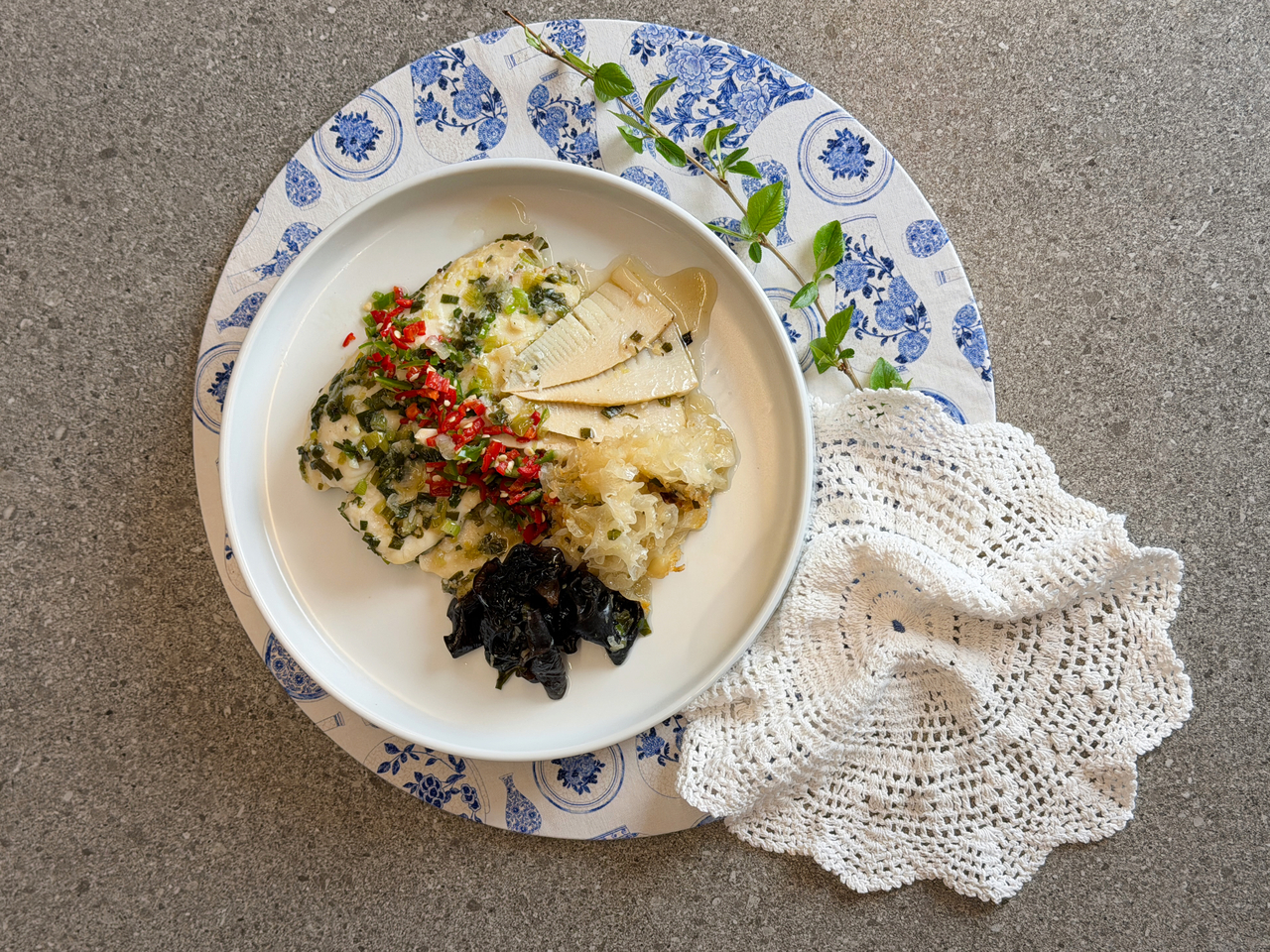
The Chinese cuisine Lee pursues does not aim to replicate the mainland original. She defines it as "K-Chinese cuisine" — Chinese food rendered in a distinctly Korean palette. Jjajangmyeon, jjamppong and tangsuyuk are all, she notes, already Koreanized forms of Chinese cooking. She wants to push that process further, reinterpreting Chinese dishes to feel even more at home on Korean palates.
"Jjajangmyeon, jjamppong and tangsuyuk are already Koreanized Chinese food," she said. "I want to go further — to reinterpret Chinese cuisine through Korean ingredients and my own style as the witch. I can use doenjang, gochujang, seasonal wild greens. I want to create flavors that feel familiar yet have never been tasted before."
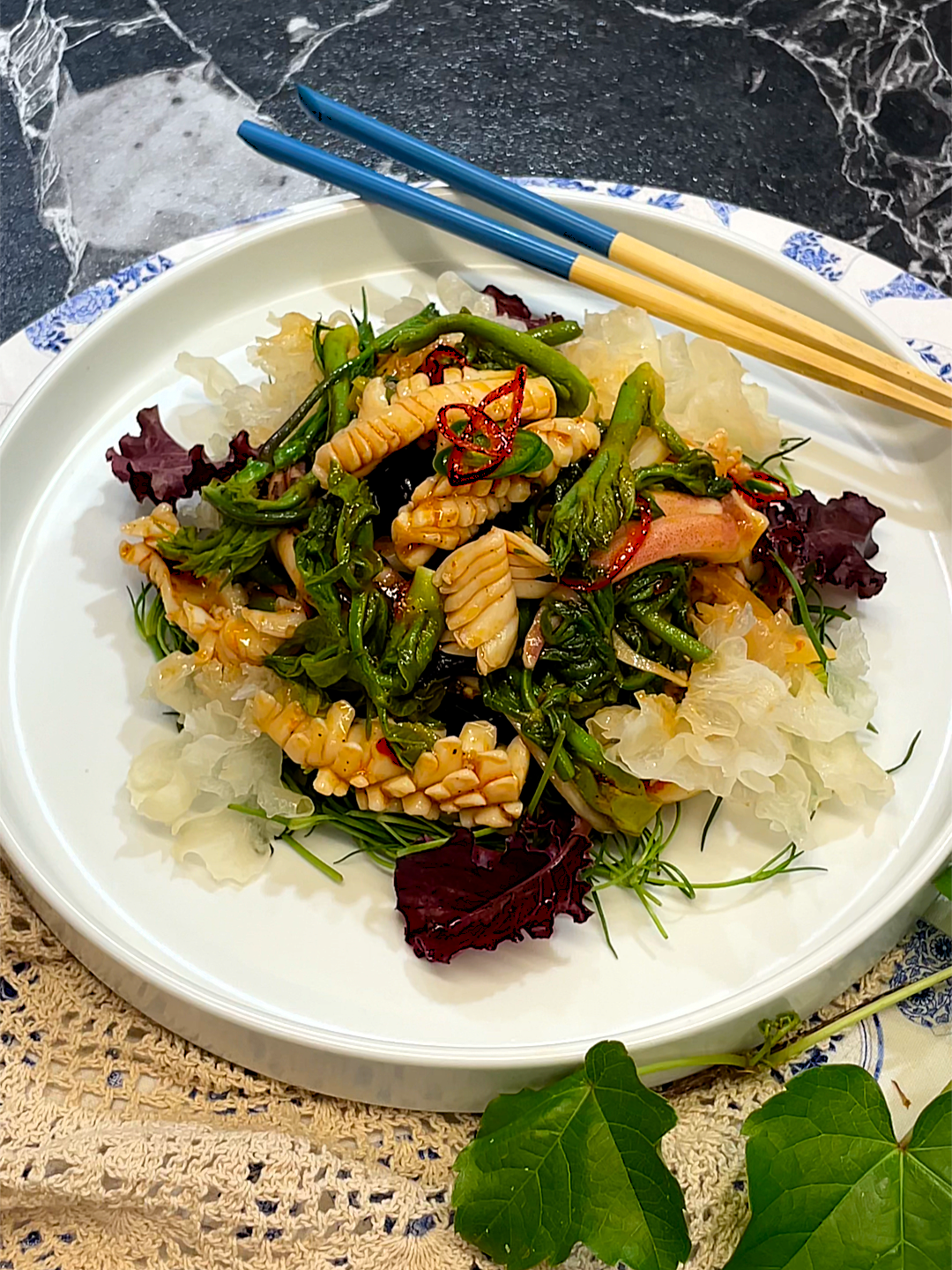
The spicy squid salad she served that day made her vision unmistakably clear. Built on doubanjiang and oyster sauce, spiked with garlic and red pepper flakes, her "Jungma sauce" was finished with a splash of vinegar. The result was at once familiar and strange — a new genre sitting at the border of Chinese and Korean cooking, tilting just slightly toward the Korean side. The flavor was by far the standout: spicy, sweet and tangy in a crowd-pleasing way, yet with enough variation to give it real depth.
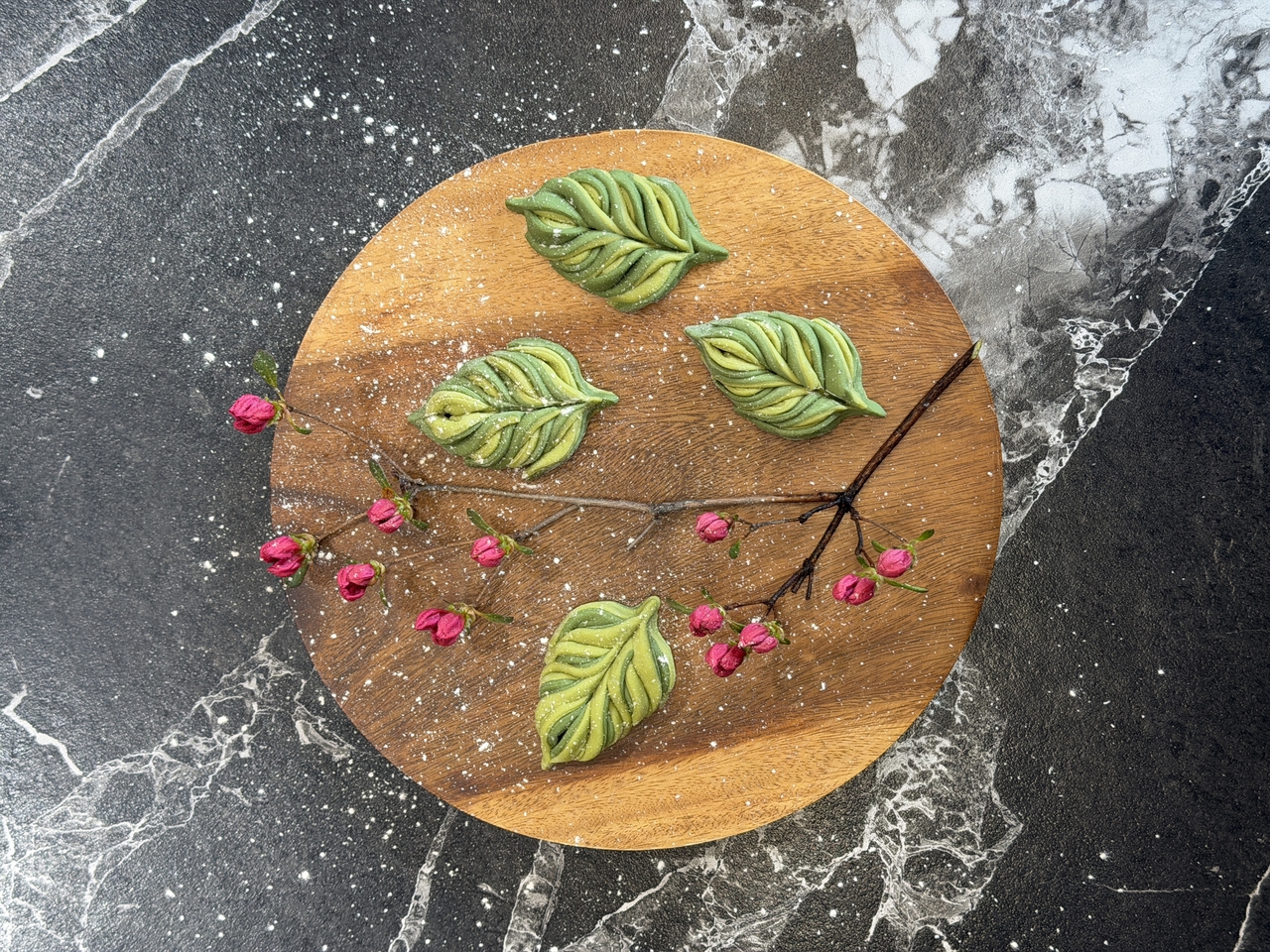
As a chef, her gaze is already fixed on the world. Lee dreams of K-Chinese cuisine spreading beyond Korea's borders — and hopes the day will come when even China, the home of the original, seeks out the Korean version.
"Personally, I want to build a strong personal brand and become a chef who introduces K-Chinese cuisine to the world," she said. "I hope many people come to experience K-Chinese cuisine through me. And who knows — the day K-Chinese cuisine is reverse-exported to China may not be just a mirage."
People may still call her the witch. But the person I saw was someone who had spent years forging herself so she would not break. And that flame has not gone out yet.
123@heraldcorp.com