

Walk down the main strip in Hongdae, Mapo-gu, and a hotpot restaurant sign catches your eye. Next door, a line snakes out of a newly opened milk tea shop.
Open YouTube and travel vloggers are posting footage from Shanghai and Chongqing. Scroll through Instagram's Explore tab and reels of celebrities in wanghong — Chinese influencer — makeup fill the screen. Squeeze in between them and a short-form romance drama series with an outlandish plot plays as an ad.
A few years ago, many Koreans dismissed Chinese aesthetics as excessive. Now, they can't seem to look away.

The word "jungti" — a term for an over-the-top, tacky Chinese aesthetic — once carried an unmistakably negative connotation. Among Koreans in their 20s, it is now taking on an entirely new meaning.
The shift traces back to a couples YouTube channel called "Yeodano." Whenever the channel's Chinese boyfriend, Yeoru, tried to buy Chinese-style clothing or insisted on his questionable taste, his Korean girlfriend Dano would shoot him down with a simple "that's so jungti."
Rather than taking offense, Yeoru leaned into it — acknowledging the label and adjusting accordingly. In one clip, he picked up a pair of gold earrings only to put them straight back down after Dano said, "Way too jungti." His immediate "guess I can't, then" became a running joke.
"A Chinese guy getting called jungti and just accepting it and giving up on the spot — that's hilarious," one comment read. The couple's jungti content spread as a meme, and the word began shedding its negative baggage.
From there, jungti crossed into fashion and entertainment circles, where it has since been embraced as a mark of personality and even praise.

Keywords like "jungti legend Jang Ha-o" and "jungtidas" signal how far the term has traveled. Jungti now reads as hip, good value, flashy and fresh — a full-blown aesthetic in its own right.
So why have Koreans in their 20s started to embrace it?
China dropped its visa requirement for South Korean travelers in November 2024, making the country far easier to visit. More than 1.98 million Koreans traveled to China in just the first eight months of last year — a 40.6 percent increase from the same period the year before.
Word of mouth about China's relatively low prices added fuel, and the number of young Koreans heading to Shanghai and Chongqing rose noticeably.
As those travelers posted vlog content on social media, C-beauty trends — Douyin makeup tutorials, wanghong makeup looks, Temu lash recommendations — took hold.
Wanghong makeup, the style Chinese influencers wear on their personal livestreams, is defined by its dramatic before-and-after transformation: heavy base coverage, intense pink tones, traditional Chinese dress and a tourist-spot photo shoot all rolled into one cultural experience. Reels and TikTok videos of the look racked up strong view counts.
Before-and-after photos of celebrities including Park Myung-su and Kwak Beom going through the wanghong treatment spread quickly, cementing it as a must-do stop on any China itinerary.
As interest in Chinese makeup grew through travel content, attitudes toward Chinese beauty products began to shift as well.
Korean makeup has long prized a natural, skin-forward finish. Douyin makeup — matte, flawless coverage with heavy glitter accents — offered something different, and it caught on among consumers in their teens and 20s. Demand for Chinese beauty products followed, with many shoppers turning to Temu and AliExpress for lower prices on the same items.
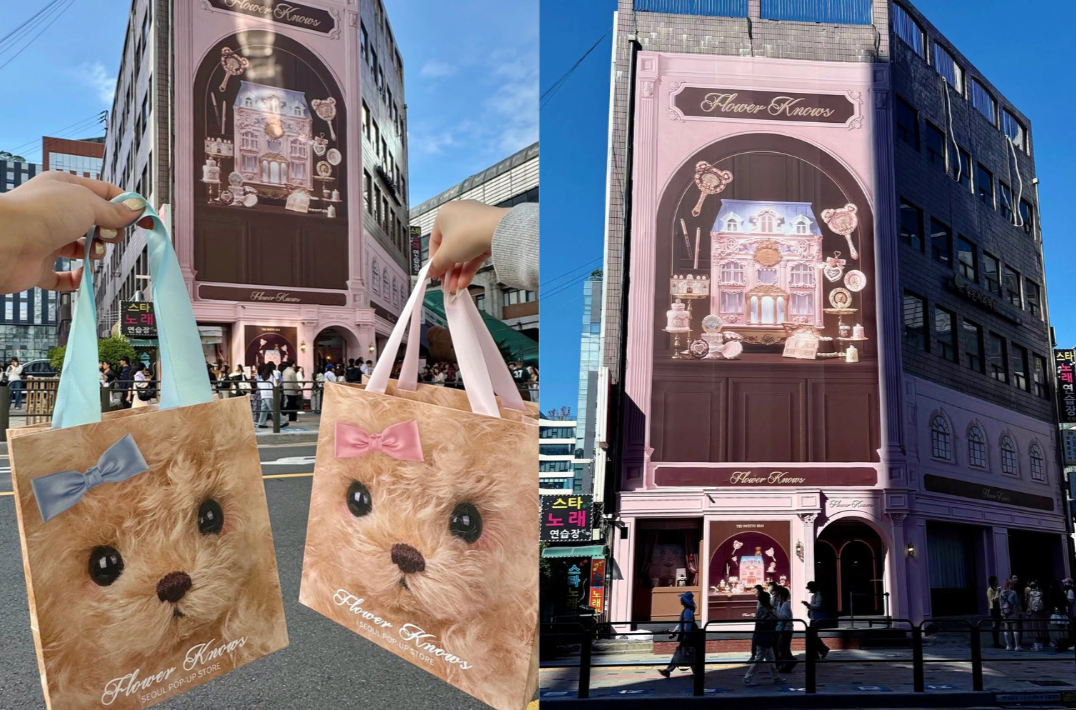
Riding that momentum, several Chinese makeup brands secured spots in Korean online retail. Flower Knows landed on Musinsa and Chicor; Judydoll entered Coupang Inc. Flower Knows also opened a pop-up store in Seongsu-dong and moved into Chicor's physical stores, steadily raising the profile of Chinese cosmetics in Korea.
Quality concerns had long kept Chinese cosmetics at arm's length from Korean consumers. That skepticism has quieted as Chinese brands began partnering with Korean OEM and ODM manufacturers for production.
These brands are now competing aggressively with domestic labels through online marketing, setting themselves apart through bold color palettes and elaborate packaging. Flower Knows, for instance, leads with its princess-style compacts and intricate embossed designs — a pitch squarely aimed at the experience-driven spending habits of consumers in their 20s.
As a result, the brand reached No. 1 in the eye makeup category on Musinsa.

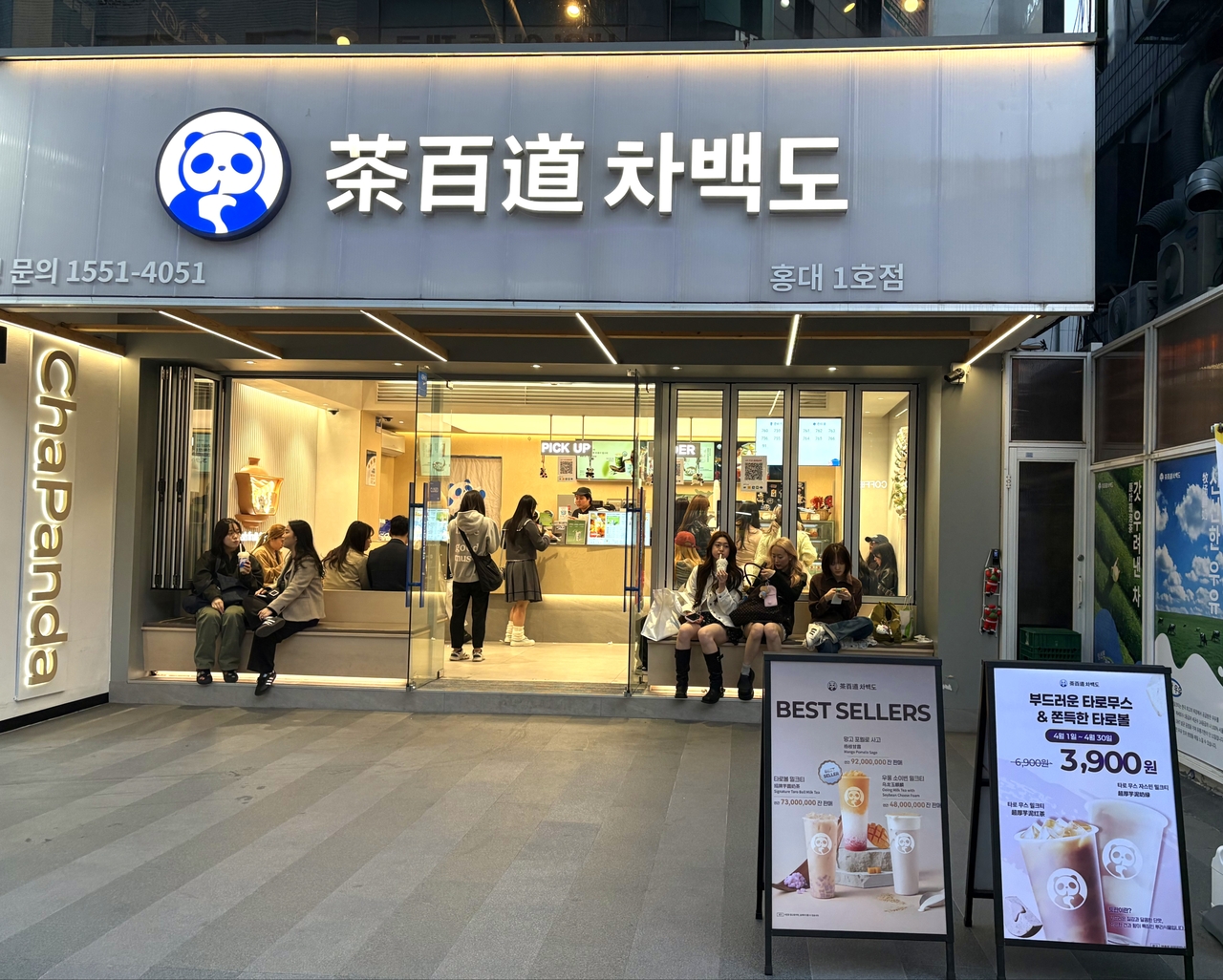
Chinese milk tea brands have already staked out prime real estate across Seoul. HEYTEA, MIXUE, ChaPanda and AUNTEA JENNY have all opened in major commercial districts — and CHAGEE is set to join them soon.
CHAGEE became known as "Won-young's milk tea" after a clip went viral of IVE member Jang Won-young taking a sip and exclaiming, "What is this? This is insanely good! Dive, hold on, I need to open Papago." The brand is preparing to open locations in Gangnam, Sinchon and Yongsan iPark Mall, and has already drawn attention with a pre-launch event offering 50 percent discount QR codes posted on store hoardings.
On social media, menu recommendation posts were pulling high view counts even before the stores opened.
Why are so many Chinese milk tea brands pushing into Korea at once?
The answer lies partly in a saturated home market. As Chinese consumers have tightened their spending, domestic growth prospects have dimmed, pushing brands to look abroad to survive.
Korea holds particular appeal. Korean consumers are known for their high standards and sensitivity to trends, making the market a proving ground for brands eyeing global expansion. The logic is straightforward: if a brand can make it in Korea, it can make it anywhere.
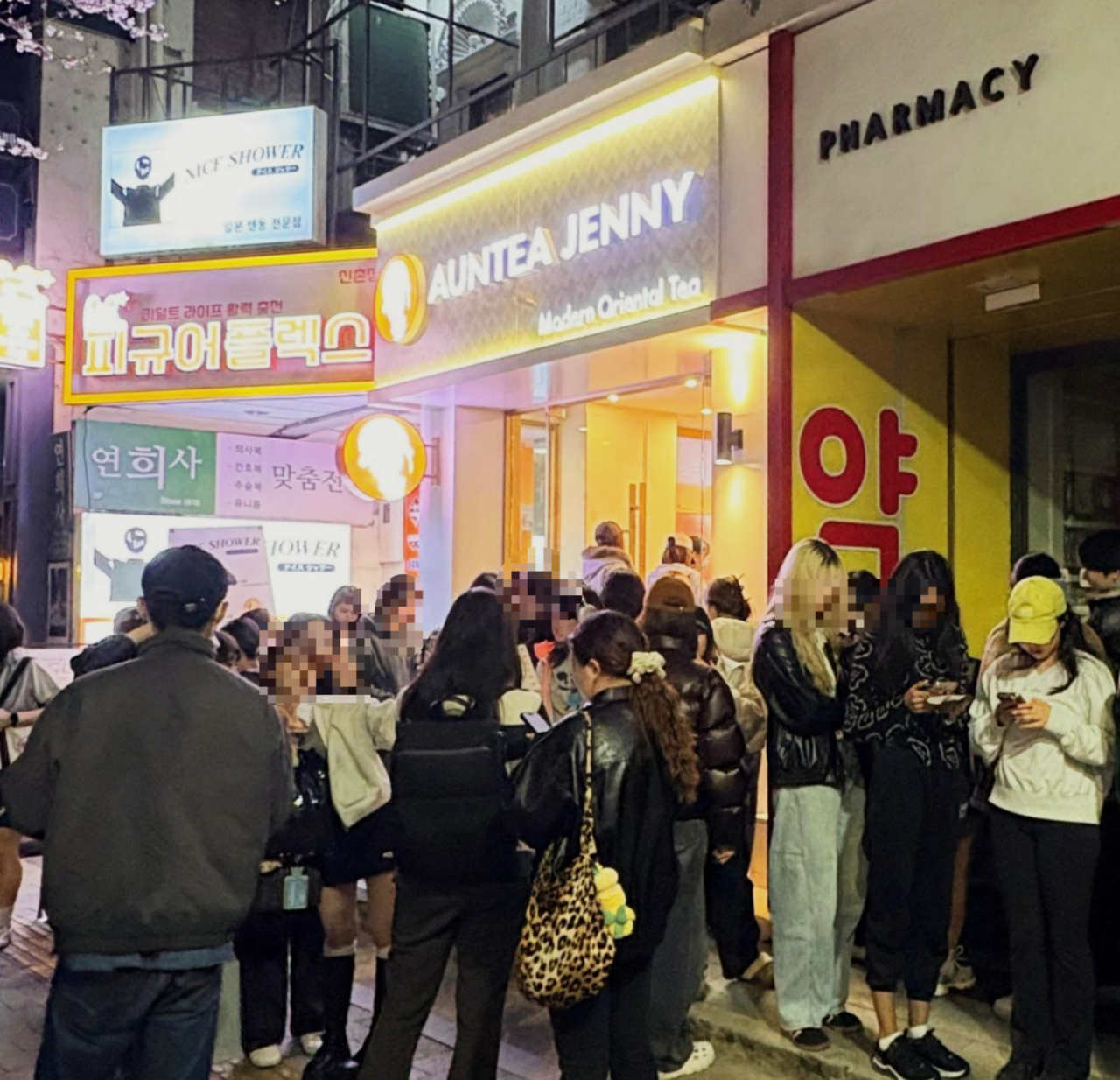
But why are young Koreans willing to queue for Chinese-style milk tea specifically?
Most milk tea currently sold in Korea traces its roots to Taiwanese-style drinks made with powder and syrup. Chinese brands targeted exactly that gap — leading with real brewed tea leaves, fresh fruit and grain toppings to offer something the existing market could not.
Each brand has carved out a distinct identity. HEYTEA markets itself as a clean, additive-free drink; ChaPanda leans into a light, healthy image built around fruit teas. MIXUE competes on price, positioning itself as the go-to value option, while AUNTEA JENNY sets itself apart with a signature milk tea topped with glutinous rice instead of tapioca pearls. The incoming CHAGEE is differentiating through premium branding built around a reinterpretation of traditional Chinese tea.
Healthy ingredients combined with strong individual brand identities make Chinese milk tea a natural fit for consumers in their 20s — a generation that pays close attention to diet and gravitates toward experience-driven spending.

Solo rotating hotpot — popularized by Yongga Hotpot — has spread by word of mouth, and related restaurants are opening across Seoul's major commercial districts.
The format is simple: each seat has its own induction burner, diners choose their broth, then pick ingredients off a rotating conveyor belt. One flat fee covers unlimited access to dozens of ingredients, with sides like tangsuyu (sweet-and-sour pork), desserts and drinks all included. Compared with traditional hotpot restaurants where ingredients are ordered separately and sauce bars carry an extra charge, the value proposition is clear.
There is one more decisive advantage: it is perfectly comfortable to go alone. Diners set their own pace and choose only what they want, with no need to match anyone else's rhythm — a format that maps neatly onto the solo-living, dining-alone culture common among Koreans in their 20s.
The numbers back it up. Yongga Rotating Hotpot's Gangnam branch averages 1,872 people on the waitlist per day, ranking first nationwide on the reservation platform Catch Table.
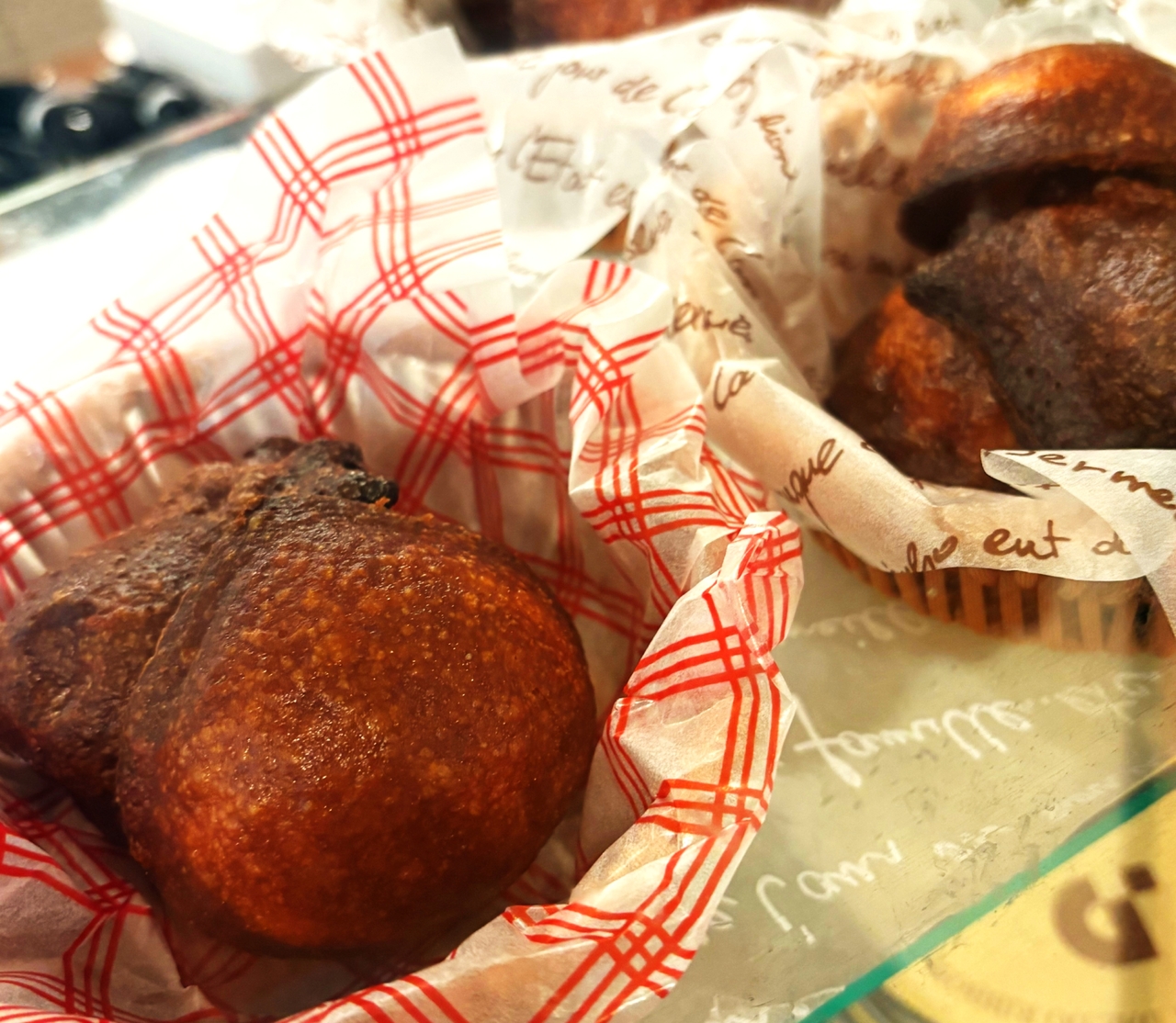
Butter tteok, a dessert that originated in Shanghai, set Korean social media ablaze starting in March.
Derived from the Chinese traditional snack "huangyou niangao," it is made from a dough of glutinous rice flour and tapioca starch mixed with milk — crispy on the outside, chewy inside, with a rich buttery aroma.
The treat had actually peaked in China late last year before local interest faded. Korea was a different story. From the first week of March, influencers began spreading recipes and restaurant recommendations at speed.
The key was texture. The crispy-outside, chewy-inside contrast hit squarely at what dessert-loving consumers in their 20s are after right now, and a price of 2,500 won (about $1.80) per piece made it easy to pick up on impulse.
The buzz has since cooled — dessert trends move fast these days — but the window has not closed entirely. E-mart24, Notted and several coffee franchise chains are preparing to release their own commercial versions of butter tteok. Keep an eye on the convenience store and cafe near you.
By Noh Seung-min, content operator
Editing by Min Sang-sik
mss@heraldcorp.com




