
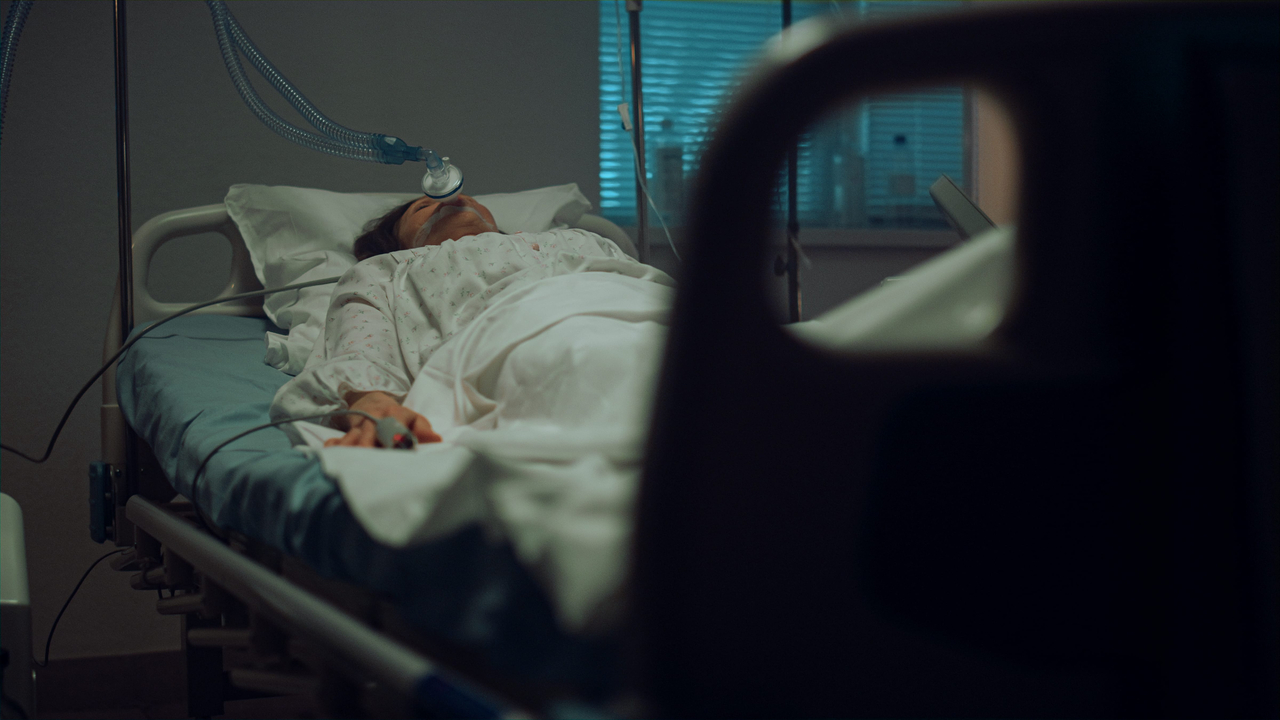
Discharging their father felt like giving up on him forever. For the family of a patient identified only as A, the years spent at Seoul Metropolitan Boramae Medical Center — operated by Seoul National University Hospital — left wounds that could never heal.
The story begins Nov. 22, 2005, when A was admitted to Boramae Medical Center and diagnosed with multiple cerebral infarctions in both hemispheres, hypertensive microangiopathy, vertebral artery stenosis and an aneurysm. Brain surgery — a craniotomy and aneurysm clipping — was performed the following month on Dec. 22.
Warning signs appeared almost immediately after the operation. On Feb. 6, 2006, while A was recovering in a general ward, he suffered right frontal lobe hemorrhage, right lateral ventricle hemorrhage, midline shift and bilateral frontal lobe cerebral infarction. The resulting brain damage left him in a vegetative state.
His family could not bring themselves to leave the hospital — and they had legal grounds to stay. A Seoul Central District Court ruling (Case No. 2010Gahap80270) had found Boramae Medical Center liable for medical malpractice, ordering the hospital to pay approximately 80 million won ($54,000) plus delayed damages, along with a partial award covering treatment and nursing costs. The hospital ultimately paid around 162 million won ($109,000).
To the family, it seemed only natural that the hospital responsible for the malpractice should continue treating A at no additional charge. Since the ongoing care stemmed directly from the hospital's negligence, they believed they owed nothing further.
But the family soon discovered that the malpractice ruling, the damages paid and the question of A's continued hospitalization were three entirely separate matters. Boramae Medical Center repeatedly asked the family to discharge A, arguing that inpatient treatment was no longer necessary. The family refused each time.
Then one day, a lawsuit arrived — filed by Seoul National University Hospital. The family had no choice but to respond.
Battle over an 11-pyeong hospital room
The dispute centered on a roughly 11-pyeong (37.09-square-meter) hospital room. Boramae Medical Center, the plaintiff, argued that because A's condition had shown no change over an extended period, no treatment beyond palliative care was necessary.
On that basis, the hospital sought his discharge — but the family refused. Seoul National University Hospital ultimately sued, demanding payment of approximately 12.4 million won ($8,370) in unpaid medical bills accumulated during A's hospitalization from Nov. 22, 2005 to Feb. 4, 2013.
In plain terms, the hospital argued that A could receive care at a convalescent hospital or at home, and asked the family to discharge him. It also sought to terminate the treatment contract on grounds of nonpayment.
The family saw it differently. They argued that the hospital's medical fee claim — its right to collect payment for treatment — was void because the treatment itself arose from the hospital's own malpractice.
Specifically, the family said Boramae Medical Center's negligence had left A in a vegetative state, making him a critically ill patient requiring intensive inpatient care rather than palliative treatment. They also said the Medical Service Act prohibits a hospital from refusing treatment without just cause.
Court: Hospitalization contract terminated; medical bills must be paid
Seoul Central District Court (Judge Jeong Mun-gyeong) ruled, citing Article 689, Paragraph 1 of the Civil Act, that Seoul National University Hospital could terminate the hospitalization agreement at any time. The court added that the family was obligated to pay the outstanding medical bills separately from the earlier malpractice litigation.
The court rejected the family's contention that A required continued inpatient treatment at a general hospital, siding instead with Boramae Medical Center's assessment. The ruling drew on records from the malpractice litigation, A's medical charts at Boramae and physician opinions.
In reaching that conclusion, the court cited three findings from the physical assessment conducted during the earlier malpractice case: that A was in a vegetative state with little prospect of significant improvement; that palliative care including physical therapy and medication was needed to prevent functional deterioration and complications; and that the nursing and related costs recognized in the damages case were intended to maintain A's current condition and prevent further decline.
On that basis, the court said: "The hospitalization agreement between the plaintiff (Seoul National University Hospital) and defendant A was already lawfully terminated pursuant to the discharge instructions and requests made by the plaintiff's attending physicians beginning around February 2012. At the latest, the agreement was lawfully terminated on June 14, 2013, when a copy of the complaint — containing the expression of intent to terminate the hospitalization agreement — was served on defendant A. Accordingly, defendant A and his family are obligated to vacate the hospital room."
The court also held that even though the hospital's malpractice had been partially recognized in earlier proceedings, the family remained separately obligated to pay the approximately 12.4 million won ($8,370) in outstanding medical bills plus delayed damages. It rejected the family's argument that the medical fee claim was void because it arose from the hospital's negligence.
In its detailed reasoning, the court noted three points: that the hospital's liability had been capped at 40 percent in the earlier case; that only 60 percent of the medical costs had been recognized after offsetting the hospital's fault; and that Boramae Medical Center had already paid the family the full principal and interest of the damages award. The court therefore concluded that the medical fees claimed in this case had not been offset by the outcome of the prior litigation.
Attorney Cho Jin-seok: 'Regrettable but real — avoid unnecessary costs'

Attorney Cho Jin-seok of law firm O'Kims said he felt for the family of A. Their sense of injustice was understandable, he said, but the court's judgment — grounded in precedent — was a separate matter. His advice: do not waste money or effort on a losing battle.
He noted that in some cases, patients' families continue to occupy general hospital rooms even after receiving damages, hoping to secure ongoing treatment. Doing so, he said, can infringe on the right to care of other patients who genuinely need intensive treatment — an outcome that is bad for the patient, the family and other patients alike.
The court ruled that the family of A must pay Boramae Medical Center approximately 12.4 million won ($8,370) in outstanding medical bills plus delayed damages.
"If a patient has become irreversibly incapacitated and subsequent care is limited to managing aftereffects or preventing further deterioration, the court's position is that such care falls outside the fundamental purpose of the treatment obligation and constitutes part of loss mitigation — meaning the patient cannot be billed for surgical or treatment costs," Cho said.
He added that even when malpractice is established, as in A's case, once the patient has received compensation covering past and future treatment costs, the obligation to pay medical bills resumes from that point. "In such a situation, the patient and family can be considered to be in breach of their payment obligation," he said.
Cho also noted that hospitals frequently recommend transfer to a convalescent hospital, primary care clinic or care facility — or issue discharge orders — based on medical judgment, and that relevant government ministries share this view alongside the courts.
For that reason, patients and their families must be able to present clear medical grounds justifying the need for continued inpatient treatment.
"The fact that malpractice occurred does not, by itself, entitle a patient to remain hospitalized at that institution," Cho said. "There are cases where patients, relying solely on the fact that malpractice was recognized, refuse to vacate the room or pay their bills — only to lose a lawsuit brought by the hospital and end up paying more than they originally received in damages."
He added that patients should keep in mind that a hospital can pursue payment of medical fees and seek a court order to vacate the room. "It is better not to waste unnecessary costs or effort," he said.
ko@heraldcorp.com




