Trump triples mine-clearing operations, cites Iran's internal divisions as obstacle to deal; US forces seize another Iran-linked oil tanker in Indian Ocean
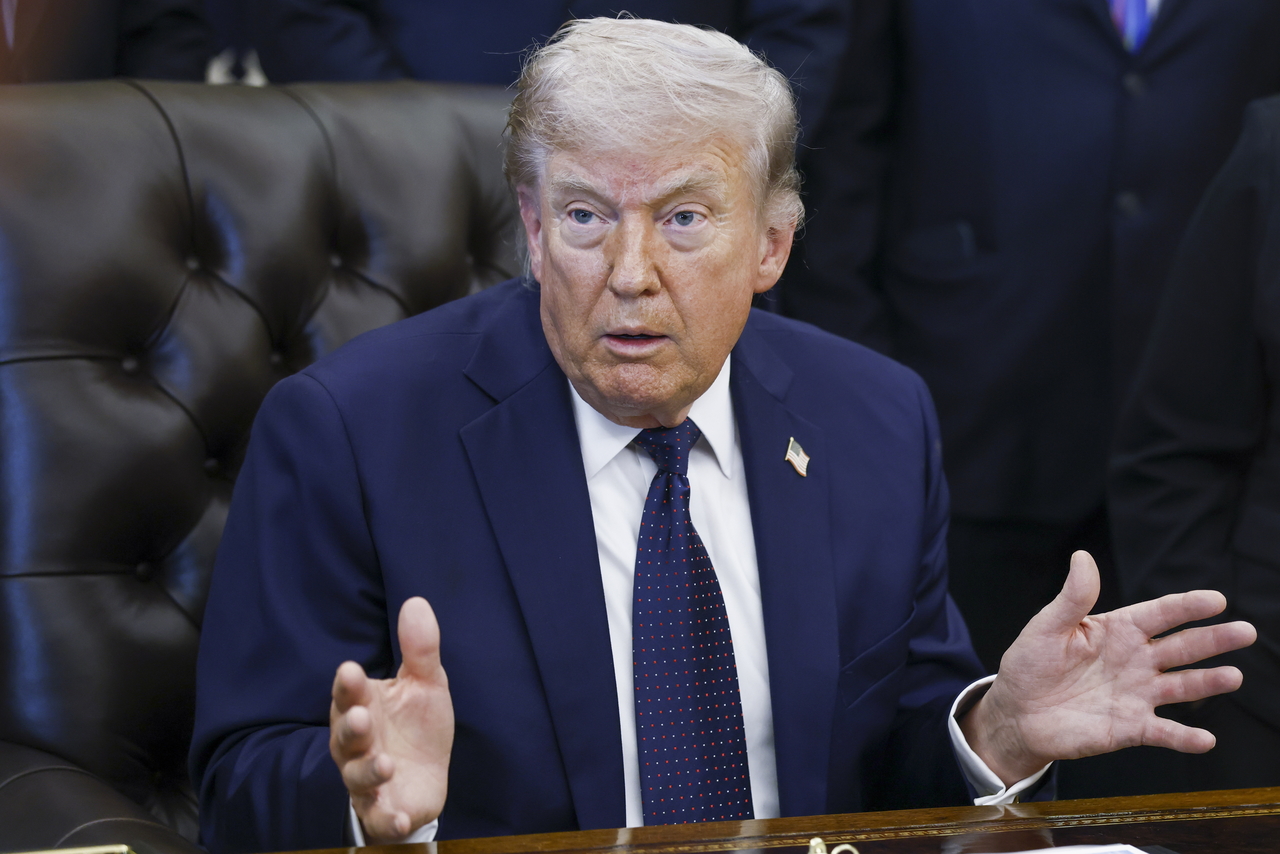
President Donald Trump on Wednesday ordered the US Navy to shoot and sink any vessel laying mines in the Strait of Hormuz, and vowed to keep the waterway sealed until Iran agrees to a deal on ending the war and denuclearization. The twin declarations — a shoot-to-sink directive paired with a reaffirmed blockade — are widely seen as an effort to press Iran into negotiations by underscoring American military control over the strategic chokepoint.
In a post on his Truth Social platform, Trump said he had ordered the Navy to "shoot and kill" any ship laying mines in the strait's waters, "no matter how small the boat."
"There should be no hesitation," he added, and went on to say that US forces had already sunk 159 Iranian naval vessels during the military campaign, leaving them "at the bottom of the sea."
Trump also ordered mine-clearing operations in the strait to continue and directed that their scale be tripled.
Iran has been using fast attack boats to lay mines and seize vessels in the Strait of Hormuz, exploiting the waterway's narrow width to avoid long-range operations. The Islamic Revolutionary Guard Corps Navy's speedboats have drawn attention as a core "asymmetric" asset — a weapons system capable of achieving outsized effects with limited numbers — in Iran's strategy to contest control of the strait.
In a separate post, Trump said the US held complete control of the Strait of Hormuz and that no vessel could enter or leave without US Navy approval. "Until Iran can make a deal, the Strait will be 'sealed up tight,'" he wrote.
Trump also said Iran was "having a very hard time figuring out who their leader is," describing the internal rift between hardliners "getting decimated on the battlefield" and moderates who are "not really that moderate (but getting more and more respect!)" as "crazy."
The remarks amounted to identifying Iran's internal divisions as one reason peace negotiations have stalled. Trump had earlier declared a unilateral extension of the truce, setting its expiration as the point at which Iran resolves its internal disagreements, presents a unified proposal and negotiations are concluded.
US forces also seized another oil tanker carrying Iranian crude in the Indian Ocean on Wednesday, within the US Indo-Pacific Command's area of operations. The seizure extended the maritime blockade beyond the Strait of Hormuz and appeared designed to intensify pressure on Tehran and push for a swift resumption of negotiations.
The US and Iran agreed to a two-week truce on April 7, but peace negotiations have made little headway since it expired. With Trump having unilaterally declared an extension of the truce, tensions between the two sides over the Strait of Hormuz have continued to rise rather than ease.
Trump has maintained the maritime blockade to pressure Iran, while Iran has responded by firing on and seizing vessels in the strait. Iran has criticized the blockade and US threats as obstacles to negotiations, but Washington has reaffirmed its intention to keep the blockade in place — and has now signaled it will sink mine-laying ships — deepening the standoff further.
yckim6452@heraldcorp.com