Trump confirms truce deadline in media interviews; maritime blockade to remain until deal is signed; contradictory remarks on Vance's Pakistan trip and a possible deal 'tonight' add to confusion
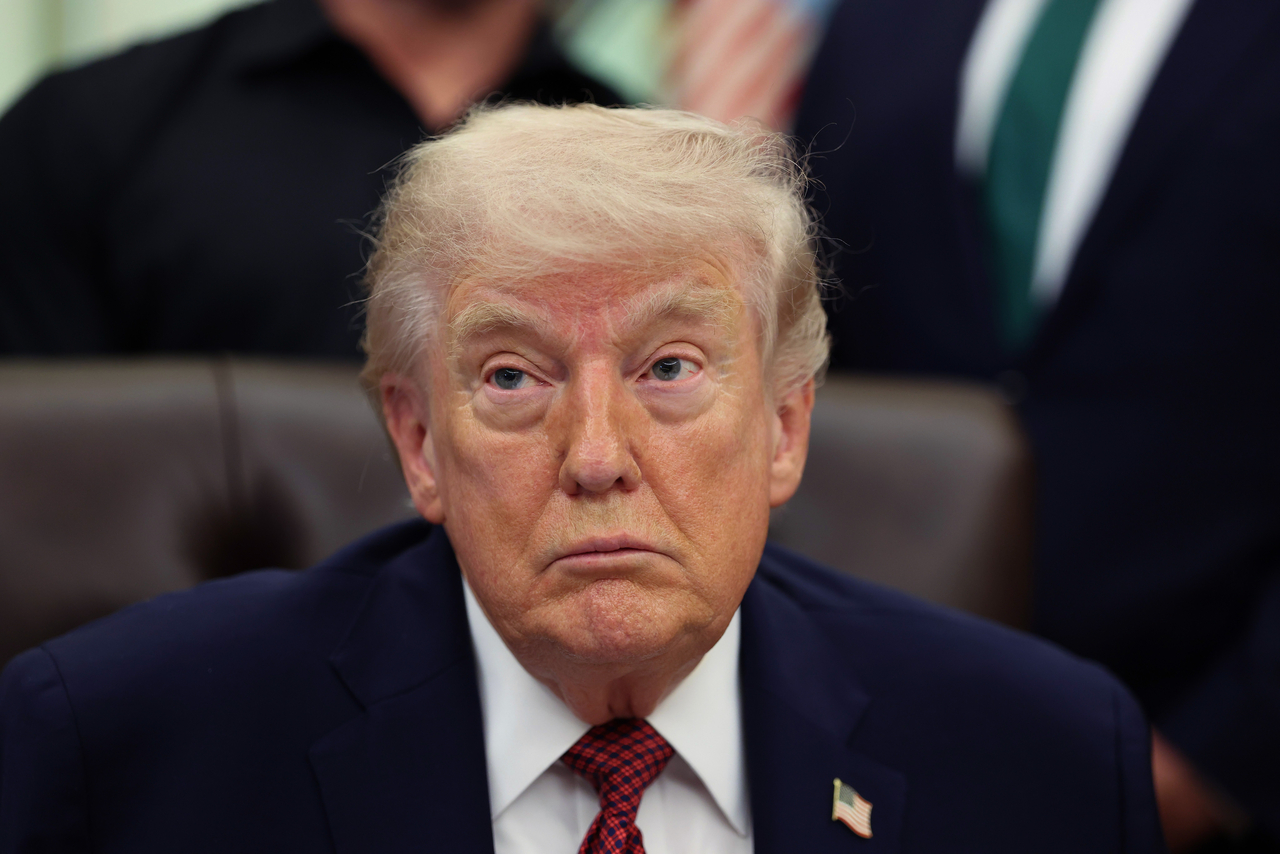
Donald Trump said Sunday that the two-week truce with Iran expires Wednesday evening Eastern time — Thursday morning Korean Standard Time — and that extending it is "very unlikely." Negotiations will begin Tuesday, he said, and the US military's maritime blockade on Iran will remain in place until a deal is signed. His repeated contradictions over Vice President JD Vance's travel plans and other details have added to growing confusion over the state of the talks.
In a phone interview with Bloomberg, Trump said the truce would end "Wednesday evening, Washington time."
The US and Iran agreed to a two-week truce on April 7. Tuesday had widely been understood as the deadline, but Trump's remarks suggest the administration is interpreting the start of the truce period flexibly, in effect extending it by one day.
Trump said Vance would leave for Pakistan that day to conduct negotiations with Iran, with talks set to begin Tuesday. He called an extension of the truce "very unlikely" and said the maritime blockade would continue until a deal is reached.
"They want me to open it. Iran desperately wants me to open the strait. I'm not going to open it until there's a signed agreement," Trump said.
Asked whether hostilities would resume immediately if no deal was reached, Trump said, "If there's no deal, I would certainly expect that." He added that he would not rush into a bad agreement and that there was enough time. He said he would like to attend the talks in person but that it probably would not be necessary.
Trump's overall message appeared aimed at maximizing the perceived length of the truce window while building expectations for a deal — even as he reiterated that the blockade would continue and that strikes would resume if negotiations failed, maintaining pressure on Tehran.
Earlier, Trump told the New York Post that Vance was already on his way to Pakistan and would arrive soon. Reuters subsequently cited a source familiar with the matter as saying Vance had not yet left the United States.
Meanwhile, Fox News host Maria Bartiromo posted on X that morning saying Trump had told her a deal would be reached "tonight." That claim contradicts Trump's own Bloomberg interview, in which he said negotiations would not begin until Tuesday, making a deal the same evening impossible.
The contradictions have prompted speculation that Trump may be deliberately sowing confusion as the outlook for the talks remains uncertain.
The previous day, Trump had treated negotiations in Islamabad on Monday as a foregone conclusion, while Iran has yet to state clearly whether it will participate. Reports have emerged suggesting Iran is weighing engagement, though some within the country suspect Trump is posturing without genuine intent — building a pretext to resume strikes rather than seeking a real agreement.
On his Truth Social platform, Trump criticized media coverage of a potential war with Iran and claimed that "the result in Iran will be amazing, just like the result in Venezuela, which the media refuses to cover properly." He added that "if Iran's new leadership — regime change! — is smart, Iran can have a great and prosperous future."
The Venezuela comparison appeared to reference that country's trajectory after President Nicolas Maduro was taken into US custody in early January. Venezuela subsequently reopened oil export channels and moved to improve foreign relations under closer alignment with the Trump administration. Trump appeared to suggest Iran could follow a similar path — and, without stating it explicitly, that a deal with Washington could bring economic support for postwar reconstruction and prosperity.
Trump's caveat — "if Iran's new leadership is smart" — could also be read as a call for Iran to resolve its internal divisions. Iranian military forces have moved to re-blockade the Strait of Hormuz, and figures such as parliament speaker Mohammad Bagher Ghalibaf, who have taken a leading role in the negotiations, face pushback from within.
US Central Command said Sunday that 27 vessels had turned back or returned to Iranian ports since it began the maritime blockade on April 13, targeting ships entering and leaving Iranian ports and coastal areas.
yckim6452@heraldcorp.com